
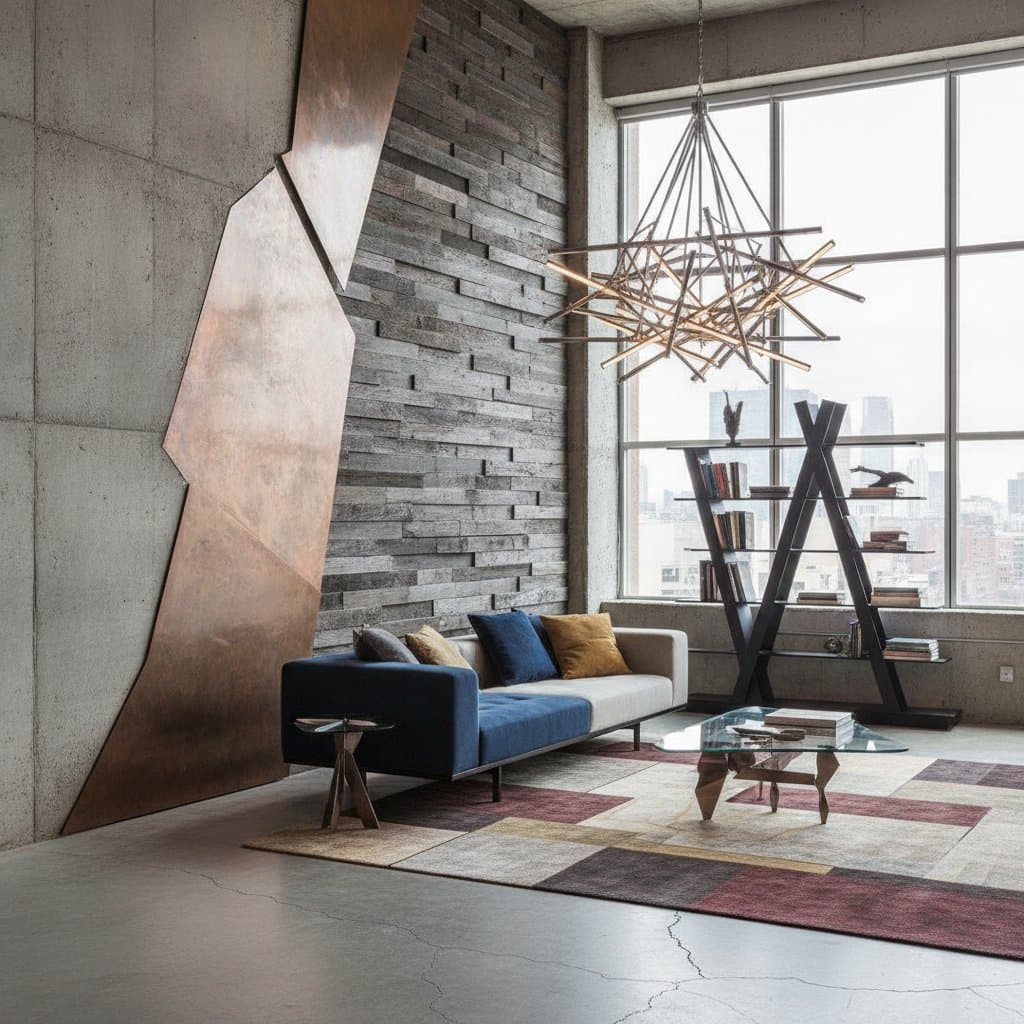
Deconstructivist Interiors: Embracing Fragmented Design
Many homeowners find perfectly styled rooms too polished and predictable. Deconstructivist interior design offers an alternative by breaking away from symmetry and order. This approach produces bold, expressive rooms that feel personal and distinctive.
Spaces that appear slightly chaotic yet balanced demonstrate the style in action. It encourages viewers to find beauty in the imperfect and challenges conventional expectations.
Core Principles of Deconstructivism
Deconstructivism originated in architecture as a rejection of perfect lines and uniformity. It favors broken forms, unexpected angles, and sculptural spatial arrangements. Applied to interiors, the style converts rooms into experiences rather than purely functional areas.
The aim centers on intentional fragmentation that generates curiosity. Designers work with tension so that surfaces, colors, and angles carry energy. Sharp intersections, floating elements, and gravity-defying furniture often appear.
In practice, the approach grants permission to break rules and treat the home as art.
Reasons for Growing Interest
Structured rooms can feel overly safe. Deconstructivist spaces introduce excitement and movement that reflect creativity within apparent disorder. Moving away from standard layouts and matching sets also produces rooms that belong uniquely to their owners.
Fragmented design further prompts fresh perspectives on existing materials. A cracked mirror or exposed beam can shift from flaw to focal point.
Practical Steps for Implementation
Adoption does not require full reconstruction. Begin with small additions and build layers gradually. Focus on contrast, geometry, and texture.
Introduce Asymmetry
Traditional rooms emphasize balance. Deconstructivist rooms rely on tension. Arrange furniture at slight angles and combine differing shapes and heights. Position a round coffee table beside a rectangular sofa, hang artwork off-center, or suspend light fixtures at varied levels.
Combine Materials and Finishes
Pair industrial, natural, and synthetic surfaces. Concrete walls next to glossy metal or distressed wood beside glass create depth. Effective pairings include raw steel with polished marble, concrete with soft textiles, and glass panels against rough plaster.
Apply Color with Purpose
Neutral palettes dominate many examples, yet strategic color adds drama. Introduce a single bright panel on a white wall or black trim across a pale surface. Lighting can accentuate these variations through shadows and reflections.
Reveal Imperfections
Accept or create deliberate breaks such as floating partitions that stop short of the ceiling or visible structural supports. These elements convey honesty and movement.
Explore Unexpected Forms
Furniture with sharp edges or asymmetrical shapes and shelves that intersect oddly contribute to the aesthetic. Custom or modular pieces allow further personalization while remaining functional.
Weighing Benefits and Drawbacks
Visually dynamic rooms that encourage self-expression represent key advantages. The style suits both new construction and renovations and supports reuse of existing materials. Potential drawbacks include a sense of disorganization if pushed too far, higher costs for custom work, and increased maintenance demands.
Managing Cost and Effort
Simple updates such as furniture rearrangement or geometric painting require modest investment. Larger modifications involving steel, glass, or concrete increase expenses and labor. Combine premium and reclaimed materials, complete basic preparation personally, and plan for custom fabrication time to maintain control.
Safety Considerations
Sharp edges and heavy elements require careful placement. Secure wall panels to studs, specify tempered glass, and obtain permits for structural changes. Consult professionals when load-bearing elements or wiring are involved.
Achieving Cohesion
Successful designs maintain underlying control. Each irregular element contributes to an overall rhythm. Step back after adjustments to confirm the space sparks interest without sacrificing comfort. A mix of directional and ambient lighting unifies textures and softens lines.
Incorporating Personal Elements
Mount old tools as wall art or display broken ceramics as sculpture. Combine modern pieces with vintage signage and retain visible repair marks. These choices produce an evolving, authentic environment.
Guidelines for Intentional Results
Define strong architectural lines first. Limit the color palette and repeat shapes or materials to connect fragmented parts. Preserve negative space and test arrangements with tape or mockups before final installation.
Living with the Design
Irregular lines and shifting light keep the space engaging over time. Maintain surfaces gently and allow patina to develop. The neutral foundation permits later softening with textiles or lighting if preferences change.