
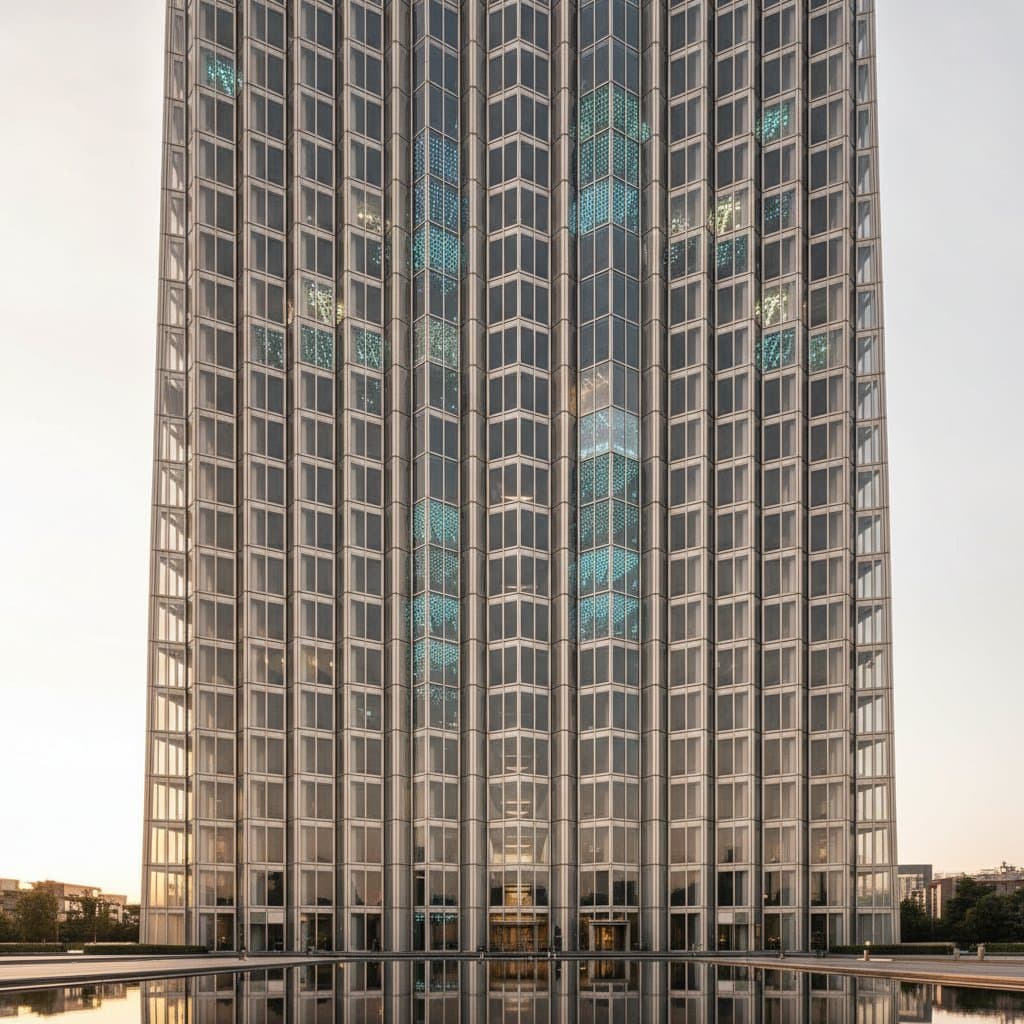
Algorithm-Driven Facades Overcome Traditional Limits
Have you ever walked past a building and noticed its outer surface shifting with the light? Panels may adjust position or patterns may evolve as the sun moves overhead. These effects result from mathematics applied directly to modern architecture.
Architects now rely on algorithms and calculations to create facades that respond to surrounding conditions. The resulting designs deliver both visual appeal and measurable performance gains. This approach is expanding rapidly and altering how buildings function in daily use.
Limits of Conventional Facades
Traditional facades face clear restrictions. A fixed wall or glass curtain can manage only a narrow range of heat, light, and airflow demands. Designers have long sought exteriors that remain striking while also cutting energy use and maintaining interior comfort.
Parametric tools now reduce these constraints. A facade becomes a modeled system rather than a static plane. Each panel or shade follows mathematical rules derived from site data. The goal centers on practical problem solving rather than visual novelty alone.
Core Elements of Algorithm-Driven Facades
An algorithm-driven facade begins with measured inputs such as sun angles, wind patterns, and temperature ranges. Software processes these values to determine surface behavior. Outcomes include panels that open or close automatically or tiles whose depth varies with heat load.
Some systems incorporate sensors for real-time adjustment. Others rely on a fixed yet optimized geometry established during design. In both cases the architect defines the governing rules while the software evaluates many options to identify balanced results.
Software and Methods in Current Practice
Several established programs support this work. Grasshopper, Rhino, and Dynamo let designers build and adjust complex relationships visually.
Common techniques include the following:
- Parametric modeling updates an entire structure when one variable changes, eliminating repeated manual edits.
- Algorithmic scripts generate patterns from data relationships, such as reducing panel size as sunlight intensity rises.
- Environmental simulations test performance across weather scenarios before construction begins.
- Digital fabrication machines produce precise components from finalized models, enabling complex forms at controlled cost.
These methods now appear routinely in architecture offices and support the transition from concept to built work.
Performance Advantages
Math-driven facades improve several measurable outcomes. They lower cooling and lighting loads by managing daylight and heat at the surface. Interior spaces experience steadier temperatures and reduced glare.
Material use becomes more efficient because algorithms calculate minimum quantities that still meet structural needs. Some installations add sensors that maintain performance without daily oversight. The combined effect supports lower operating costs across the life of the building.
Practical Obstacles and Responses
Higher initial costs remain the primary barrier. Specialized software and fabrication increase the budget compared with standard curtain walls. Savings appear later through reduced energy demand.
Design complexity requires close coordination among architects, engineers, and fabricators. Projects therefore need extra review cycles. Moving components demand scheduled maintenance to address dust and mechanical wear. Local permitting offices may request additional documentation when systems depart from conventional practice.
Steps to Implement a Project
Clear goals form the starting point. Define whether the facade must control sunlight, establish a visual identity, improve insulation, or meet several aims at once. Assemble a team experienced in parametric modeling and digital fabrication.
Collect site data on sun path, wind, and temperature. Set fixed parameters and variable ones before running simulations. Consult energy and structural specialists during modeling. Confirm fabrication methods early and plan access routes for any maintenance requirements.
Budget and Schedule Factors
Cost varies with automation level. A fixed patterned screen adds modest expense over conventional construction. A fully motorized system can double or triple the facade budget depending on scale.
Extended modeling time is offset by faster, more accurate fabrication. Projects with tight budgets can still apply the same logic to static shading elements that require no moving parts.
Observed Applications
Completed buildings demonstrate the range of possibilities. Origami-style folding screens regulate sunlight on cultural centers. Three-dimensional printed tiles direct airflow across office towers. Perforated metal panels produce shifting visual effects on educational facilities. These examples show that the method suits many building types when the rules align with local conditions.
Long-Term Value
Sustainability gains arise from reduced material waste and lower operational energy. Natural regulation of temperature and light decreases stress on mechanical systems. Fewer repairs follow, extending service life and protecting the initial investment.
Property owners and design teams that adopt these principles gain both performance and visual distinction. Continued improvements in software and fabrication will make the approach accessible across a wider range of projects.