
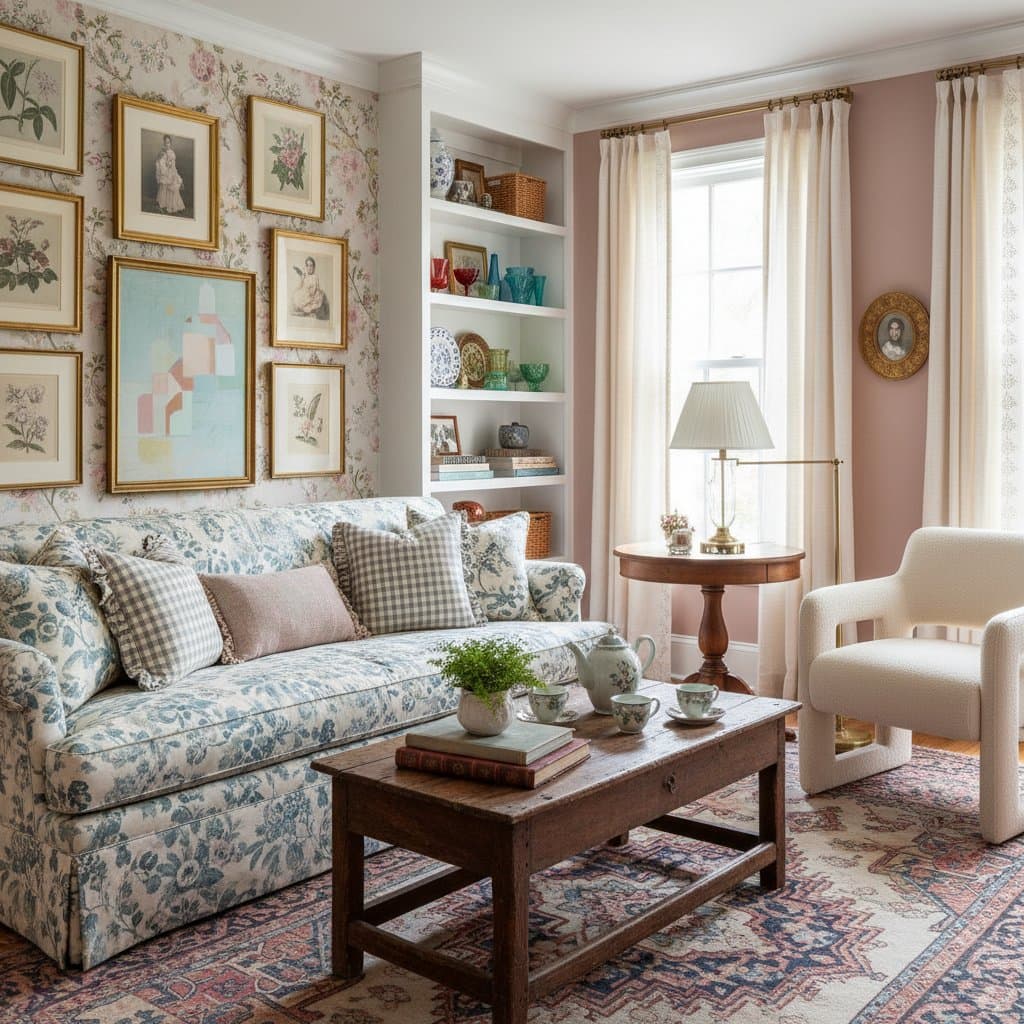
Young Homeowners Revive Grandmillennial Traditional Charm
Young homeowners increasingly select rooms adorned with floral draperies, vintage china, and needlepoint cushions over sleek, minimalist interiors. This shift signals the emergence of grandmillennial style, a design approach that merges cherished patterns from past generations with contemporary updates. Rather than stark, uncluttered environments, this method introduces warmth, texture, and narrative depth to daily spaces.
Numerous young buyers discover solace in traditional aesthetics following an era dominated by austere modern designs. Individuals weary of neutral tones and angular forms may find grandmillennial style appealing. The aesthetic honors the allure of classic interiors while ensuring they remain practical and vibrant.
Defining Grandmillennial Style
Grandmillennial style achieves equilibrium by revering heritage without clinging to outdated conventions. Elements such as ruffled curtains, pleated lampshades, and timeless motifs appear alongside streamlined furniture, understated flooring, and refreshed color schemes. The outcome yields a multifaceted, inviting ambiance free from rigidity.
Consider this approach as a tribute to the artistry and ease valued by earlier eras, adapted seamlessly to modern routines. Individuals retain essential conveniences while encircling them with items that convey personal history. The style proves comforting, distinctive, and deeply individualized.
Reasons Young Buyers Embrace Traditional Charm
Following prolonged exposure to minimalism and transient furnishings, younger homeowners seek environments that evoke authenticity. They desire residences that appear inhabited rather than artificially arranged. Grandmillennial style fulfills this aspiration through palpable comfort and relational ties.
Several factors explain the appeal of this resurgence:
- Individuality above uniformity: The design promotes integrating inherited items, secondhand discoveries, and familial artifacts over coordinated ensembles.
- Environmental responsibility: Opting for pre-owned furniture or restoring worn pieces conserves resources and cuts expenses.
- Cost-effectiveness: Assemble the aesthetic gradually by acquiring select items, avoiding comprehensive overhauls.
- Sentimental resonance: The style evokes fondness for dwellings enriched by significant possessions rather than ephemeral accents.
This method suits those who prefer spaces amassed organically rather than meticulously staged. It allows enjoyment of heritage motifs while preserving functionality and relevance.
Establishing the Core Elements
To incorporate grandmillennial style, commence modestly to build layers of texture, hue, and legacy without dominating the area. Follow these steps for an effective introduction.
- Select a neutral base palette. Employ muted tones like warm ivories, subtle taupes, or soft pastels in azure or sage to ground bolder elements and highlight intricate details.
- Incorporate heritage motifs. Introduce botanical prints, tartans, or scenic toile on secondary furnishings such as throw cushions, window treatments, or seating upholstery for immediate depth.
- Blend eras thoughtfully. Pair a contemporary sectional with a restored sideboard or position abstract prints over an aged bureau to foster dynamic interplay.
- Prioritize durable materials. Seek solid timber constructions, genuine metal accents, and resilient fabrics to emphasize enduring quality over disposable alternatives.
- Integrate meaningful accents. Display ancestral portraits, passed-down dishware, or crafted textiles to infuse genuine character.
Such adjustments convert ordinary sitting areas into intimate retreats affordably. Many begin with current possessions, enhancing them via local consignments or auctions.
Sourcing Pieces and Key Considerations
Designer outlets prove unnecessary for achieving this aesthetic; authentic gems often emerge from unconventional venues.
- Consignment shops and markets: Scout for ornate wooden accents, aged reflectors, and ceramic fixtures.
- Probate auctions: Uncover premium floor coverings, metallic serveware, or stitched fabrics.
- Digital platforms: Regional postings frequently offer aged cabinets, seating, or storage units at reduced rates.
- Familial archives: Inquire among kin regarding stored relics; recipients often welcome their revival.
When acquiring pre-loved goods, inspect for robust build and premium composition. Pieces requiring renewal, such as upholstery updates or surface treatments, typically cost less than equivalents. For instance, re-covering a single armchair ranges from $200 to $500 based on material, while revitalizing a compact surface involves basic abrasion and finish application for approximately $75.
Maintaining Balance and Modernity
Vibrant motifs and embellishments risk excess; restraint ensures harmony. Adhere to these principles for cohesion.
- Opt for pale surfaces: Light or pastel coatings counteract dense textiles and aged woods, preserving brightness.
- Apply prints selectively: Balance elaborate upholstery with plain drapery, or subdued seating with ornate wall coverings.
- Incorporate sleek illumination: Position angular standing lights or simplified pendants to infuse contemporary edge.
- Curate displays mindfully: Showcase cherished objects while concealing surplus to foster openness over congestion.
Intentional curation renders the environment evocative yet progressive, evoking ease rather than relic status.
Advantages and Challenges of Grandmillennial Design
All aesthetics involve compromises; awareness aids informed choices.
Advantages:
- Fosters a welcoming, bespoke ambiance
- Promotes eco-conscious reuse of established items
- Adapts readily to evolving preferences
- Remains economical through strategic acquisitions
Challenges:
- Risks disarray absent vigilant selection
- Certain relics demand restoration efforts
- Demands thoughtful pairing for cohesive results
- Might limit broad appeal during resale
Accounting for these aspects enables appreciation without pitfalls. Focus on restraint and foresight for optimal outcomes.
Room-Specific Grandmillennial Enhancements
Infuse traditional elements across varied settings, suitable even for compact dwellings. Tailored suggestions follow for principal zones.
Sitting Area: Install a draped settee, botanical panels, and metallic or earthenware fixtures. Offset with current visuals or unadorned surfaces for equilibrium.
Sleeping Quarters: Fit a motif-laden panel or stitched linens. Include a restored vanity or bedside unit with heritage fittings. Gentle glows and blooms finalize the serenity.
Cooking Space: Arrange dishware on exposed racks. Swap utilitarian grips for metallic ones. Introduce a diminutive patterned mat or array of aged vessels.
Washing Area: Affix bordered illustrations or faint-patterned coverings. A gathered fixture atop the mirror adds subtle allure to utilitarian zones.
Initiate in a single space or distribute refinements progressively. Modest alterations yield substantial impact without significant outlay.
Budgeting and Scheduling Essentials
Grandmillennial pursuits generally prove more economical than wholesale contemporary transformations, yet structured planning remains vital. Duration varies with scope.
- Financial scope: Refresh one area for $300 to $800 via salvaged and self-directed efforts; extensive endeavors like fabric renewal or bespoke panels may reach $3,000 to $5,000.
- Duration: Sourcing ideal components spans several weeks to quarters; patience enhances authenticity.
- Involvement: Tasks often include manual refinishing or installations; those inclined toward hands-on work find fulfillment here.
For expedited results, emphasize soft goods and ornaments initially. Such swaps alter atmospheres swiftly, with structural additions deferred.
Harmonizing Heritage with Contemporary Functionality
A hallmark of this style lies in its compatibility with present-day essentials. Preserve digital displays, polished fixtures, and efficient setups amid historical surrounds. The fusion elevates each component.
Position innovations amid classics deliberately rather than concealing them. A slim monitor atop an aged credenza integrates smoothly with encircling visuals. A sleek eating surface beneath a period fixture creates purposeful contrast. These pairings sustain utility while amplifying character.
Cultivating Your Signature Space
Grandmillennial style transcends mere replication of ancestral arrangements; it reinterprets comforting, intimate qualities for contemporary contexts. Initiate modestly, explore hues and textures, and permit organic development.
Those drawn to plush materials, multifaceted tones, and poignant particulars will find lasting satisfaction. The process demands dedication, yet yields an enveloping sense of belonging upon entry. Vigilantly seek opportunities in secondary markets, reclaim kin heirlooms, and rely on intuition.