
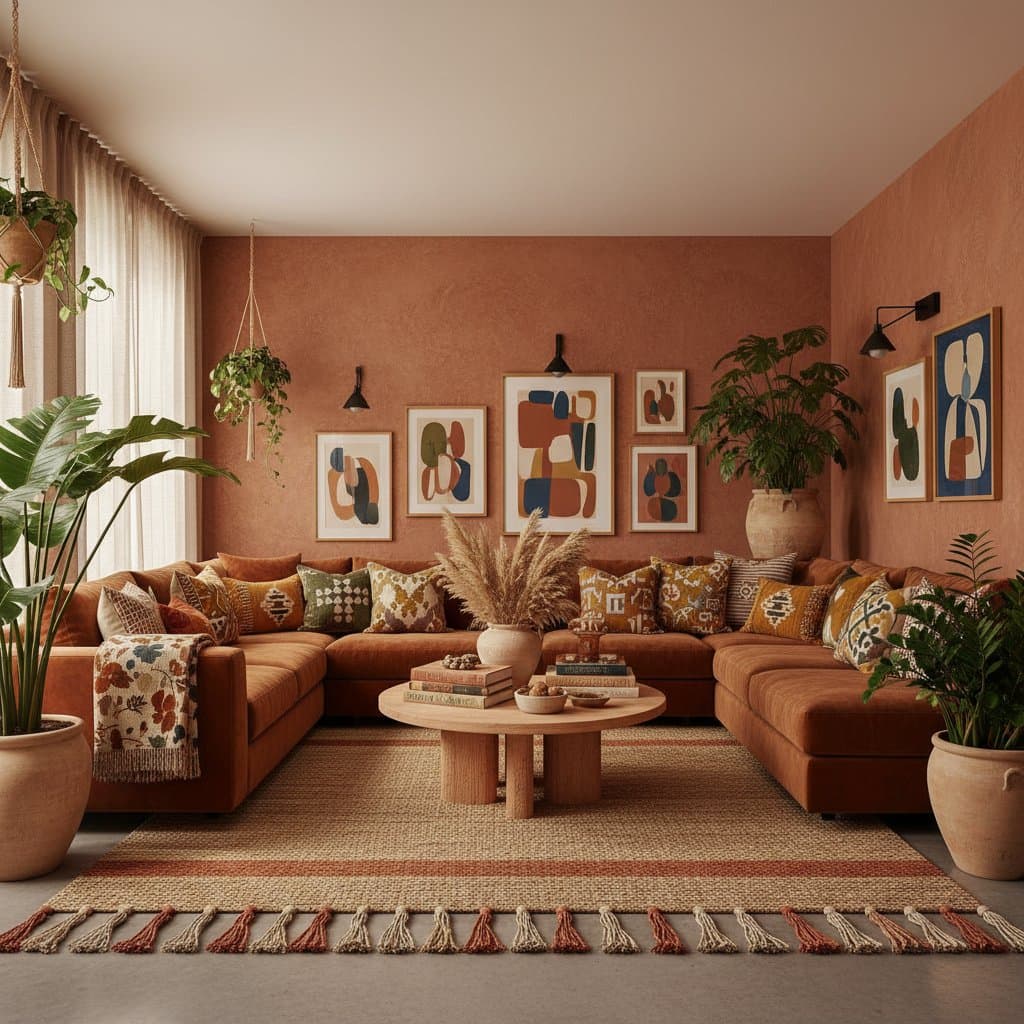
The Role of Terracotta in Earthy Maximalist Design
Consider a room that exudes stability and allure while brimming with character. Such an effect defines earthy maximalism, which combines lush textures, intricate patterns, and organic hues to produce environments rich in warmth and history. Terracotta emerges as a pivotal element in this aesthetic, subtly dominating contemporary design schemes. Designers favor terracotta's warm tones because they infuse boldness with an inherent sense of ease.
The Enduring Appeal of Terracotta
The term terracotta derives from the Italian for baked earth, reflecting its origins in fired clay. This hue evokes soil, rock, and golden light, offering warmth that remains understated. It integrates seamlessly with contemporary and traditional motifs alike. Introducing terracotta into a space introduces profound dimension that stark neutrals simply cannot replicate.
Earthy maximalism seeks equilibrium amid abundance. It employs natural elements, artisanal surfaces, and curated artifacts to weave a narrative. Terracotta aligns perfectly with this vision by forging connections to the natural realm. It provides vibrancy without harshness and comfort without excess weight.
Integrating Terracotta into Maximalist Environments
Maximalism encourages bold expression through eclectic collections and stylistic fusions across periods. However, even in such dynamic settings, a unifying hue proves essential to maintain cohesion. Terracotta excels in this capacity, serving as a conduit between exuberance and tranquility.
Incorporate terracotta via walls, flooring, or accents such as ceramics, cushions, or frame details. It harmonizes with forest greens, muted indigos, ochre yellows, and soft ivories. The outcome yields a multifaceted palette that captivates without intimidation.
Terracotta bolsters maximalism in these key ways:
- It tempers intense motifs. Bold motifs and varied surfaces gain softness through terracotta's gentle warmth, preventing an overly stark impression.
- It enhances organic elements. Adjacent to timber, hide, or wicker, terracotta elevates their inherent richness.
- It infuses character without conflict. Though colorful, terracotta functions neutrally, facilitating effortless layering.
Practical Applications for Terracotta in Home Design
Incorporating terracotta requires no comprehensive renovation. Begin with targeted updates that yield significant impact.
Accent Walls with Terracotta Paint
A single terracotta-painted wall establishes a nurturing centerpiece in living areas or sleeping quarters. This choice pairs effectively with crisp moldings or pale timber furnishings. Select a balanced shade blending crimson and umber undertones. Quality interior paint typically costs between fifty and seventy dollars per gallon. Budget an additional twenty dollars for tools like brushes, masking tape, and trays if necessary.
Terracotta in Textiles
Experiment with blankets, drapery, or pillows to gauge terracotta's suitability. These elements demand minimal commitment yet transform ambiance swiftly. Opt for fabrics in flax, weave, or plush varieties. Natural compositions preserve the grounded essence. Expect expenditures from twenty to one hundred dollars, influenced by dimensions and fabric type.
Authentic Terracotta Ceramics
Genuine clay items impart true authenticity. Vases, pots, or mosaic surfaces deliver tactile depth unmatched by imitations. Artisanal creations often feature subtle tonal shifts for added intrigue. Small decorative pieces range from fifteen to sixty dollars, while substantial planters command higher prices.
Layering with Complementary Warm Hues
Blend terracotta with subdued apricot, sienna, or tawny shades to form a cohesive narrative. For variety, combine with sage verdant, slate neutral, or alabaster. Maintain harmony by matching undertones: warm alongside warm, cool beside cool.
Advantages and Limitations of Terracotta
Understanding terracotta's strengths and challenges informs informed decisions.
Advantages:
- Introduces warmth and layering without excess
- Complements contemporary and antique furnishings
- Synergizes with organic surfaces and natural substances
- Cultivates an enveloping, stable ambiance
Limitations:
- May diminish light in compact areas if overapplied
- Requires ample illumination to reveal its nuances
- Certain variants may discord with chilled palettes
In confined or dimly lit rooms, confine terracotta to accessories or fabrics rather than expansive surfaces. This approach captures its essence without constriction.
Strategies for Effective Implementation
Terracotta spans from light clay-pink to intense scorched crimson. Tailor selections to illumination levels and desired mood.
- Sample Thoroughly. Apply test patches or procure material samples. Observe shifts across lighting conditions.
- Incorporate Varied Textures. Unite terracotta with plaited containers, timber pieces, or mineral details for vitality.
- Select Appropriate Sheens. Satinless surfaces enhance natural authenticity; lustrous ones suit refined contexts.
- Fuse Eras Seamlessly. Terracotta thrives amid patina. Merge heirloom treasures with sleek outlines for intrigue.
Terracotta tiles suit culinary, sanitary, or exterior zones. With proper sealing, they endure and maintain cleanliness. Installation expenses span six to twelve dollars per square foot, varying by grade and workmanship. Though a substantial outlay, tiles contribute enduring enhancement.
The Earthy Essence of Terracotta
Earthy maximalism prioritizes thoughtful accumulation over saturation, linking interiors to environmental roots. Terracotta embodies this ideal, born from terrestrial origins. Its vitality manifests in subtle evolutions under varying illumination, infusing dynamism.
For residences seeking hospitality paired with individuality, terracotta delivers equilibrium. It surpasses slate in coziness and tempers the fervor of scarlet or amber. This hue endures beyond fleeting modes.
Incorporating Terracotta Thoughtfully
Initiate modestly with select accents and assess their influence over time. Evaluate comfort in daylight and evening glow. If harmonious, expand to feature walls or hearth surrounds. Alternatively, let it unify cushions, canvases, and carpets.
On limited funds, prioritize paints and weaves for maximal transformation at minimal expense. With greater resources, explore terracotta bases, crafted vessels, or upholstered forms in kindred shades.
Benefits of Terracotta Integration
Terracotta fosters serenity upon adoption, mitigating harsh lines, invigorating subdued zones, and instilling rootedness. It embodies maximalism's curated ethos over disarray.
Terracotta's warm tones dominate earthy maximalism by rendering dwellings intimate and anchored. Their adaptability, tolerance, and vitality ensure lasting appeal. Enveloping oneself in nature-inspired colors elevates spaces beyond mere adornment.