
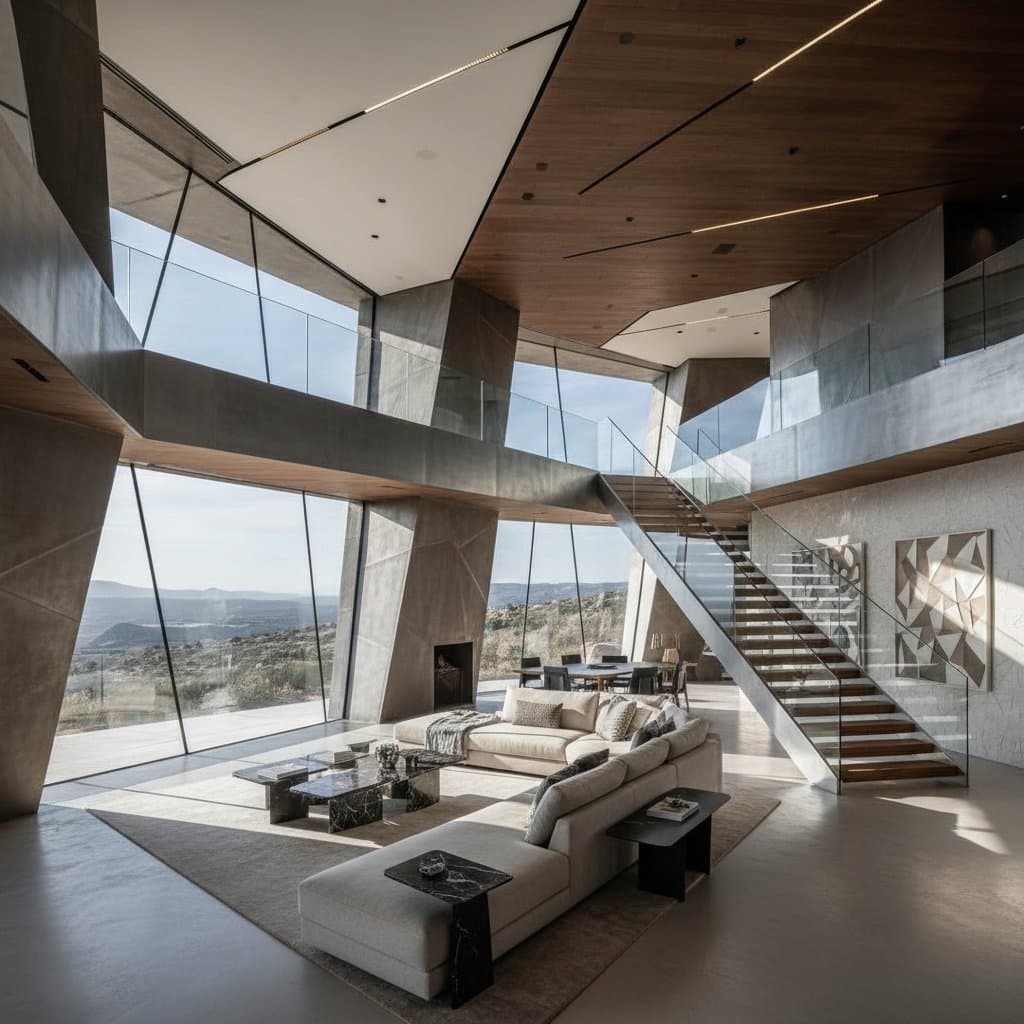
The Emergence of Asymmetrical Designs in 2026 Luxury Architecture
Contemporary luxury homes often challenge traditional notions of balance. A roofline may slope at an unexpected angle, a expansive glass facade might project over a landscaped terrace, and the main entrance could shift slightly from center. These elements combine to produce a deliberate, captivating presence. Asymmetrical homes represent a pivotal shift in high-end design, appealing to clients who prioritize uniqueness over uniformity.
Historically, luxury builds emphasized symmetrical proportions rooted in classical ideals. Current affluent buyers, however, gravitate toward asymmetrical approaches for their innovative edge and personal resonance. Influences from deconstructivist and avant-garde movements encourage architects to innovate with structure, yielding residences that resemble dynamic sculptures rather than standardized templates.
This evolution stems from broader cultural preferences. Luxury now equates to authentic self-expression and imaginative spatial solutions, moving beyond mere opulence.
Key Attractions of Asymmetry for Affluent Homeowners
Prospective luxury owners desire properties that distinguish themselves in exclusive neighborhoods. They seek structures that mirror their refined preferences and lifestyle. Asymmetrical architecture excels here by enabling customized configurations and silhouettes.
Several factors contribute to the popularity of this style in premium developments:
-
Compelling Exterior Presence
Asymmetrical facades capture attention instantly. Angled eaves, staggered fenestration, and layered finishes generate enduring visual intrigue, blending contemporary flair with enduring sophistication. -
Adaptable Internal Configurations
Free from symmetrical mandates, designers optimize interiors around sunlight patterns, terrain contours, or daily routines. This approach yields fluid, efficient areas that enhance usability without compromise. -
Harmonious Site Adaptation
These designs conform to the property's natural features. Structures might contour around mature foliage, undulating grades, or panoramic vistas, promoting seamless environmental dialogue over imposed geometry. -
Expressive Architectural Persona
Owners view their homes as extensions of identity. Asymmetry conveys ingenuity and progressive mindset, resonating with the ethos of contemporary high-end habitation.
Constructing an Asymmetrical Residence: A Phased Guide
Asymmetrical projects demand coordinated efforts from architects, structural specialists, and contractors adept in balancing form and function. The outcome hinges on meticulous planning to achieve stability alongside visual impact.
Phase 1: Site Analysis and Preliminary Planning
Initial efforts focus on thorough site evaluation. Topographical surveys, solar orientation assessments, and sightline analyses inform the overall form. Such responsiveness ensures the design maximizes daylight ingress, seclusion, or scenic integration through non-linear footprints.
Phase 2: Conceptualization and Iteration
Architects then refine the vision through iterative sketches and digital renders. Departing from bilateral symmetry, they develop organic massing options. Clients typically evaluate multiple prototypes, selecting one that aligns functionality with artistic intent, such as incorporating a cantilevered lounge overlooking a valley.
Phase 3: Technical Engineering and Framework
Engineering scrutiny is paramount for load-bearing integrity. Off-kilter configurations impose atypical stresses on bases and supports. Solutions often include high-strength steel girders, fortified concrete slabs, or advanced timber assemblies to accommodate overhanging volumes or uneven spans.
Phase 4: Choosing and Integrating Materials
Contrasting elements define the aesthetic narrative. Selections range from sleek metal panels juxtaposed with warm stone cladding to ensure durability and cohesion. Builders collaborate to perfect joints, guaranteeing weather resistance while preserving clean lines, which influences both budget and schedule.
Phase 5: Execution and Fine-Tuning
Construction demands exacting craftsmanship. Precise angular calibrations guide the assembly of bespoke components like curved glazing, custom rafters, or sculpted exteriors. Timelines extend beyond standard builds, often by 20 to 30 percent, to accommodate these intricacies.
Ensuring Compliance, Safety, and Durability
Non-conventional shapes introduce engineering hurdles, yet rigorous protocols safeguard habitability and regulatory adherence.
-
Expert Structural Evaluation: Engage a certified engineer to map force distributions, particularly in protruding sections or multifaceted roofing. This step prevents vulnerabilities and confirms resilience.
-
Regulatory Approvals: Local authorities process asymmetrical submissions similarly to bespoke builds, though reviews prolong due to unconventional schematics. Prepare detailed drawings and simulations to expedite.
-
Regional Hazard Considerations: In seismic or gale-prone areas, incorporate enhanced bracing or flexible joints. Early consultations with specialists mitigate redesign expenses and enhance long-term security.
For modest asymmetrical features, like a tilted extension or displaced gable, professional input remains essential. Minor alterations can still influence equilibrium and stress pathways.
Harmonizing Innovation with Practical Comfort
Avant-garde exteriors must support seamless interiors. Effective asymmetrical designs prioritize ergonomic flow within their bold outlines.
-
Navigation and Connectivity: Pathways adapt to irregular geometries, maintaining intuitive progression through wide corridors or curved thresholds.
-
Interior Furnishings: Tailored pieces, such as modular shelving for sloped walls or pivoting cabinetry in niches, optimize space utilization.
-
Illumination Strategies: Multi-tiered fixtures highlight architectural contours while illuminating recesses, fostering warmth and versatility.
-
Upkeep Protocols: Elaborate surfaces warrant periodic checks on weatherproofing, caulking, and runoff systems to preserve integrity.
Ultimately, superior asymmetrical homes fuse aesthetic daring with everyday ease, delighting the eye without impeding routine.
Advancing Your Asymmetrical Project
To pursue this architectural path, identify architects proficient in experimental forms, scrutinizing portfolios for deconstructivist precedents. Schedule site visits to assess real-world execution and client satisfaction. Partner with contractors skilled in intricate assemblies and interpretive blueprints.
Assess financial readiness and appetite for iterative refinement beforehand. This discipline thrives on collaboration and foresight. The result manifests as a bespoke sanctuary embodying personal vision and exemplary artistry.
As luxury paradigms evolve, asymmetrical homes pioneer this transformation through inventive silhouettes, tactile diversity, and contextual sensitivity. For those investing in distinction, they transcend shelter to become profound statements of contemporary refinement.