
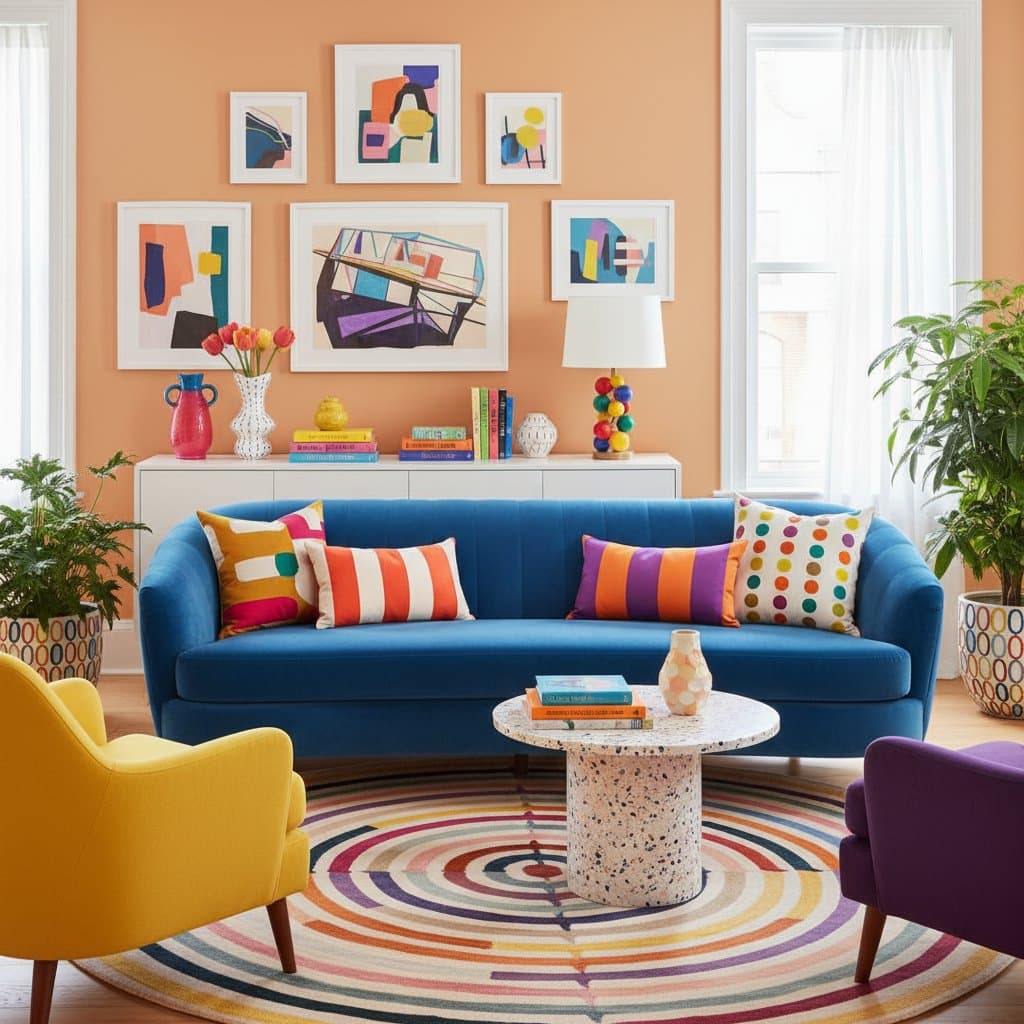
Understanding Dopamine Decor and Its Shift from Minimalism
Home interiors increasingly feature vivid hues and dynamic patterns. Design publications and social media platforms highlight transitions from subdued neutrals to lively accents. This evolution signals the decline of minimalist aesthetics in favor of dopamine decor, a style that prioritizes emotional vibrancy.
Minimalism emphasized streamlined forms, sparse furnishings, and soft palettes to promote tranquility. Such approaches suited periods of uncertainty, offering visual respite. However, prolonged exposure to these restrained environments has prompted many to seek greater vitality and personal resonance in their living spaces.
Dopamine decor counters this by focusing on sensory delight and psychological well-being. Designers draw from neuroscience, where dopamine represents reward and pleasure. The result manifests as interiors that stimulate positive responses through intentional, uplifting choices.
Defining Dopamine Decor
Dopamine decor revolves around enhancing emotional states via environmental design. It leverages color psychology, associating specific shades with distinct moods: for instance, sunny yellow evokes optimism, while serene teal promotes relaxation. This approach treats decoration as a tool for cultivating happiness.
In contrast to minimalism's emphasis on subtraction, dopamine decor promotes abundance in curated forms. Homeowners layer complementary textures, such as velvet cushions atop woven rugs, and incorporate items that evoke personal joy. Consider a sunflower-yellow armchair paired with emerald-green shelves; these selections prioritize sentiment over symmetry.
The essence lies in authenticity rather than flawlessness. Each element, from a hand-painted ceramic to a boldly striped curtain, contributes to an atmosphere of delight. This method transforms ordinary rooms into sanctuaries that mirror the occupant's inner world.
Reasons for Abandoning Minimalist Interiors
Minimalism excelled in fostering clarity and reducing visual noise, yet it often resulted in spaces that felt detached. Bare walls and uniform tones, while orderly, lacked the warmth essential for daily comfort. Residents increasingly desired environments that conveyed narrative and affection.
Dopamine decor restores uniqueness by embracing eclectic combinations. It permits pairings like a cobalt-blue vase beside a rustic oak table, defying conventional harmony. Such freedom allows spaces to evolve as extensions of personal stories, rather than adhering to impersonal ideals.
The Psychological Transition
Vibrant surroundings influence well-being profoundly. Psychologists note that exposure to warm tones, such as peach or amber, elevates alertness and sociability. Cooler variants, like mint green, soothe anxiety during reflective moments. Thoughtful application of these colors supports equilibrium, particularly in hybrid work-from-home setups where motivation wanes.
Studies in environmental psychology affirm that personalized, colorful settings boost creativity and productivity. Individuals report heightened satisfaction when their homes align with emotional needs, marking a departure from minimalism's austerity toward inclusive expressiveness.
Incorporating Dopamine Decor Gradually
Transitioning from neutrals requires measured steps to avoid discomfort. Begin with subtle integrations that build confidence over time. The following strategies provide accessible entry points.
-
Incorporate accents via textiles. Select vivid pillows in citrus tones or a geometric throw in sapphire blue. These portable items alter ambiance swiftly without permanent commitment.
-
Introduce a focal wall. Opt for a matte finish in lavender or terracotta on one surface. This technique draws attention while preserving overall cohesion.
-
Blend motifs with restraint. Pair polka dots in coral with subtle stripes in the same palette. Limiting to two or three hues maintains visual unity amid variety.
-
Curate sentimental displays. Position cherished mementos, such as framed postcards from journeys or handmade pottery. These additions infuse narrative depth beyond mere aesthetics.
-
Enhance with illumination. Employ dimmable fixtures in brass to soften bold shades. String lights in warm white amplify coziness, tempering intensity.
Benefits and Drawbacks
Advantages:
- Generates uplifting, dynamic atmospheres that invigorate occupants.
- Fosters innovation through flexible, evolving arrangements.
- Adapts readily to shifting preferences with modular updates.
Disadvantages:
- Risks appearing disordered without deliberate curation.
- Intense shades may dominate compact areas, reducing perceived space.
- Demands periodic refreshes to align with emerging styles.
Budget-conscious implementations favor affordable modifications. Repurpose existing pieces with fabric dyes or adhesive tiles, achieving impact for minimal investment. Comprehensive overhauls might exceed five hundred dollars, whereas targeted tweaks often stay below one hundred.
Key Factors in Implementation
Assess functionality prior to changes. Playful motifs suit communal areas like lounges but may hinder focus in studies. Evaluate natural light: ample windows accommodate deeper tones, while dimmer rooms benefit from reflective surfaces.
Renters should prioritize non-invasive solutions, such as command hooks for art or fabric panels for walls. Homeowners gain latitude for structural elements, including cabinetry in playful pastels. Always anchor vibrancy with neutrals, like a linen armchair, to prevent overload.
Scale matters in execution. In larger volumes, distribute colors evenly; in smaller ones, concentrate on vertical elements like shelves to expand illusion. Test samples under various lighting to confirm enduring appeal.
Building Your Dopamine-Inspired Space
Retain foundational neutrals as a base, layering joyful accents atop them. This hybrid preserves familiarity while introducing excitement. Experiment incrementally to refine the balance.
Target high-traffic zones first, such as entryways or dining areas. Introduce a single vibrant rug or artwork, observe its influence for several days, then iterate. This iterative process ensures alignment with lifestyle rhythms.
Ultimately, interior design serves as a canvas for personal vitality. Dopamine decor empowers creation of environments that nurture joy, blending color's power with individual essence for lasting fulfillment.