
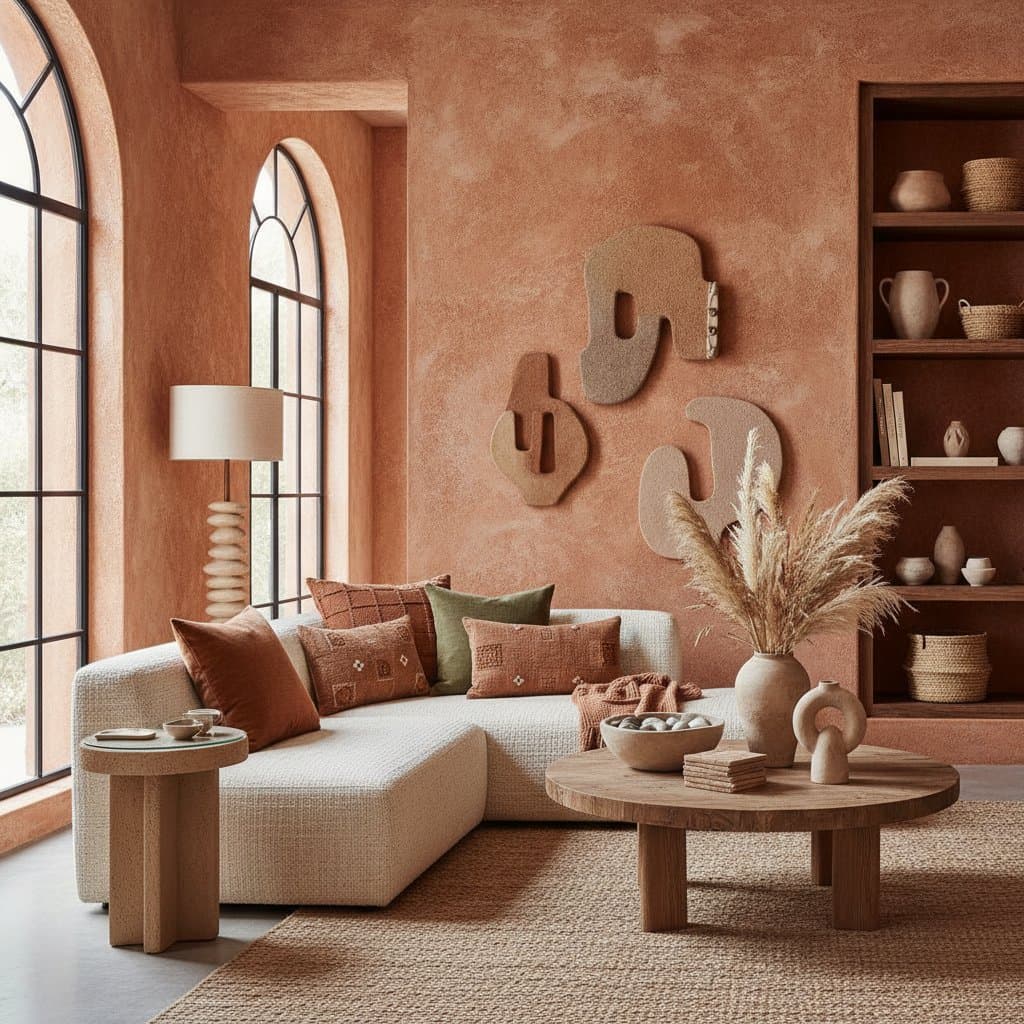
Earthy Maximalism with Terracotta Clay Interiors
You walk into your home after a long day and feel the atmosphere immediately. The space either welcomes you or it does not. Many living rooms feel sterile or overly controlled. Earthy maximalism with terracotta clay interiors offers warmth, texture, and personality without descending into visual excess.
This approach combines the grounding presence of natural earth materials with the collected energy of maximalism. It emphasizes depth through color, form, and texture rather than accumulation. The sections below explain how to apply the style, estimate costs, address safety considerations, and determine when professional help adds value.
Central Role of Terracotta Clay
Terracotta translates as baked earth. This material anchors spaces visually and texturally because it originates from the ground. In earthy maximalist rooms it serves as both foundation and focal point.
Placement Options for Terracotta
- Flooring. Traditional terracotta tiles deliver warmth underfoot. Installed costs range from 8 to 15 dollars per square foot based on finish and pattern.
- Walls. Clay plaster or limewash in terracotta tones softens light and introduces subtle texture. Professional application typically costs 4 to 7 dollars per square foot.
- Decor. Handmade vases, pottery, and wall planters add variation. Individual pieces range from 20 to 150 dollars according to size and craftsmanship.
- Fireplaces. Terracotta brick or handmade tiles create a focal point and improve heat retention.
Terracotta pairs well with oak or walnut, brass or copper, and linen or jute. The combination reads rustic yet refined.
Budget Planning by Approach
Earthy maximalist interiors adapt to different budgets. Material quality, project scale, and professional involvement determine final costs.
DIY Range
- Clay wash or paint for walls requires 150 to 400 dollars in materials.
- Terracotta decor pieces total 200 to 600 dollars for a balanced collection.
- Textiles and rugs fall between 300 and 800 dollars depending on size and fiber.
- Lighting and accessories cost 250 to 500 dollars for warm-toned fixtures.
A single-room DIY refresh therefore falls between 900 and 2300 dollars.
Professional Range
- Clay or lime plaster walls cost 4 to 7 dollars per square foot.
- Terracotta tile flooring costs 8 to 15 dollars per square foot installed.
- Custom built-ins range from 2000 to 5000 dollars.
- Lighting design and fixtures range from 1000 to 3000 dollars.
A medium living space under professional direction typically totals 8000 to 20000 dollars. Regional labor rates and shipping for heavy materials affect these figures.
Climate Considerations
Terracotta performs differently across climates. Dry regions allow unsealed surfaces that develop a natural matte patina. Humid regions require a breathable sealer to prevent mold and efflorescence. Reapplication every few years maintains protection.
Clay plasters absorb and release moisture, which helps stabilize indoor humidity. This property adds practical comfort alongside visual appeal.
Care and Durability
Proper maintenance allows terracotta and clay finishes to last decades. Sweep floors regularly and mop with pH-neutral cleaner. Reapply sealant when surfaces appear dull. Dust clay plaster walls and avoid harsh chemicals. Wipe unglazed pottery gently with a slightly damp cloth.
Small repairs blend readily because clay finishes age with character. Cracked tiles or chipped plaster can be touched up without visible seams.
Sourcing and Sustainability
Clay and terracotta rank among the most sustainable interior materials. They are natural, recyclable, and low in emissions. Local artisans often produce handmade tiles from regional clay, which reduces transport impact and supports nearby makers.
Low-fire clay offers warmer color variation yet remains more porous. High-fire clay provides greater density for high-traffic floors.
Practical Steps for Execution
- Sketch the space or assemble a mood board before purchasing. Establish main terracotta surfaces first, then layer complementary materials.
- Maintain a tight color family while varying finishes. Matte, glossy, rough, and smooth surfaces interact with light to sustain visual interest.
- Layer lighting with warm bulbs because terracotta absorbs light and can otherwise feel heavy.
- Choose natural fabrics such as cotton, linen, wool, and jute to offset the density of clay.
- Leave select walls or shelves partially open so texture and form remain prominent.
- Engage professionals for plaster application. Proper mixing and technique prevent cracking and reduce future repairs.
Ongoing Enjoyment of the Space
Completed rooms evolve with seasons and light. Terracotta tiles deepen over time. Clay walls shift subtly with humidity. These changes form part of the material character.
Adjust textiles seasonally rather than overhauling the room. Rotate accessories to refresh the arrangement while preserving its core identity. Consistent gentle cleaning and timely resealing keep surfaces in good condition.
The result is a grounded, expressive environment built from honest materials that endure. Whether the project begins with one accent wall or a full renovation, the space feels warm, tactile, and distinctly personal.