
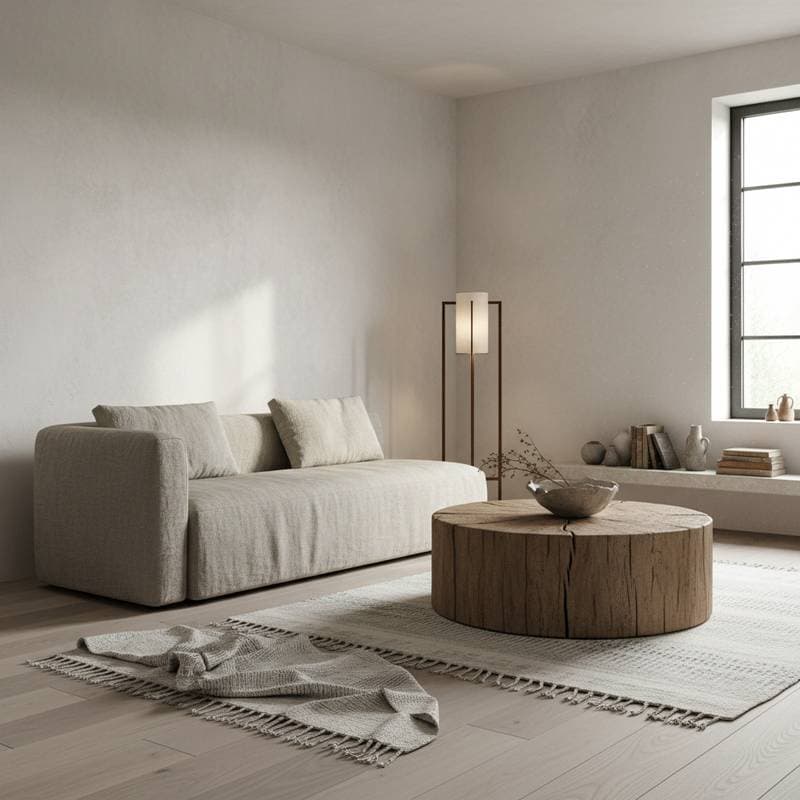
Imperfect Beauty: Wabi-Sabi Interiors Set to Trend in 2026
Consider the subtle imperfections in your living space: a faint scratch on a wooden shelf, the soft fade of sunlight on a curtain, or the natural warp in an aged floorboard. These elements often prompt thoughts of repair or replacement. Yet, they hold the essence of Wabi-Sabi, a Japanese philosophy that reveals profound beauty in the transient and incomplete. This approach gains momentum as a defining interior trend for 2026, inviting homeowners to cultivate spaces rich in character and calm.
Why Wabi-Sabi Resonates in Contemporary Living
Homeowners increasingly seek refuge from the uniformity of curated, magazine-ready environments. Wabi-Sabi provides that contrast by prioritizing organic textures, earthy hues, and artisanal pieces. Rather than concealing wear, it integrates such details to evoke narratives of daily use and passage of time.
A subtle fissure in a stoneware bowl or the gentle distressing of a plaster wall becomes a testament to lived experience. This philosophy aligns with broader aspirations for mindful, genuine surroundings. Implementation requires no major renovation; focus on subtle shifts that enhance existing features while fostering a sense of ease.
Core Principles of Wabi-Sabi Design
Understanding the foundational concepts equips you to integrate Wabi-Sabi effectively.
-
Simplicity as Intentional Restraint
Spaces remain free of excess, yet retain warmth through purposeful selections. Each object contributes meaning, whether through utility or sentiment. -
Natural Materials for Timeless Appeal
Select elements like reclaimed timber, terracotta, or undyed fabrics. These develop appealing patinas over time, enhancing depth without artificial intervention. -
Impermanence as Aesthetic Value
Visible signs of aging, such as softened edges or irregular surfaces, signify vitality. They underscore the beauty inherent in evolution and use. -
Harmony Through Tranquility
Designs promote equilibrium via diffused lighting, open circulation, and negative space. This creates an atmosphere of quiet reflection and stability.
Practical Steps to Incorporate Wabi-Sabi
Transitioning to this style begins with accessible adjustments, emphasizing mindset over expenditure.
-
Curate with Discernment
Assess your possessions and retain only those that evoke serenity or hold personal significance. For instance, a solitary ceramic vessel on a shelf outshines a crowded display, drawing attention to its unique form. -
Incorporate Organic Textures
Swap synthetic surfaces for tactile alternatives, such as a seagrass mat underfoot or wool throws draped casually. These choices ground the room in sensory authenticity. -
Adopt an Earthy Palette
Layer neutrals drawn from the landscape: warm beiges, soft grays, and hints of sage. Apply them to walls, upholstery, and accents for a cohesive, soothing effect. -
Celebrate Visible Marks
Preserve or accentuate natural wear; for example, mend a fractured dish with kintsugi, using metallic resin to highlight the break as an enhancement. -
Integrate Natural Elements
Introduce foraged items like driftwood arrangements or potted ferns. Position them to frame views of the outdoors, blurring boundaries between interior and nature.
Advantages and Potential Drawbacks
Wabi-Sabi offers distinct benefits alongside considerations for balanced execution.
Advantages:
- Fosters a meditative environment that supports mental well-being.
- Promotes sustainability by repurposing items and minimizing new purchases.
- Adapts seamlessly to diverse architectures and scales.
- Allows customization through thrifted or crafted additions.
Drawbacks:
- Risks appearing disorderly without careful curation.
- Demands discipline to prevent accumulation of unrelated pieces.
- Neutral tones may feel monotonous in low-light settings.
Maintain intentionality to sidestep these pitfalls. The aim centers on evoking quiet assurance, not disrepair.
Key Factors for Implementation
Budgeting: This style suits modest allocations. Rearrange furnishings, apply natural oils to revive wood, or source affordable vintage linens from local markets.
Timeline: Initiate changes in a single afternoon by sorting items, then refine gradually. The iterative process itself cultivates patience.
Involvement: Challenge lies in releasing rigid standards of symmetry. Embracing variability simplifies subsequent decisions.
Upkeep: Attend to materials periodically; buff wooden surfaces annually and air out fabrics. Resulting changes in appearance enrich the aesthetic.
Expert Input: Independent adoption suffices for most, though consulting a artisan for bespoke elements like hand-applied limewash ensures authenticity.
Embracing the Lived-In Essence
As you attune to these nuances, your surroundings gain intimacy. An asymmetrically glazed plate or a beam with exposed knots conveys soulful presence over uniformity.
This philosophy invites deceleration, freeing you from relentless upkeep. The softened fabric of a favored cushion or the patina on a door handle signifies cherished moments.
Steps to Initiate Your Transformation
Select a focal area, such as an entryway, and apply these principles: streamline surfaces, introduce raw textures, and observe evolving comfort.
Refinements occur organically, adapting to your rhythm. Ultimately, your home emerges as a sanctuary of subtle depth, where each imperfection affirms a narrative of fulfillment.