
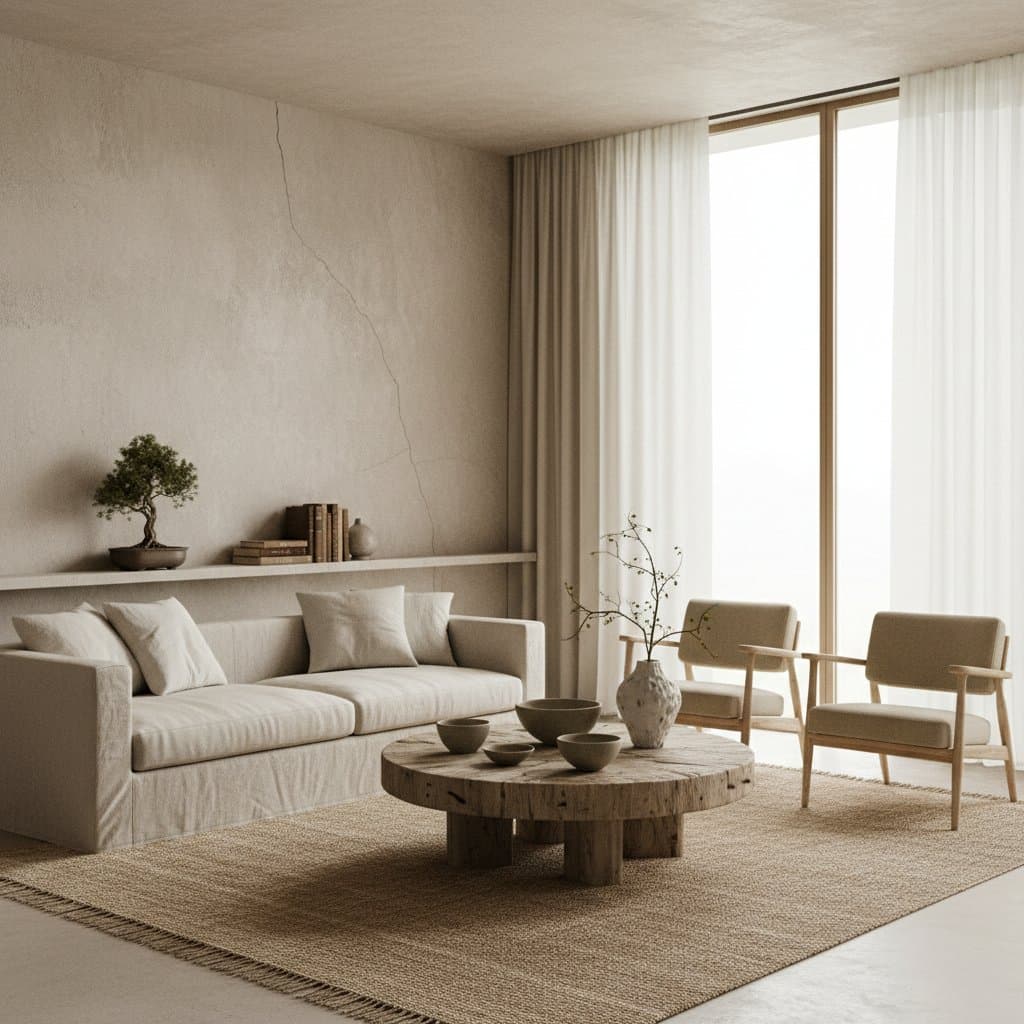
Embrace Wabi-Sabi: Imperfect Interiors for Timeless Living
Picture entering your living room where everything appears polished and coordinated, yet the space lacks warmth. It feels sterile rather than inviting. If you yearn for authenticity and a sense of lived experience, consider adopting Wabi-Sabi, the Japanese design philosophy that honors imperfection, impermanence, and the subtle beauty of everyday wear.
Envision a home where an uneven ceramic mug holds value for its handmade quality, or a weathered wooden beam reveals stories of time and use. Wabi-Sabi encourages appreciation for the poetry in flaws, comfort in simplicity, and interiors that pulse with natural rhythm instead of strict symmetry.
Understanding Wabi-Sabi in Contemporary Spaces
Wabi-Sabi does not promote neglect or deterioration; it reveres genuine expression. Beauty emerges from the raw and unrefined. Consider a linen sofa bearing gentle wrinkles, a clay vase marked by its creator's hand, or the subtle patina on a brass fixture. These elements serve as traces of life's passage, not defects.
In an era where homeowners pursue flawless finishes, Wabi-Sabi offers a counterpoint. It prompts deliberate curation, prioritizing atmosphere over exactness. This approach grounds a home in personal significance, fostering a sense of connection.
Core Principles of Wabi-Sabi Design
-
Simplicity
Select items with personal resonance and eliminate excess. A solitary handmade bowl on a wooden surface often captivates more than a cluttered display. -
Natural Materials
Prioritize wood, stone, linen, and clay. These substances develop character through aging, their inherent textures linking interiors to the natural world and encouraging sensory engagement. -
Muted Colors
Opt for subdued, earthy shades like sand, clay, moss, and charcoal. Such palettes evoke landscape serenity and endure across seasons. -
Imperfection
Seek asymmetry and organic variations. A vase with a minor chip or a plate featuring irregular glazing imparts depth that mass-produced items lack. -
Transience
Recognize that novelty fades. Wabi-Sabi views aging—through scratches, softening hues, or evolving patina—as an enhancement of authenticity.
Incorporating Wabi-Sabi into Your Home
Simplify Your Surroundings
Assess existing possessions and declutter surfaces to retain only cherished items. View this process as opening space for elements that inspire calm, not as stark reduction. As clutter recedes, your home's inherent personality surfaces.
Select Authentic Materials
Choose substances that convey vitality. An oak table of solid construction, a rug woven by hand, or linen drapes that diffuse sunlight embody Wabi-Sabi essence. Source from artisans employing time-honored techniques; their creations often include nuanced variations that ensure uniqueness.
Introduce Texture and Variation
Combine smooth and coarse elements for visual and tactile richness. Pair rough plaster walls with polished concrete floors, or place woven baskets alongside refined ceramics. This interplay prevents monotony and elevates coordinated harmony.
Integrate Natural Elements
Draw inspiration from the environment. Arrange a foraged branch in a plain vase, display a beach-gathered stone, or position plants in ambient light. Nature's inherent irregularity infuses genuine energy unmatched by artificial decor.
Refine Your Lighting
Avoid stark overhead illumination, which diminishes nuanced details. Employ warm, diffused sources such as paper lanterns, candles, or lamps with low wattage. These create a gentle radiance that accentuates material textures.
Harmonizing Imperfection with Practicality
Wabi-Sabi spaces must accommodate daily routines. An attractive cracked bowl should securely contain fruit. Balance visual appeal with reliability by selecting durable options that gain character without compromising utility.
In kitchens or bathrooms, opt for finishes like sealed concrete surfaces that patina attractively yet withstand demands. For communal areas, invest in sturdy furniture designed for longevity. Such pieces acquire subtle marks over time, enhancing narrative without structural failure.
The Emotional Resonance of Wabi-Sabi
Releasing the pursuit of flawlessness yields profound tranquility. Wabi-Sabi affirms that homes, much like individuals, transform gradually. A teacup's notched rim or a cushion's faded spot weaves into the residence's history, cultivating appreciation for the present.
Contemplate sipping tea on a porch as sunlight dances over aged wood. This unadorned interlude evokes profound humanity. Such moments capture Wabi-Sabi's core.
Blending Wabi-Sabi with Modern Minimalism
Minimalism emphasizes decluttering, whereas Wabi-Sabi cherishes organic flaws. Their fusion yields tranquil yet inviting environments. Maintain sleek profiles and open areas, but incorporate natural inconsistencies for warmth.
In urban settings, apply tactile surfaces and bespoke accents. A concrete wall tempered by woven fabrics, or a streamlined table accompanied by eclectic vintage seating, conveys personality within restrained boundaries. This method suits city dwellings and rural retreats alike.
Key Practical Aspects
-
Budget Management
Wabi-Sabi flourishes through moderation, often at lower cost. Repurpose existing items, explore secondhand markets, or acquire artisan works instead of high-end novelties. -
Ongoing Care
Natural elements demand attention. Apply oil periodically to wood, launder linen to enhance softness, and allow metal to form patina. Regard these evolutions as narrative additions. -
Safety Measures
When using reclaimed or aged components, verify structural integrity. Reinforce vintage furniture or seal salvaged beams as needed. Prioritize secure installation. -
Regulatory Compliance
For alterations involving structure, wiring, or plumbing, engage qualified experts. Adhering to local standards safeguards your space and investment.
Collaborating with Design Professionals
Professional input often elevates Wabi-Sabi implementation. Designers versed in natural materials can blend rustic appeal with contemporary ease. Their knowledge of regional conditions ensures enduring performance.
Seek guidance from contractors experienced in sourcing reclaimed elements or applying traditional finishes like limewash. This partnership aligns vision with feasibility.
Nurturing Your Wabi-Sabi Space
Allow your completed interior time to mature. Materials adapt, colors deepen, and surfaces gain nuance. Resist immediate corrections to minor wear; permit organic progression that mirrors daily rhythms.
Incorporate simple practices to sustain vitality. Refresh arrangements with seasonal branches, rearrange displayed ceramics, or ventilate rooms to blend outdoor aromas with indoor textures. These actions preserve dynamism and highlight ephemeral beauty.
Steps to Realize Your Vision
Adopting Wabi-Sabi transcends aesthetics; it reshapes perspective. It urges mindfulness, recognition of beauty in flaws, and embrace of time's flow. Your home emerges as a true extension of self.
Prepare to craft an environment that balances earthiness with poise. Let wood's irregular grain, linen's gentle folds, and candle's muted light affirm that authenticity surpasses idealized perfection.