
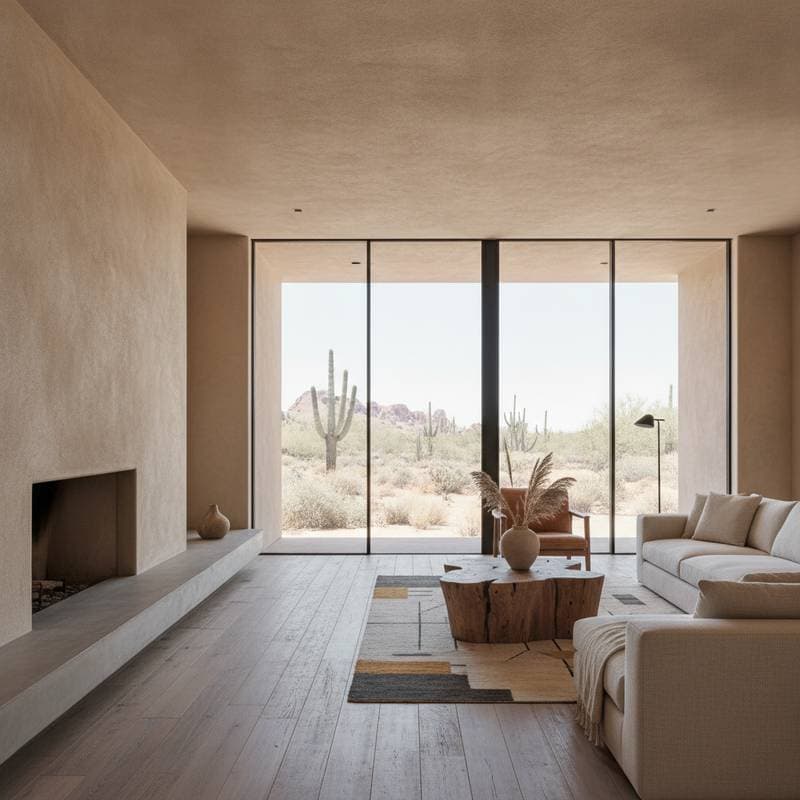
Wabi-Sabi Desert Homes: Earthy Minimalist Style
You may have stood in a desert landscape and noticed how the light shifts across sand and stone. The colors are muted. The air is still. Everything feels simple yet deeply grounded. That same feeling is what many homeowners want to bring indoors through the wabi-sabi approach to desert home design. It is a style that values imperfection, natural materials, and quiet restraint.
Finding Beauty in Imperfection
Wabi-sabi design celebrates what is raw and real. Cracked plaster, weathered wood, or slightly uneven stone are not flaws. They are reminders that materials age and change. In a desert setting this philosophy fits perfectly. The dry climate enhances natural textures. Muted earth tones blend easily with the surrounding landscape.
For homeowners the goal is not to create a showroom perfect house. It is to create a space that feels calm, balanced, and connected to the environment. A wall with hairline texture or a handmade ceramic sink adds personality. A small imperfection becomes a feature rather than a problem.
The Foundation of Desert Minimalism
Desert modernism often focuses on clean lines, open layouts, and a strong connection between indoors and outdoors. Wabi-sabi design softens that modern structure with organic materials and subtle imperfections. The result is a minimalist home that feels warm instead of cold.
Start with a neutral color palette. Shades of sand, clay, and stone form a grounding base. Add contrast through darker woods, aged metal, or rough textiles. Avoid glossy finishes. Matte surfaces reflect less light and feel more natural in the desert bright sun.
Building Materials That Age Gracefully
If you are planning a renovation or new build choose materials that improve with age. Clay plaster walls, reclaimed wood beams, and concrete floors all fit the wabi-sabi approach. They are durable, simple to maintain, and develop character over time.
Recommended materials include the following.
- Adobe or rammed earth offers excellent thermal properties that keep interiors cool.
- Reclaimed wood adds warmth and reduces waste.
- Concrete or limestone floors are easy to clean and naturally textured.
- Natural fabrics such as cotton, linen, and wool soften hard surfaces.
A typical wabi-sabi interior may cost between 125 and 250 dollars per square foot depending on finishes and craftsmanship. Custom plasterwork or handmade tiles can raise costs. They often deliver long term value through durability and timeless appearance.
Creating Comfortable Spaces
Minimal does not mean empty. The wabi-sabi desert home focuses on comfort and function without clutter. Every piece should have a purpose. Furniture with simple shapes and natural finishes works best. Choose a few statement items rather than filling every corner.
Follow these practical design steps.
- Keep walls simple. Finish them with lime wash or clay plaster.
- Use low, grounded furniture to echo the flat desert horizon.
- Layer textures instead of colors for visual depth.
- Add plants that thrive in low humidity such as succulents or desert palms.
- Allow space between objects so the room feels open and calm.
Lighting is also essential. Use soft, indirect light instead of harsh overhead fixtures. Wall sconces, concealed LED strips, or lantern style lamps create gentle illumination that highlights texture.
Practical Considerations
Before starting construction confirm that materials meet local codes. Rammed earth and adobe structures may need special engineering approval. In some regions sealed concrete floors or plaster walls require vapor barriers to prevent cracking.
Energy costs can be lower in a wabi-sabi desert home when you use passive cooling and natural ventilation. Expansive windows or sliding doors that open to shaded patios help regulate temperature. Maintenance is minimal since most finishes are natural and easy to repair.
Safety should always come first. Heavy beams, stone slabs, or earthen walls require skilled installation. Hire professionals for structural work or electrical wiring. Reserve DIY efforts for finishing touches like painting or furnishing.
Embracing Authentic Desert Living
A wabi-sabi desert home is not about perfection. It is about authenticity and comfort. When you choose materials that tell a story and allow time to leave its mark your home becomes part of the landscape rather than separate from it.
Focus on what feels honest and functional. Let the imperfections stay. Over time the patina on your floors or the uneven grain in your wood table will remind you that beauty often comes from use and age.