
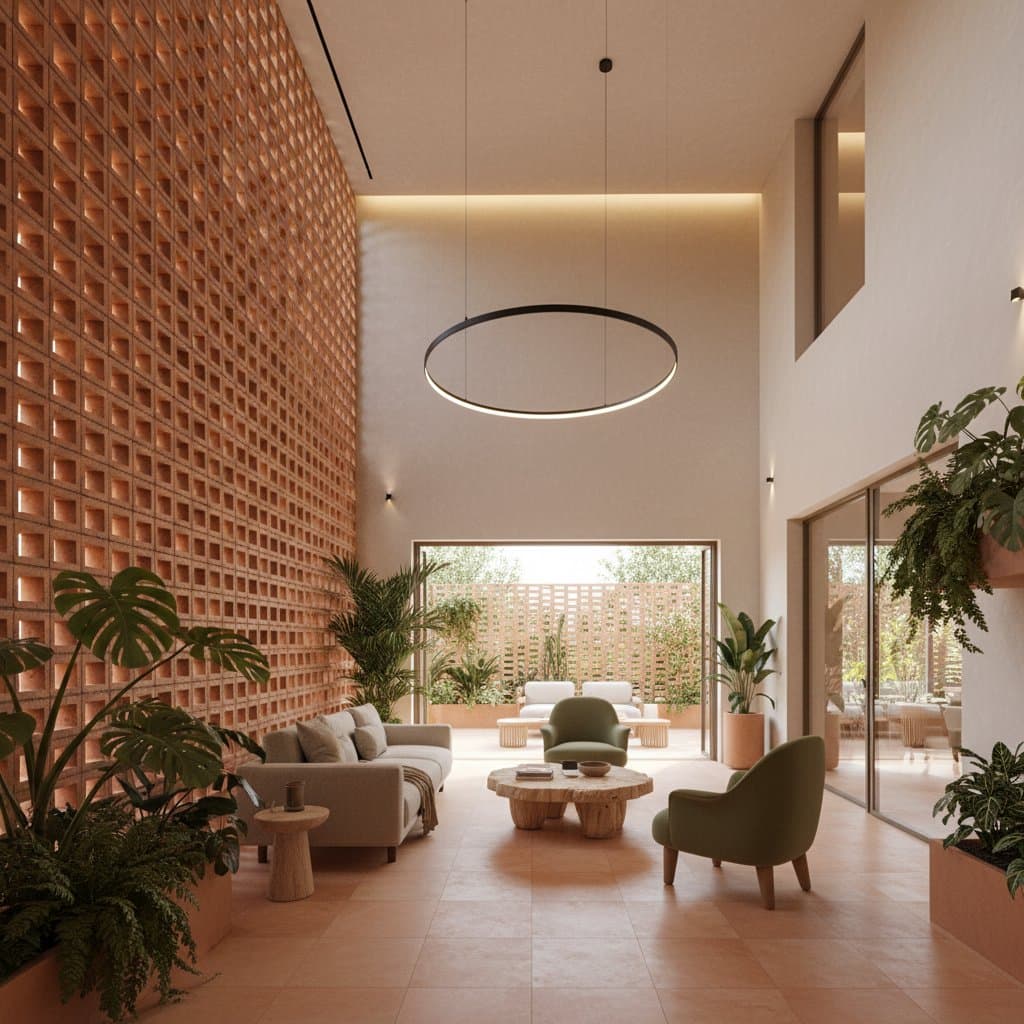
Terracotta's Rise: Earth Tones Redefining 2026 Design
Recent issues of design publications and upscale hospitality spaces highlight a notable shift. Terracotta, with its rich, baked-clay hue, reemerges in architecture and interiors. This material imparts warmth and tactile depth, creating environments that resonate as both enduring and contemporary. For those considering a refresh to living areas, terracotta alongside complementary earth tones provides a serene, adaptable aesthetic suitable for diverse environments.
Why Terracotta Is Back
Previous design eras favored cool grays, pristine whites, and glossy surfaces, which conveyed sophistication yet often lacked vitality. Homeowners and professionals now seek alternatives that evoke life, stability, and organic essence. Terracotta addresses this desire precisely, derived from ancient clay traditions while integrating seamlessly with diffused illumination, plush fabrics, and fluid forms.
The resurgence extends beyond mere pigmentation to foster genuine interaction. Individuals prefer substances that exhibit subtle irregularities and mature elegantly over time. A terracotta flooring installation or exterior panel achieves this, as each element displays distinct variations and develops patina that enhances rather than diminishes appeal.
The Appeal of Earth Tones in Modern Design
Earth tones integrate effortlessly into daily life. They harmonize with timber, rock, and alloy elements, establishing equilibrium in enclosed or open-air settings. Terracotta offers a spectrum from pale apricot to intense ochre, pale pink to deep mahogany, enabling adaptation to pastoral or sleek motifs.
Professionals frequently combine terracotta with these supporting palettes:
- Soft ivories or beiges to evoke lightness and ease
- Verdant olives or sages to introduce botanical vitality
- Deep charcoals or subdued blacks for contemporary sharpness
- Golden brasses or bronzes to provide layered dimension
Home updates can commence modestly with furnishings or advance to structural integrations. In each instance, terracotta conveys a distinctive coziness unmatched by alternatives.
Where Terracotta Works Best
Terracotta suits numerous contexts, though certain uses accentuate its inherent qualities most effectively. Consider these favored implementations:
-
Exterior Facades: Cladding in terracotta introduces organic grain to contemporary structures. It serves as a substitute or enhancement to masonry, delivering distinctive chromatic diversity that distinguishes the elevation.
-
Floors and Tiles: These resilient, low-upkeep options excel in culinary zones, outdoor terraces, and thresholds, providing enduring foot traffic resistance.
-
Accent Walls: Clay-rendered surfaces impart spatial volume without dominance. Position them adjacent to resting areas, corridors, or hearths for focal interest.
-
Roofing: Barrel or flat terracotta tiles endure harsh elements, promoting thermal moderation and imparting iconic visual allure.
-
Decor and Pottery: For minimal commitment, select vessels, luminaires, or containers to infuse equivalent cordiality into existing arrangements.
Step-by-Step: Incorporating Terracotta in Your Space
To integrate this element thoughtfully, proceed incrementally. Follow this structured method:
-
Start with Color Testing
Examine specimens under ambient conditions. Tones shift with illumination sources, so apply trial swatches to vertical or horizontal planes prior to final selection. -
Decide on Texture
Opt for polished subtlety or artisanal ruggedness aligned with ambient style. Unfinished, crafted variants enhance informal realms, whereas refined slabs complement streamlined environs. -
Balance with Neutrals
Offset terracotta via subdued backdrops or appointments. Such equilibrium maintains composure and averts visual weight. -
Add Greenery
Flora thrives in clay receptacles, and their union yields invigorating, healthful ambiance. -
Mix Old and New
Embrace asymmetry in pairings. Terracotta bridges antique artifacts and pristine contemporaries fluidly.
Pros and Cons to Keep in Mind
Every substance presents advantages alongside limitations, and terracotta proves no exception.
Pros:
- Inherent thermal regulation for stable interior climates
- Exceptional longevity with appropriate protection
- Enduring visual harmony adaptable to varied aesthetics
- Environmentally sound with minimal synthetic components
- Straightforward localized restoration capabilities
Cons:
- Absorbent nature requires protective coatings against discoloration or ingress
- Susceptible to fractures from impact
- Demands periodic care exceeding glazed alternatives
- Inherent tonal inconsistencies may not align with uniform preferences
Those who value its organic quirks find the benefits substantially eclipse potential issues.
Architectural Uses: Reinventing the Facade
Within building practices, terracotta evolves beyond heritage applications like sloped coverings or vernacular dwellings. Contemporary practitioners deploy it as a bold expressive tool. Modular panels form precise alignments, incorporating incisions or embossments that interact with diurnal light shifts, rendering exteriors animated rather than static.
Commercial endeavors benefit from its resilience against discoloration, reduced upkeep needs, and potential for tonal transitions. Paired with transparent enclosures or metallic frameworks, it yields progressive yet hospitable outcomes. Residential endeavors can mirror this on reduced scopes, such as perimeter barriers or alfresco culinary stations.
Interior Design with Clay and Warm Neutrals
Within domestic confines, terracotta anchors rooms with tangible presence. Clay splashes in preparation areas introduce dimension sans ostentation. In ablution spaces, subdued clay planes with metallic hardware evoke therapeutic retreats. Communal areas gain softness through select clay integrations amid sparse layouts.
Explore these applications:
- Substitute entry or utility flooring segments with clay modules.
- Apply a restrained clay wash to one vertical plane for understated hue infusion.
- Suspend clay-shaded fixtures to diffuse amber illumination.
- Pair clay holders with interlaced carriers for organic material synergy.
Terracotta aligns well with innate textiles like flaxen weaves, unprocessed fibers, and fleeced yarns. These parallels reinforce the elemental motif while preserving tidy warmth.
Practical Considerations: Cost, Time, and Maintenance
Relative to quarried stones, terracotta remains economical, though expenses vary by refinement and expanse. Expect mid-tier outlays per unit area for modular or surfacing products. Artisanal or sourced variants command premiums for enhanced depth and diversity.
Assembly mirrors vitrified installations in duration, augmented by initial and recurrent coatings. Post-placement sealing, refreshed biennially, mitigates hydration risks and sustains vibrancy. External deployments merit expert oversight to guarantee runoff and endurance.
Upkeep involves gentle aqueous solutions. Steer clear of corrosives or caustics that erode finishes. Isolated damages permit piecemeal substitutions over comprehensive overhauls.
Sustainable and Local Benefits
Among viable options, terracotta stands out for ecological merits. Sourced from regional earths and processed via intense heat, it minimizes transit footprints and bolsters proximate artisanship. Certain producers repurpose legacy clays, curtailing refuse.
Selection diminishes reliance on artificial veneers. Devoid of noxious treatments, it persists for generations with sparse intervention. This durability positions it as a judicious choice for aesthetic and planetary stewardship.
Bringing Terracotta into Your Home
Inspired by its inherent cordiality, initiate with targeted inclusions like threshold pavements or exterior vessels. Observe integration in situ before expansion. Terracotta fosters tranquility and linkage, fulfilling contemporary desires for authentic havens.
This material's prominence in current aesthetics signals permanence over ephemerality. Incorporating earth-derived elements crafts sanctuaries of poise and authenticity.