
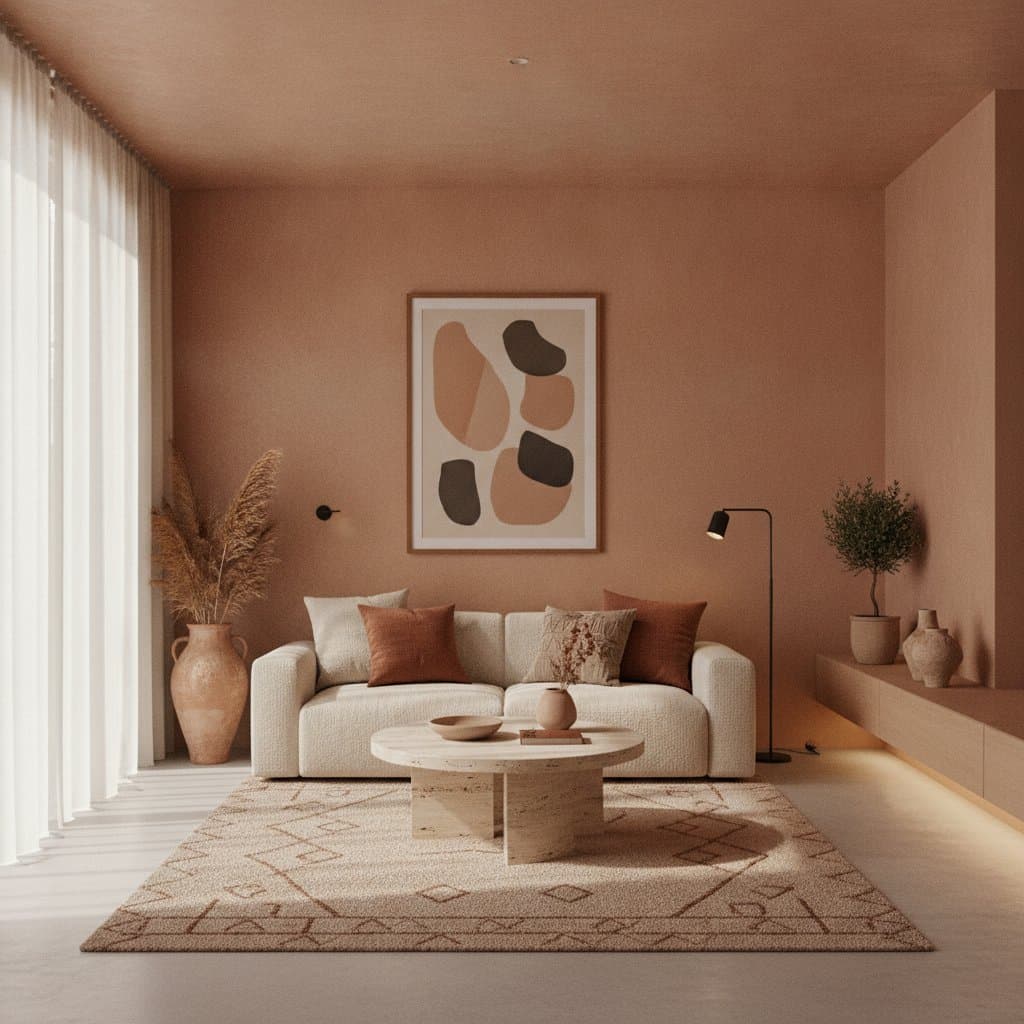
Embrace Warm Minimalism with Earthy Terracotta Interiors
A home that feels calm and grounded starts with thoughtful color choices. Stark white walls often leave rooms feeling cold and uninviting. Terracotta tones introduce warmth that softens modern lines while preserving an open, airy layout.
The Appeal of Terracotta Warmth
Terracotta sits between orange, red, and brown on the color spectrum. This range creates visual depth that feels rooted in natural landscapes. The hue softens sharp architectural edges without adding visual clutter.
Warm minimalism maintains clean surfaces and negative space. It replaces sterile finishes with materials that show texture and age gracefully. Plastered walls in clay hues, woven storage pieces, and hand-formed pottery bring this balance into daily living.
Why Warm Minimalism Works So Well
Pure minimalism delivers clarity but can lack emotional comfort. Terracotta restores that comfort through its connection to earth elements. Clean furniture lines paired with natural finishes create spaces that function as personal retreats.
The palette adapts to multiple rooms. Living areas gain conversational warmth from a single terracotta accent wall. Kitchens feel more welcoming with cabinetry finished in a muted clay tone. Bathrooms achieve a spa-like calm when earthy hues meet diffused lighting.
Building a Terracotta Palette
Decide first on the scale of color application. Terracotta works equally well as a dominant wall color or as small repeated accents. The following steps keep the approach minimal yet effective.
- Paint one feature wall in a matte terracotta shade to anchor the room without shrinking its perceived size.
- Introduce textiles such as linen cushions or jute rugs in rust and cinnamon shades that layer gradually.
- Choose furniture and accessories in wood, rattan, or raw linen to echo the same natural origin.
- Place a few ceramic vessels or clay planters on open shelves to reference the material directly.
- Hold larger surfaces in warm white or soft beige so the terracotta remains the focal point.
Lighting and Texture for Atmosphere
Natural daylight brings out terracotta's shifting undertones throughout the day. In lower-light rooms, select bulbs rated 2700K to 3000K to preserve the inviting quality. Texture contrast heightens the effect: smooth plaster next to woven fabric creates visual interest without added pattern.
A sealed terracotta tile floor provides a cool surface underfoot in summer. A clay lamp base diffuses light softly in the evening. These material choices keep the design grounded and cohesive.
Key Practical Factors
- Painting or adding accessories stays within modest budgets, while tile or cabinetry updates require larger investment.
- Raw terracotta is porous and needs a penetrating sealer; porcelain tiles that replicate its appearance reduce maintenance demands.
- In warm climates the material stays cool to the touch; in cooler regions combine it with wool throws or underfloor heating.
- Limit deep tones to one surface in small rooms to avoid a heavy appearance.
Styling the Space
Display only objects that carry personal meaning. A single sculptural vessel on a shelf draws the eye more effectively than multiple small items. Select seating and tables with simple silhouettes yet natural wood finishes.
Introduce living plants such as olive trees or dried grasses to extend the palette outdoors. Keep all surfaces matte to reinforce the organic character of the scheme.
Adapting to Your Environment
Coastal homes benefit from softer peach terracotta that reflects nearby sand tones. Urban apartments gain character from deeper rust shades set against concrete or brick. Humid regions achieve the same visual result with clay-look paint that requires less upkeep than unsealed tile.
Executing Your Design Vision
Professional guidance helps match finishes to lifestyle needs and ensures proper surface preparation. The result is a home that feels both timeless and distinctly personal.