
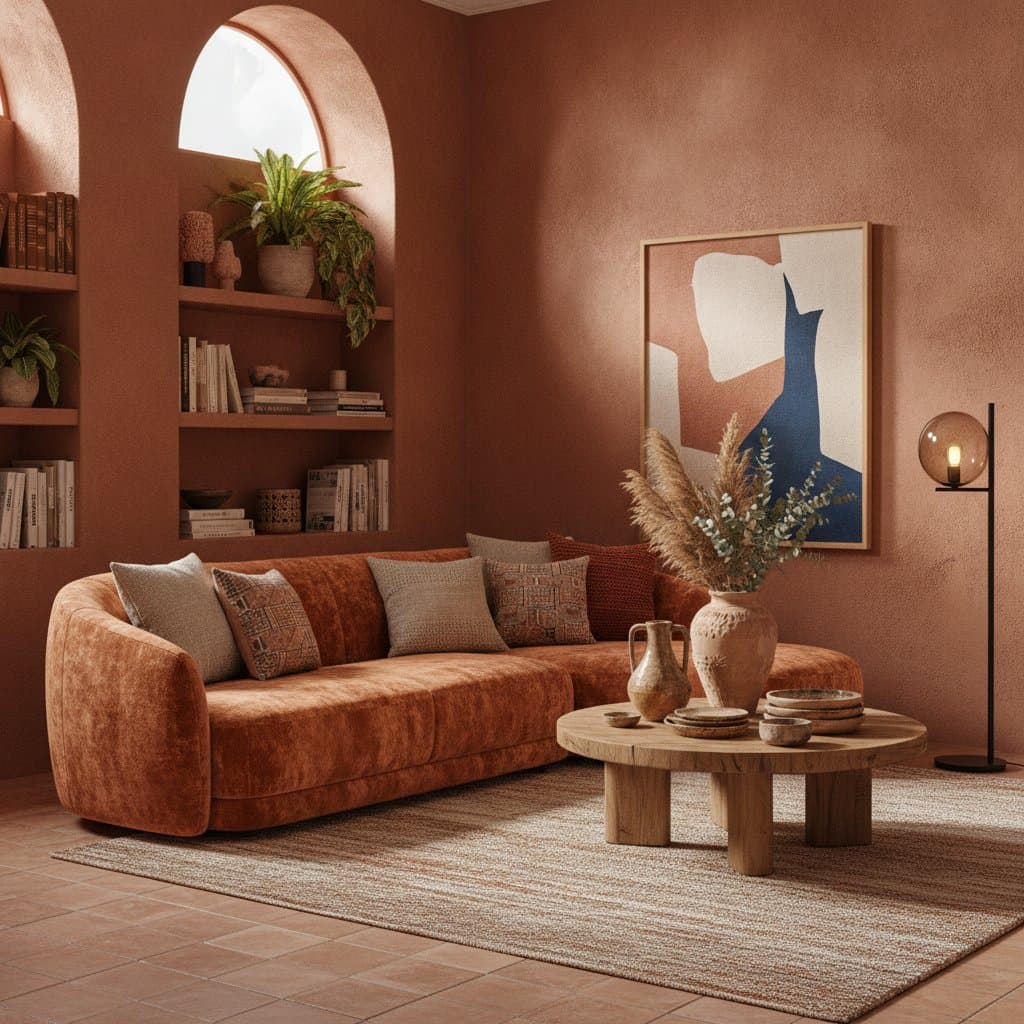
Earthy Maximalism: Terracotta Textures Shaping Interiors
You have been craving warmth, depth, and personality in your home. Minimalist spaces often feel too stark and quiet. Earthy maximalism offers a design language that creates grounded, soulful interiors. Terracotta serves as the central material because it highlights natural color, texture, and craftsmanship.
Picture a sunlit room with walls in soft clay hues, woven rugs across the floor, and handcrafted pottery on shelves. This combination produces a calm yet lively atmosphere. Terracotta textures now anchor many interiors that feel both collected and personal.
The Appeal of Earthy Maximalism
Earthy maximalism layers natural materials, organic shapes, and tactile finishes to build spaces that tell stories. It embraces abundance while maintaining balance through craftsmanship and varied textures. Terracotta supports this approach with its sun-baked tones that add warmth and its raw surface that grounds bolder patterns.
The material bridges rustic character with modern energy. It works equally well in spaces focused on global influences or simple rustic details.
Bringing Terracotta Into Your Home
Incorporate terracotta through walls, floors, accessories, and functional areas. Mix textures and tones until the room feels lived-in rather than staged. The following approaches provide concrete starting points.
Walls That Warm the Room
Apply limewash or clay-based paints in muted clay tones to create movement that shifts with daylight. These finishes suit living rooms, bedrooms, and bathrooms by producing a soft, enveloping effect.
Floors With Character
Choose handmade terracotta tiles with irregular edges for authenticity or large-format matte versions for a contemporary look. Layer them with woven rugs or natural sisal to add comfort and visual contrast.
Statement Pottery and Accessories
Position large terracotta planters, vases, and sculptural vessels as focal points. Their porous surfaces convey craftsmanship. Group pieces in varying shapes and tones on consoles or open shelves to form an organic visual rhythm.
Terracotta in the Kitchen
Line open shelving with clay-colored dishes or install a backsplash of handmade tiles. Add smaller items such as utensil holders or a rustic bread bowl to enhance everyday tasks.
Outdoor Inspiration Brought Indoors
Place textured planters with herbs, woven baskets, or clay candleholders throughout interior spaces. These elements create a natural flow between indoor and outdoor areas.
Balancing the Look
Pair terracotta with soft neutrals such as sand, oatmeal, or ivory. Introduce linen, jute, or reclaimed wood for additional texture. Aged brass or copper accents add depth. Deep teal or olive green provides color contrast that maintains a grounded feel.
Practical Considerations
Seal porous terracotta surfaces to reduce stain risk. Authentic tiles develop a patina over time yet may chip under heavy impact. Handmade tiles fall in the mid to high price range, while smaller accents offer lower-cost options. In humid climates, apply sealant and ensure ventilation to preserve material integrity. Consult a local design professional for sourcing and installation guidance.
Embracing Terracotta Daily
Terracotta textures alter the daily mood of a space. Mornings become calmer and evenings more settled. Organic materials and layered patterns encourage attention to details such as sunlight on a clay surface or the softness of a throw against leather.