
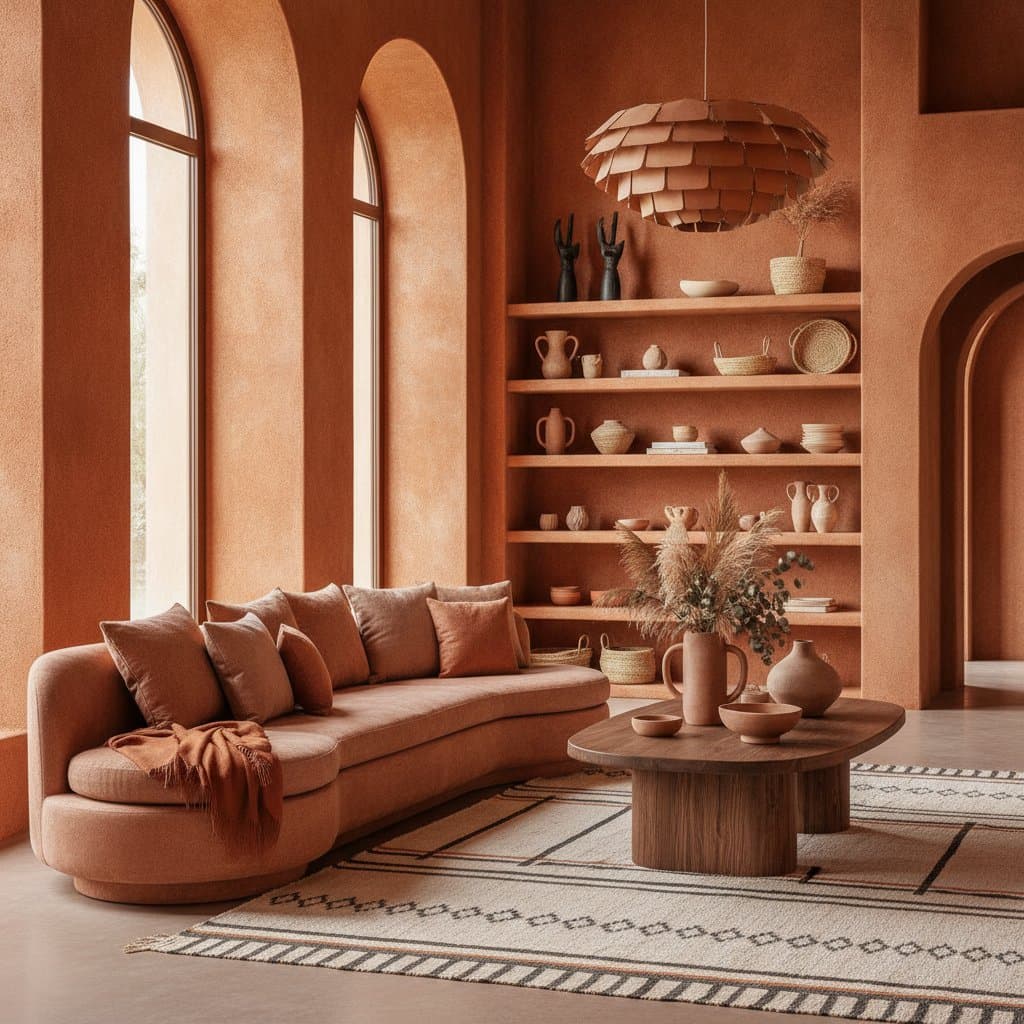
Terracotta Clay Interiors: The Earthy Maximalism Trend
Imagine stepping into a room where walls glow with quiet warmth and every surface carries the mark of natural materials. Terracotta clay interiors deliver this effect through sun-baked hues and handcrafted textures. The approach blends ancient building traditions with layered modern design.
Homeowners seeking personality often look for warmth and authenticity that feels intentional rather than staged. Terracotta meets this need by merging earthy tradition with the expressive layering of maximalism. The result feels both rooted and current.
The Appeal of Earthy Maximalism
Terracotta connects interiors to the ground through its tactile surface and subtle color shifts. Synthetic finishes lack the same depth. When combined with maximalist layering, clay elements produce rooms that read as personal and comfortable.
This version of maximalism favors richness over excess. The palette centers on russet, burnt orange, sienna, and muted coral. These tones build visual depth while remaining easy on the eye. Handcrafted details replace scattered patterns.
Origins of the Current Revival
Clay floors, tiles, and vessels have long defined architecture in Mediterranean regions, Latin America, and parts of Asia. Contemporary designers refresh these materials by pairing them with sleek metal fixtures and mid-century furnishings. The contrast prevents the look from feeling purely nostalgic.
Such pairings also align with demand for sustainable options that age gracefully.
Incorporating Terracotta Surfaces
Focus first on how walls, floors, and accents interact. Clay plaster creates a soft, light-responsive base. Pale shades enlarge smaller rooms, while deeper brick tones foster intimacy in larger spaces. Limewash paint offers a lower-cost alternative that mimics the same surface quality.
Terracotta tiles develop a natural patina underfoot. Seal them with matte wax to maintain breathability. Underfloor heating pairs well with the material in cooler climates. Pair these surfaces with raw linen, reclaimed wood, and woven jute for contrast.
Statement objects such as sculptural pendants or oversized pots can anchor the theme without covering every surface. Abstract art in ochre tones and organic ceramics reinforce the palette.
Budget, Upkeep, and Climate Factors
Clay plaster costs more initially due to labor, yet it endures with little maintenance. Apply it to a single feature wall when budgets are limited. Handmade tiles command higher prices than machine-made versions; both require periodic resealing.
Mild soap suffices for routine cleaning. Clay regulates humidity in varied climates, though rugs or heating systems help in colder regions. Check local permit rules before structural work near these finishes.
Compatible Design Approaches
The warm palette adapts to several aesthetics. Modern Mediterranean rooms combine terracotta floors with whitewashed walls and iron details. Bohemian settings layer clay tones with patterned textiles and rattan. Minimalist spaces use terracotta accents to soften clean lines. Industrial rooms balance clay against concrete and leather.
Lasting Value and Daily Experience
Terracotta and clay rank among the most sustainable interior materials because they require minimal processing and remain fully recyclable. They support healthy air quality and reduce long-term waste.
Over time the surfaces record light, touch, and air, gaining character that feels lived-in from the start. This quality turns rooms into places that support rest and steady focus.