
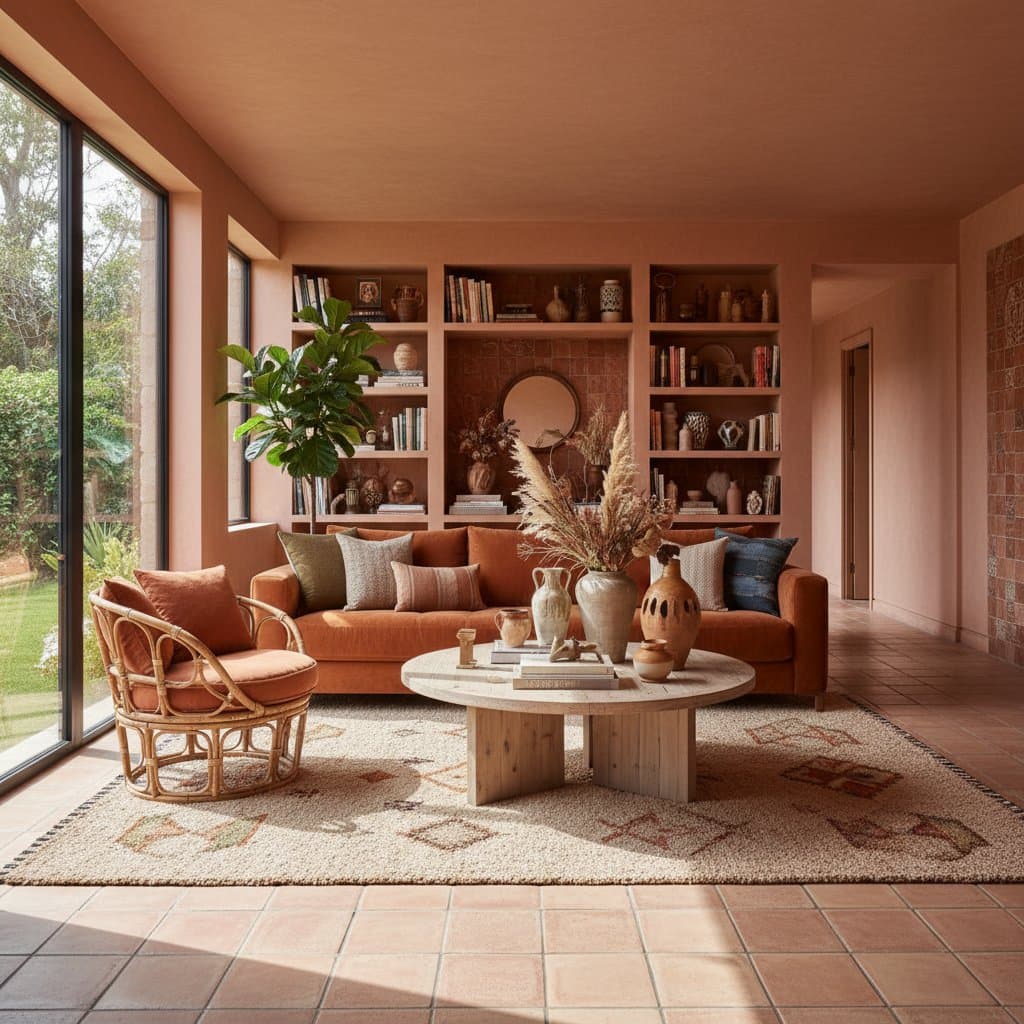
Terracotta Interiors Embrace Earthy Maximalism Trends
Terracotta has returned to prominence in contemporary design. This earthy tone now integrates with the layered aesthetic of modern maximalism to produce interiors that feel collected and grounded. The shift from cool grays to warmer clay shades appears in both residential projects and design publications.
Terracotta counters sterile environments by introducing natural warmth and texture. It suits traditional and contemporary architecture alike when balanced with considered layers of pattern and material. This guide provides concrete steps for selecting tones, combining elements, and executing installations.
Selecting an Appropriate Terracotta Shade
Terracotta varies in undertone from orange to brown to pink. Choice depends on room orientation, square footage, and existing finishes.
Deep Warm Terracotta
- Apply this shade in north-facing rooms that receive limited sunlight.
- Pair it with olive green, mustard yellow, or charcoal gray for contrast.
- Use it on an accent wall, upholstered seating, or floor tile.
Muted Soft Terracotta
- Select this variant for compact rooms or areas with subdued natural light.
- Combine it with light oak, cream walls, and linen fabrics.
- Incorporate it through curtains, throws, or loose cushions.
Traditional Red Clay Terracotta
- Employ this option with wrought iron hardware or dark walnut cabinetry.
- Reserve it for flooring or hand-thrown pottery to emphasize rustic character.
Test paint or tile samples on site at multiple times of day. Pigment behavior changes with finish sheen and daylight angle.
Building Layers for Earthy Maximalism
After establishing the base tone, introduce contrasting textures and forms. Earthy maximalism relies on accumulated materials rather than matched sets.
Blend Organic Materials
Combine terracotta surfaces with oak or walnut furniture, stone countertops, and rattan seating. Woven jute rugs and seagrass baskets soften hard edges. Limit synthetic laminates that interrupt the organic palette.
Introduce Pattern and Supporting Colors
Layer terracotta with deep teal, sage green, ochre, and soft blush. Geometric or botanical prints on rugs and upholstery reinforce depth. A single patterned rug that echoes the terracotta base unifies the composition.
Contrast Surface Finishes
Place matte terracotta beside glossy ceramic vessels or polished brass fixtures. In kitchens, set unglazed tile against honed stone counters to create tactile variation.
Display Collected Objects
Arrange travel souvenirs, handmade ceramics, and vintage volumes in visible groupings. Terracotta provides a neutral backdrop that prevents these items from appearing cluttered. Organize displays by shared tone or material to preserve cohesion.
Adapting Terracotta to Climate and Architecture
Terracotta performs differently across regions. In warm climates it maintains cool interiors and extends visual continuity to outdoor terraces. In cooler zones it supplies visual warmth against pale walls.
Urban apartments gain softness from small terracotta accents placed against concrete or steel. Suburban homes accommodate larger applications such as full floors or feature walls that reference surrounding landscapes.
Humid locations require glazed or sealed terracotta to limit moisture uptake. Dry climates allow unglazed tile that develops a patina over time.
Starting Your Terracotta Project
Begin with one contained change such as a single painted wall, a woven rug, or a set of clay vessels. Observe the color under daily light cycles for several weeks before expanding. Thoughtful placement allows terracotta to anchor a space while supporting additional patterns and textures.
The material integrates art, craft, and comfort within a single palette. Whether executed through paint, tile, or textiles, terracotta delivers lasting depth that connects interiors to natural tones.