
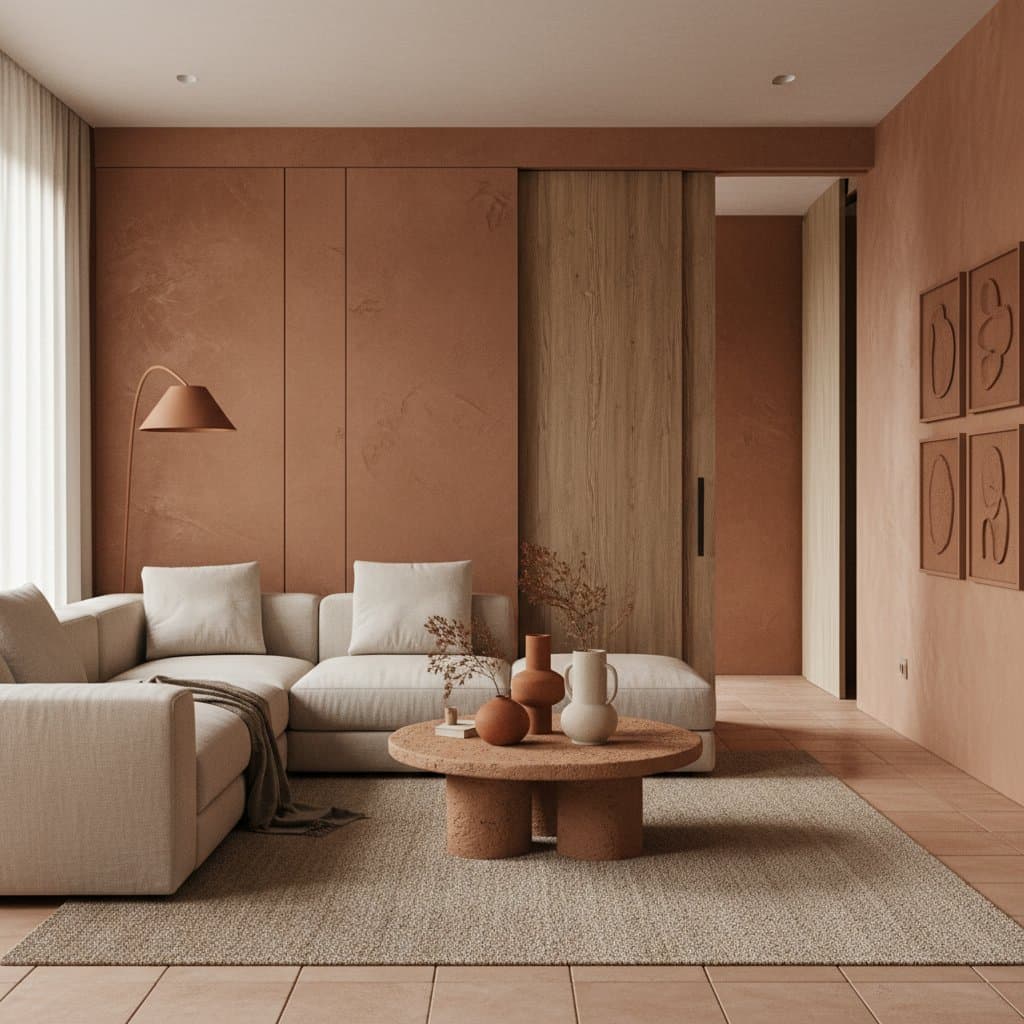
Earthy Minimalism: Terracotta and Clay Reshape Interiors
Readers often seek spaces that promote calm and a sense of grounding. These environments feature soft light on warm surfaces and textures that encourage relaxation. While minimalism offers clean lines, all-white rooms can appear stark. Earthy minimalism addresses this by integrating natural materials like terracotta and clay, which infuse authenticity and warmth into contemporary designs.
The Appeal of Earthy Materials
Earthy tones provide profound comfort through their connection to nature. Terracotta offers a subtle rust hue, clay introduces a soft blush, and raw plaster contributes gentle beige shades. These elements transform decoration into the creation of a personal sanctuary. Terracotta and clay imbue spaces with character, countering the rigidity of stark minimalism.
Imperfections enhance their allure. Handcrafted clay tiles display variations in color and texture, reflecting human artistry. Terracotta items like planters or vases deliver tactile experiences beyond mechanical production. Such materials introduce warmth and depth without excess.
Integration with Minimalist Principles
Minimalism emphasizes intentional selection over abundance. Terracotta and clay align perfectly by adding emotional resonance and visual interest. Their hues harmonize with wood, linen, and stone, fostering layered textures that enrich simplicity.
-
Color Harmony: Terracotta's warm oranges and pinks enhance neutrals such as white, taupe, and sand. Matte or polished clay finishes introduce nuanced variations that prevent monotony in minimalist settings.
-
Textural Layers: Rough clay surfaces on walls or floors create dimension. Light interacts uniquely with these irregularities, evolving daily to infuse rooms with subtle dynamism.
-
Eco-Friendly Qualities: Derived from natural sources, clay and terracotta prove renewable and biodegradable. Local sourcing minimizes environmental impact and supports regional artisans.
-
Enduring Style: Unlike fleeting trends, these materials develop patina over time. Terracotta gains a mellow glow, and clay retains elegant poise across years.
Applications Across Home Areas
Incorporate terracotta and clay thoughtfully to achieve balance with neutral palettes and straightforward shapes. These materials suit various rooms, from accents to prominent features.
Kitchens with Warmth and Functionality
Envision a kitchen backsplash of artisanal terracotta tiles, each varying slightly to form an organic mosaic. Sealed clay countertops provide durable, smooth surfaces that offset modern appliances. Display terracotta pottery on open shelves or use clay mugs to establish inviting focal points without clutter.
Serene Living Spaces
Terracotta flooring in living areas adds warmth beneath woven rugs and ambient lights. Clay plaster on walls delivers a soft, light-diffusing finish. For restraint, select clay vases, sculptural lamps, or terracotta planters with lush plants.
Tranquil Bathrooms
These materials excel in relaxation zones. Line showers with clay tiles for an organic retreat. Pair terracotta floors with crisp white walls to evoke Mediterranean simplicity, enhanced by brass or matte black fixtures.
Restful Bedrooms
Apply clay to an accent wall for soothing pigmentation that promotes mental ease. Combine with linen linens, wooden pieces, and diffused illumination to craft a enveloped, peaceful haven.
Seamless Indoor-Outdoor Links
Terracotta withstands outdoor exposure, ideal for patios and thresholds. Transition from interiors to terracotta-paved terraces that remain comfortable underfoot. Clay planters with herbs extend the design, merging boundaries fluidly.
Essential Practical Guidance
Understand material properties and upkeep to ensure successful implementation.
-
Moisture Management: Porosity requires sealing in wet areas like kitchens and bathrooms to avert stains or damage. Transparent sealants maintain aesthetics while providing safeguard.
-
Upkeep Routines: Sealed surfaces demand minimal effort. Sweep regularly and clean with mild soap solutions. Steer clear of abrasives that compromise integrity.
-
Budget Factors: Artisanal options command premium prices. Offset expenses by reserving handmade pieces for highlights and using standard tiles elsewhere.
-
Professional Application: Engage experts for clay plaster to achieve even coverage. Terracotta installations need precise grouting and sealing for longevity.
-
Environmental Suitability: In warm climates, terracotta aids thermal regulation by absorbing and releasing heat gradually. Colder areas benefit from underfloor heating pairings.
-
Regulatory Compliance: Verify local codes for renovations involving these materials. Collaborate with contractors to meet standards efficiently.
Fostering Emotional Ties Through Design
Selecting terracotta and clay transcends visual appeal; it shapes emotional experiences. These surfaces invite interaction, soothe thoughts, and affirm simplicity's beauty. Their subtle flaws echo life's nuances, delivering solace via genuineness.
Earthy minimalism elevates restraint to warmth and relatability. It diminishes distractions while nurturing tranquility.
Collaborating with Skilled Professionals
Artisans proficient in natural finishes ensure optimal results. They blend pigments adeptly, apply plaster uniformly, and seal for endurance. Regional experts connect to suppliers whose products echo local terrains, fostering community ties and spatial identity.
Post projects on doricsouth.com at no cost to connect with qualified specialists in sustainable elements. Review portfolios, obtain estimates, and select partners aligned with earthy visions.
Sustaining and Evolving Your Spaces
Completed designs reveal how terracotta and clay interact with light. Sunlight intensifies hues in mornings, shadows temper them at dusk. Aging introduces character through gentle wear, turning marks into narratives of lived experience.
Preserve vitality with routine cleaning, periodic resealing, and appreciation of developing patina. These durable choices endure across generations with attentive care.