
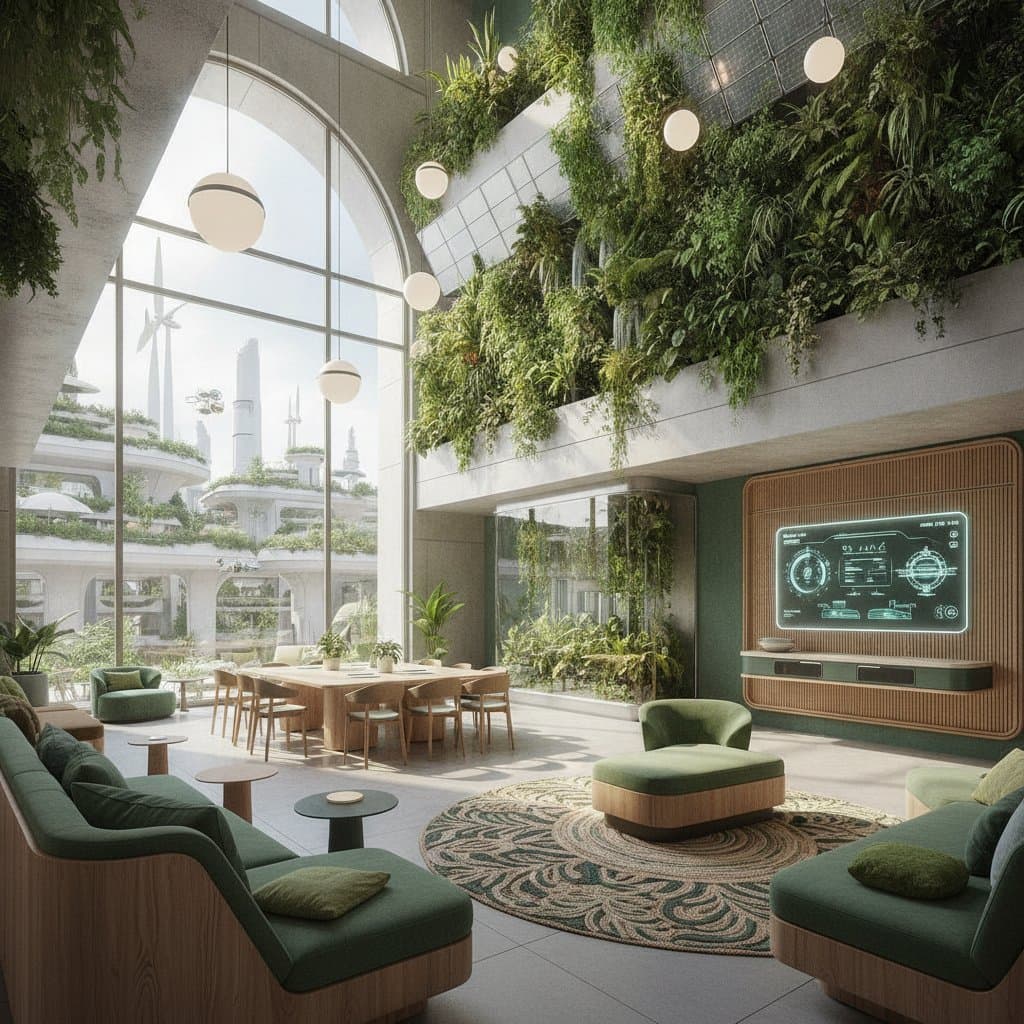
Solarpunk Aesthetics: Rise of Optimistic Green Design
Imagine walking through a city where every rooftop bursts with gardens, where glass towers shimmer with solar panels, and where soft light filters through vines that climb along living walls. The air feels cleaner. The pace feels calmer. A sense of community grows stronger. That is the spirit of solarpunk, a design movement built on optimism, sustainability, and the belief that beauty and ecology can thrive together.
A Vision Rooted in Hope
Solarpunk grew from a simple yet powerful idea. What if the future looked bright, green, and connected rather than bleak and industrial? It invites you to picture spaces powered by renewable energy, shaped from natural materials, and designed for harmony with their surroundings. The appeal lies in its focus on human creativity and environmental balance. Designers blend futuristic technology with the warmth of handmade elements.
This influence appears in architecture that integrates solar energy into structures and in neighborhoods that cultivate shared gardens along with microgrids. The approach goes beyond sustainability. It creates spaces that feel alive, where every detail contributes to belonging and purpose.
Core Elements of Solarpunk Design
Solarpunk aesthetics combine functionality with beauty. Designers focus on several key principles to bring this vision to life.
-
Green Architecture
Living roofs, vertical gardens, and natural ventilation systems define the look. Buildings become ecosystems that host pollinators, filter air, and reduce urban heat. -
Renewable Energy Integration
Solar panels, wind turbines, and energy storage systems stand visible. They serve as design features that celebrate innovation and self-sufficiency. -
Natural and Recycled Materials
Bamboo, reclaimed wood, and clay replace plastics and synthetics. Interiors glow with earthy tones and organic textures that feel grounded and welcoming. -
Community and Shared Spaces
Solarpunk design encourages social connection. Courtyards, rooftop farms, and communal workshops create opportunities for collaboration and local production. -
Technology in Service of Nature
Smart grids, water recycling, and sensor-driven lighting reduce waste and energy use. Technology supports human comfort and ecological health without drawing attention.
Bringing Solarpunk Home
You do not need a futuristic city to live the solarpunk dream. Simple steps bring its principles into any home.
- Add climbing plants or window boxes that attract pollinators and cool the surrounding air.
- Select furniture made from reclaimed wood or textiles dyed with natural pigments.
- Rearrange rooms to capture daylight and reduce reliance on artificial lighting.
- Install a small solar panel to power garden lights or charge devices.
- Swap produce with neighbors or start shared composting to strengthen local ties.
These changes create more than visual appeal. They shift daily life so that a space becomes part of a larger cycle of renewal.
Practical Considerations
Solarpunk design requires planning. Solar installations may need permits. Green roofs demand structural assessments to handle added weight. Costs range from modest investments in energy-efficient fixtures to larger projects such as solar arrays or rainwater systems. Safety remains essential with electrical or load-bearing work, so consulting professionals is wise.
Many small steps cost little. Repainting with low-VOC colors, adding indoor plants, or repurposing old materials brings immediate change. Over time these improvements reduce utility costs and create a healthier atmosphere.
Applying Solarpunk Principles Daily
Adopting solarpunk design reflects a mindset of hope and responsibility. Beauty and sustainability can coexist. When you transform a space into a green haven, you join a movement that values cooperation over consumption and imagination over despair.
Experiment with materials. Connect with local makers. Plant seeds that will grow into something enduring. Solarpunk design offers an invitation to live in harmony with surroundings and to let everyday environments tell a story of renewal and care.