
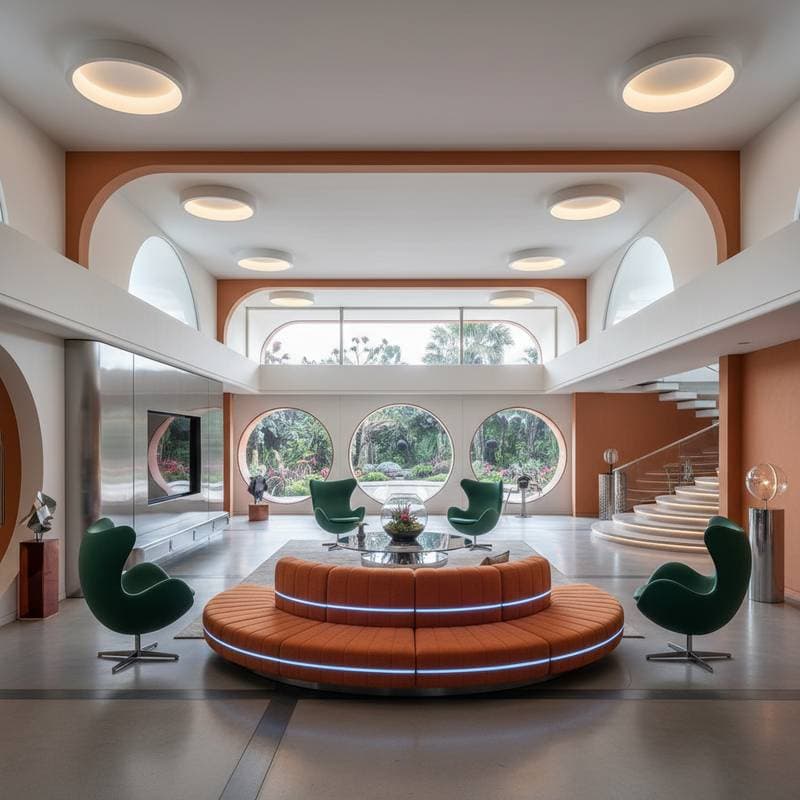
Retrofuturism's Return: 70s Space Homes for 2026
Many people glance at vintage images of circular living rooms, gleaming chrome accents, and pod-like seating and sense an unexpected appeal. This retrofuturism aesthetic, born from mid-20th-century visions of interstellar living, now influences contemporary home design. Designers and homeowners alike draw from these optimistic concepts to craft spaces that merge nostalgia with forward-thinking functionality, making 2026 an ideal year to incorporate such elements.
Why Retrofuturism Captivates Modern Designers
Retrofuturism combines speculative futurism with historical aesthetics, often rooted in the space race era's boundless enthusiasm. This approach shaped innovative architecture and furnishings that prioritized wonder over convention. Today, it reemerges to counter the starkness of minimalist trends, introducing organic curves, metallic sheens, and vibrant palettes that infuse homes with energy and character.
Elements like sinuous wall panels, polished aluminum hardware, and geometric lighting evoke a sense of exploration. Homeowners seek this style to escape monotonous neutrals and rigid geometries, opting instead for environments that encourage creativity and joy. The result is interiors that balance visual intrigue with everyday practicality.
Key Attractions of Space-Age Aesthetics
Retrofuturism stands out for its lighthearted yet sophisticated approach to design. It fosters environments that inspire without overwhelming daily routines. Consider these core draws:
- Dynamic Forms and Finishes: Arcing sofas and lacquered surfaces add vitality to rooms while maintaining open sightlines.
- Vibrant Palettes: Accents in tangerine, navy, and ivory inject personality and depth.
- Integration with Technology: Open configurations accommodate automated systems and recessed illumination seamlessly.
- Eco-Conscious Choices: Designers repurpose era-specific materials, promoting longevity and reducing environmental impact.
This style empowers experimentation, allowing spaces to evolve from sentimental nods to innovative havens.
Incorporating Retrofuturism Step by Step
Achieve the aesthetic without overhauling your entire residence. Scale efforts to match your resources and preferences. Begin with targeted updates that yield immediate transformation.
Emphasize Curved Silhouettes
Iconic rounded motifs define space-age interiors. Introduce them via circular wall art, pod armchairs, or spherical pendants. These selections soften angular rooms and promote a welcoming flow.
During renovations, integrate bowed shelving or vaulted thresholds. Such modifications enhance not only style but also spatial harmony, drawing the eye along fluid paths.
Select Strategic Color Schemes
Hues define the retrofuturist mood. Opt for high-contrast pairings that evoke cosmic themes without dominating. Effective combinations include:
- Crisp white paired with brushed nickel for sleek precision
- Terracotta tones with teak for grounded retro warmth
- Indigo accents against slate for serene expanses
- Monochromatic black-and-white for bold definition
Incorporate these through accent walls or select textiles to maintain versatility. This prevents the design from resembling a mere costume, ensuring enduring appeal.
Layer Diverse Textures
Glossy elements capture the era's metallic allure. Deploy stainless steel bases or acrylic dividers to reflect light and amplify space. Balance with organic counterparts like bamboo accents or linoleum tiling for tactile variety.
This interplay grounds the futuristic edge, creating layered depth. Test samples in natural light to confirm cohesion before full commitment.
Master Illuminated Ambiance
Strategic lighting elevates retrofuturism's dramatic potential. Employ multi-tiered schemes for versatile moods. Recommended fixtures encompass:
- Concealed linear LEDs for subtle glow
- Orb-shaped suspensions or sputnik-style clusters for focal points
- Directional spots to accentuate contours or displays
Favor warm bulbs for coziness, reserving cool spectrums for evening sci-fi immersion. Adjust dimmers to suit activities, from reading to entertaining.
Source Era-Authentic Details
Hunt for period artifacts in antique outlets or digital auctions. Iconic items such as Lucite lounges, pedestal bases, or molded seats integrate effortlessly. A single focal object can redefine an area.
Contemporary reproductions offer durability at lower costs, typically ranging from $200 to $2,000 based on scale and fabrication. Verify compatibility with existing setups to avoid mismatches.
Refresh Versus Comprehensive Overhaul
Tailor the scope to your vision and finances. Two paths provide entry points into this design ethos.
Affordable Entry Points
Test the waters with low-commitment tweaks. Implement these for swift impact:
- Apply semi-gloss enamels in platinum or pearl shades
- Introduce arched ottomans or domed side tables
- Swap fixtures for sputnik-inspired models
- Curate gallery walls with orbital motifs or modular patterns
Budget $500 to $1,000 for sourced essentials, yielding refreshed vitality.
Immersive Transformation
Commit to holistic reinvention for authentic immersion. Core components involve:
- Reshaping partitions with filleted edges
- Fabricating seamless cabinetry in molded composites
- Applying specular cladding like polished composites
- Configuring fluid layouts mimicking modular habitats
Engage specialists in modernist adaptations. Investments span $10,000 to $50,000, delivering bespoke environments that echo visionary narratives.
Advantages and Limitations of the Style
Assess benefits alongside hurdles to inform decisions.
Strengths
- Distinctive Presence: Interiors differentiate from commonplace schemes, commanding attention.
- Expressive Flexibility: Guidelines encourage customization without rigidity.
- Engaging Interactions: Unique details spark dialogue among visitors.
- Tech Synergy: Configurations support integrated automation effortlessly.
Drawbacks
- Premium Pricing: Bespoke forms demand higher outlays than off-the-shelf options.
- Sourcing Challenges: Coordinating thematic elements requires diligence.
- Trend Sensitivity: Rapid evolutions may shorten perceived longevity compared to neutrals.
Mitigate concerns by selecting adaptable anchors, ensuring the aesthetic endures personal shifts.
Essential Planning Factors
Address logistics upfront for seamless execution.
Financial Planning
Establish a cap early. Minor adjustments fit within $300 to $800. Extensive alterations escalate to five figures. Allocate toward high-return aspects like palettes and fixtures.
Timeline Management
Cosmetic shifts conclude in days. Structural edits extend to several months amid approvals and craftsmanship. Coordinate with vendors to align phases.
Material and Compliance Checks
Vintage components may harbor outdated hazards. Inspect electrics and coatings; prioritize contemporary analogs free of volatiles. Adhere to building codes for alterations.
Expert Involvement
Structural or wiring modifications necessitate approvals. Consult authorities on regulations. Partner with designers versed in atomic-era motifs to fuse heritage with compliance.
Sourcing Design Ideas
Draw from diverse wellsprings for tailored concepts:
- Archival periodicals showcasing era blueprints
- Cinematic depictions of orbital habitats
- Digital forums displaying user transformations
- Specialty emporiums for tactile evaluations
Synthesize influences to craft originals, prioritizing harmony over replication.
Harmonizing with Contemporary Lifestyles
Retrofuturism aligns with practical demands. Contoured edges reduce injury risks in family settings. Automated controls enhance the thematic immersion. Polished planes simplify maintenance, while expansive plans optimize compact footprints.
Embed utility in aesthetics, such as concealed compartments behind arcs or luminous panels for illumination. This ensures designs serve routines while evoking wonder.
Realizing Lasting Fulfillment
Completed spaces should evoke delight and introspection upon entry. Retrofuturism nurtures this by championing form, hue, and ingenuity in equal measure. Embrace it to transform housing into a canvas of perpetual discovery.