
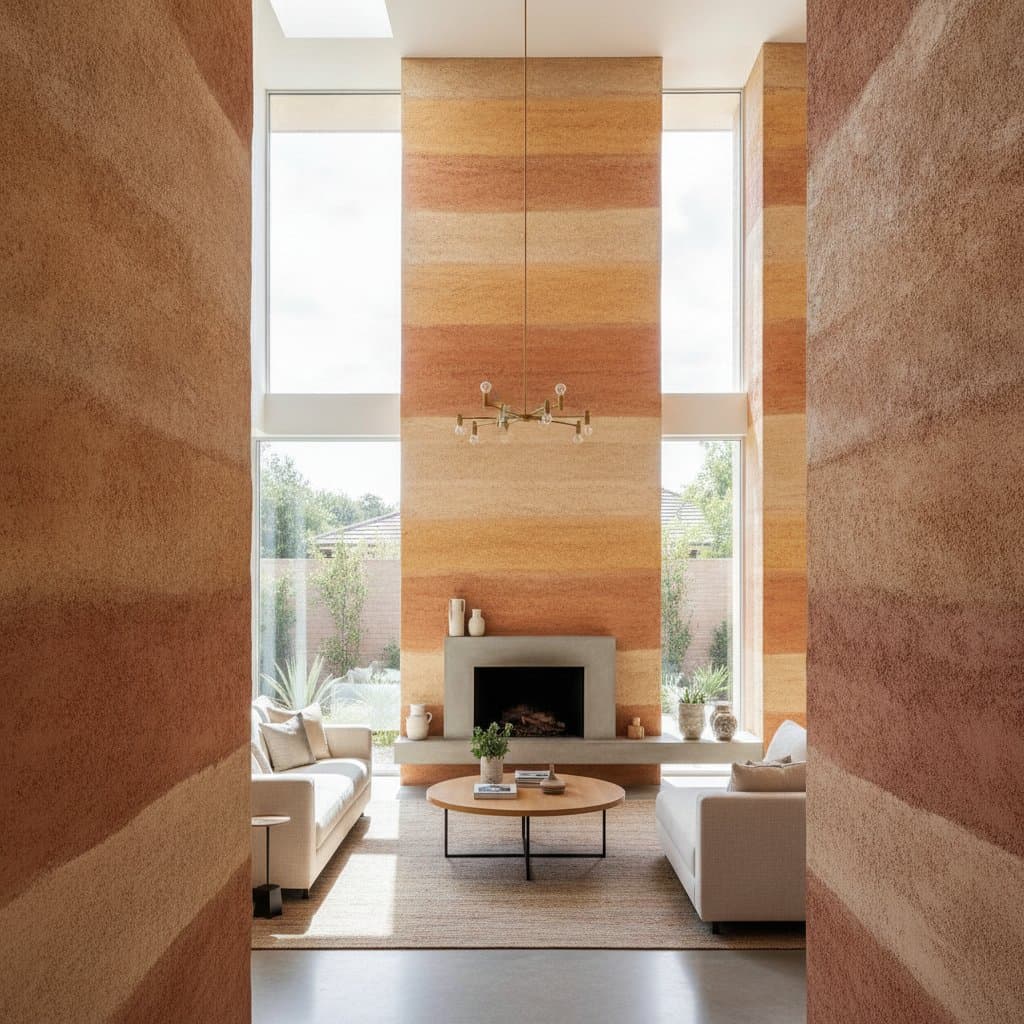
Rammed Earth Walls Move From Earthships to Everyday Homes
Stepping into a home with walls sculpted from the earth itself creates an immediate sense of calm. The cool surface, natural color variations, and shifting light throughout the day set rammed earth apart from standard drywall or concrete. This ancient technique, once limited to off-grid Earthships, now appears in suburban homes, townhouses, and custom builds.
Homeowners seek the same grounded elegance in conventional settings. The material balances strength, sustainability, and visual appeal.
The Allure of Earth Walls in Modern Design
Rammed earth walls deliver a presence unmatched by manufactured panels. Builders compact layers of soil, clay, sand, and a stabilizer such as cement or lime inside formwork. The resulting striations echo natural sandstone or canyon walls, and each installation remains unique to its site.
Residents value materials that age well and connect indoor spaces to the surrounding landscape. Rammed earth meets these priorities through its breathable surface and low environmental impact.
How Rammed Earth Construction Works
Builders erect temporary formwork, add a damp soil mixture in thin layers, and compact each layer with pneumatic tools until the material reaches stone-like density. Removal of the forms reveals a finished structural wall.
Two primary mixes exist. Traditional unstabilized rammed earth relies on local soil and clay for maximum sustainability in dry regions. Stabilized versions incorporate cement or lime to improve moisture resistance and broaden climate suitability.
Completed walls provide substantial thermal mass that absorbs daytime heat and releases it gradually at night.
From Earthships to Suburban Living
Earthships popularized rammed earth through self-sufficient designs that reused tires filled with soil. Contemporary applications replace tire walls with refined soil mixes and precise formwork that produce clean lines suitable for standard residences.
The texture integrates well with glass, timber, and steel in minimalist layouts. Projects now include private homes, community buildings, and light commercial spaces.
Why Homeowners Are Embracing Rammed Earth
Practical and sensory benefits drive adoption.
- Durability: Walls last centuries when built correctly and resist fire, insects, and rot.
- Comfort: Thermal mass moderates indoor temperatures year-round.
- Acoustics: Thick earthen construction reduces sound transmission.
- Aesthetics: Natural pigments and layers develop character over time.
- Sustainability: Abundant local materials require minimal processing and upkeep.
Many occupants also describe a quieter, more stable daily experience inside these walls.
Key Considerations Before You Build
Success depends on preparation and site-specific decisions.
- Soil Quality: Test local soil for the proper sand, silt, and clay ratios or amend as needed.
- Moisture Control: Install wide roof overhangs and foundation drainage on stabilized walls.
- Structural Design: Account for load paths, seismic requirements, and any added insulation.
- Permits and Codes: Consult local officials early and engage contractors experienced with earthen methods.
- Cost: Budget aligns with custom masonry projects, offset by reduced energy and finish expenses.
The Construction Process Step by Step
Site work begins with a reinforced foundation sized for the wall weight. Crews then assemble heavy-duty formwork, place and compact soil layers, and remove forms once curing advances. Openings for doors, windows, and utilities are formed during this sequence.
Final steps include optional breathable sealants and integration with mechanical systems.
Adapting to Local Climates
Humid regions require stabilized mixes and generous overhangs. Arid zones often perform well with unstabilized earth. Cold climates may combine rammed earth interiors with exterior insulation to maintain thermal benefits.
Designers adjust each project to work with regional conditions rather than against them.
Finding the Right Builder for Your Project
Select contractors who have completed multiple rammed earth projects and can supply references. Verify their approach to soil testing, engineering, and weather protection.
Blending Earth with Modern Living
Rammed earth supports both rustic and refined interiors. Natural surfaces pair with concrete floors and large windows, while lime washes or strategic lighting can accentuate color shifts.
Maintenance and Long-Term Care
Sealed walls need only periodic inspections after storms and reapplication of breathable sealants every few years. The surface often gains depth and beauty with age.
Exploring Rammed Earth Options
Homeowners ready to proceed should gather regional project examples, confirm soil suitability, and obtain detailed estimates. This approach yields durable, comfortable spaces that connect residents to their environment for generations.