
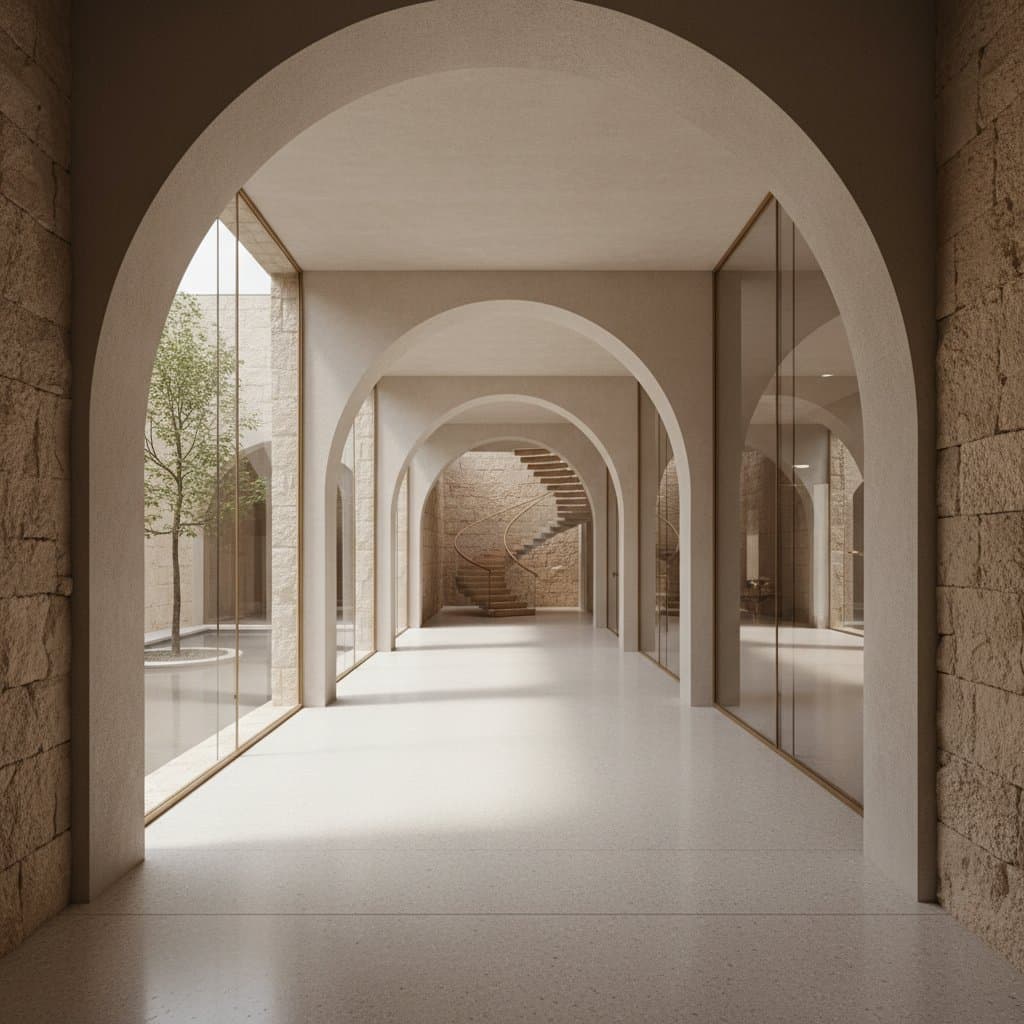
Exploring Dreamlike Transitional Spaces in Architecture
Imagine stepping from a bright courtyard into the cool hush of a shaded hallway. The air feels different, pace slows, and senses sharpen. This entry into a transitional space, a threshold, carries the energy of the departed area and the promise of the approaching one. Such moments in architecture extend beyond functional passages; they influence building experiences, movement patterns, and emotional responses.
Many individuals hurry through corridors, stairwells, and entryways without recognizing their subtle influence. These areas, however, elevate ordinary structures to poetic and immersive realms. Their strength emerges in blurring boundaries between interior and exterior, motion and repose, public and private domains. Intentional design renders them dreamlike, drawing occupants into altered rhythms of perception.
Defining Transitional Spaces
A transitional space constitutes any architectural element connecting distinct zones. Hallways, porches, breezeways, courtyards, and atriums exemplify this category. Beyond mere utility, these areas bear emotional and sensory significance. They prepare occupants for impending environments while permitting reflection on prior ones.
Cultural design practices frequently honor this intermediary nature. The Japanese genkan exceeds a shoe-removal station; it facilitates a psychological and physical transition from communal spheres to domestic tranquility. Likewise, a Southern veranda provides shade alongside a social intermediary, linking neighbors while preserving interior seclusion.
Architects attuned to this equilibrium craft transitions that appear purposeful and contemplative. Interactions among light, texture, and proportion elevate basic thresholds to profound encounters.
The Significance of Transitional Spaces
Transitional spaces subtly yet enduringly affect emotions. They establish rhythm and contrast, enabling mental recalibration between activities. Consider departing a vibrant street for a gently illuminated lobby, or progressing from a streamlined kitchen to an inviting breakfast alcove. Atmospheric shifts afford moments for respite.
These zones also regulate climate, acoustics, and seclusion. A shaded walkway moderates temperature prior to home entry. A set-back entrance mitigates street noise. A modest vestibule layers comfort and oversight. Thus, transitional architecture merges aesthetics with functionality.
Elements of Dreamlike Transitions
Evoking a dreamlike quality in transitional spaces hinges on sensory engagement. Architects employ targeted techniques to realize this impact.
-
Light and Shadow
Gentle light progressions direct motion and infuse drama. Skylights, clerestory windows, and patterned screens diffuse sunlight softly. Daily variations alter the area's ambiance accordingly. -
Material and Texture
Transitions between surfaces signal shifts. Smooth stone floors yield to heated wood, or textured brick yields to polished plaster. Bodily responses to these changes affirm threshold crossings. -
Sound and Silence
Acoustic properties define spatial perception. Courtyards with mild reverberation convey vitality, whereas muffled hallways promote serenity. Designers leverage these differences to accentuate passages. -
Framing and View
A portal outlining a landscape, or a confined corridor expanding to an atrium, builds expectancy. Visual cues propel the gaze onward, encouraging discovery. -
Scale and Proportion
Sequences of constriction and expansion prove essential. Navigation through compact, low-ceilinged paths precedes vast, lofty chambers, amplifying arrival sensations.
Integrated application of these components transforms routes into memorable journeys.
Integrating Transitional Design in Daily Environments
Grand estates or institutional buildings hold no monopoly on transitional elegance. Modest residences and offices gain from deliberate thresholds.
Entryways That Invite
An effective entryway establishes overarching ambiance. Opt for a inset door bordered by organic elements, a seating nook for footwear, or transparent panels revealing adjacent greenery. Such features instill deliberate halts and relational bonds upon arrival.
Hallways With Personality
Extended passages risk appearing underutilized, yet they suit transformation into display zones for artwork, literature, or dynamic illumination. Overhead glazing or base-level apertures inject vitality and coziness. Mounted fixtures casting diffused radiance convert inter-room travels into enriching passages.
Indoor-Outdoor Connections
Gliding panels accessing terraces, enclosed verandas, or gardens dissolve indoor-outdoor divides. Passages fluidly incorporate air currents and daylight. In temperate regions, covered walkways or lattice structures prolong usable areas while shielding from intense exposure.
Stairways as Expressive Passages
Stairs transcend vertical transport. Suspended steps, sinuous handrails, or overhead glazing render ascents elegant and captivating. Level changes evolve into sequential stories rather than mere height adjustments.
Work and Commercial Applications
Professional settings benefit from transitional zones promoting innovation and relaxation. Interim lounges adjacent to conference areas, vegetated platforms between divisions, or transparent halls viewing gardens offer cognitive breaks. Such intervals enhance concentration and wellness.
Key Factors in Transitional Design
Aesthetic thresholds demand pragmatic execution. Safety, utility, and regulatory adherence remain paramount.
- Illumination and Security: Pathways require adequate yet tempered lighting. Indirect sources or automated detectors harmonize protection with mood.
- Airflow and Ease: Favor natural circulation in intermediary areas. This sustains pleasant climates and minimizes engineered interventions.
- Resilience: Exterior-facing substances withstand humidity and abrasion. Granite, preserved timber, and sealed coatings preserve allure long-term.
- Approvals and Standards: Modifications like veranda extensions, glazing additions, or structural tweaks necessitate permissions. Confirm regional stipulations prior to initiation.
- Financial Strategy: Expenses fluctuate with scope and selections. Basic enhancements such as fixtures and coatings range from hundreds of dollars; major builds escalate to thousands. Consult skilled builders to align aspirations with resources.
Individuals need not navigate solo. Posting projects on Doric South incurs no fee and connects users with verified specialists versed in aesthetic and engineering demands. Professionals undergo checks for credentials and expertise, enabling assured progression.
Experiencing Transitional Architecture
Well-executed thresholds reveal their influence on routines. Dawn rays penetrating glazed entrances, chilled ceramic beneath unshod feet en route from sleeping quarters to lavatory, or subdued inclines leading to luminous attics integrate seamlessly. These instances subtly enhance domestic sentiments.
Transitional realms underscore architecture's dynamism. They accompany motion, steer affections, and mold environmental interactions. At their essence, they unite purpose with sentiment, converting form into ambiance.