
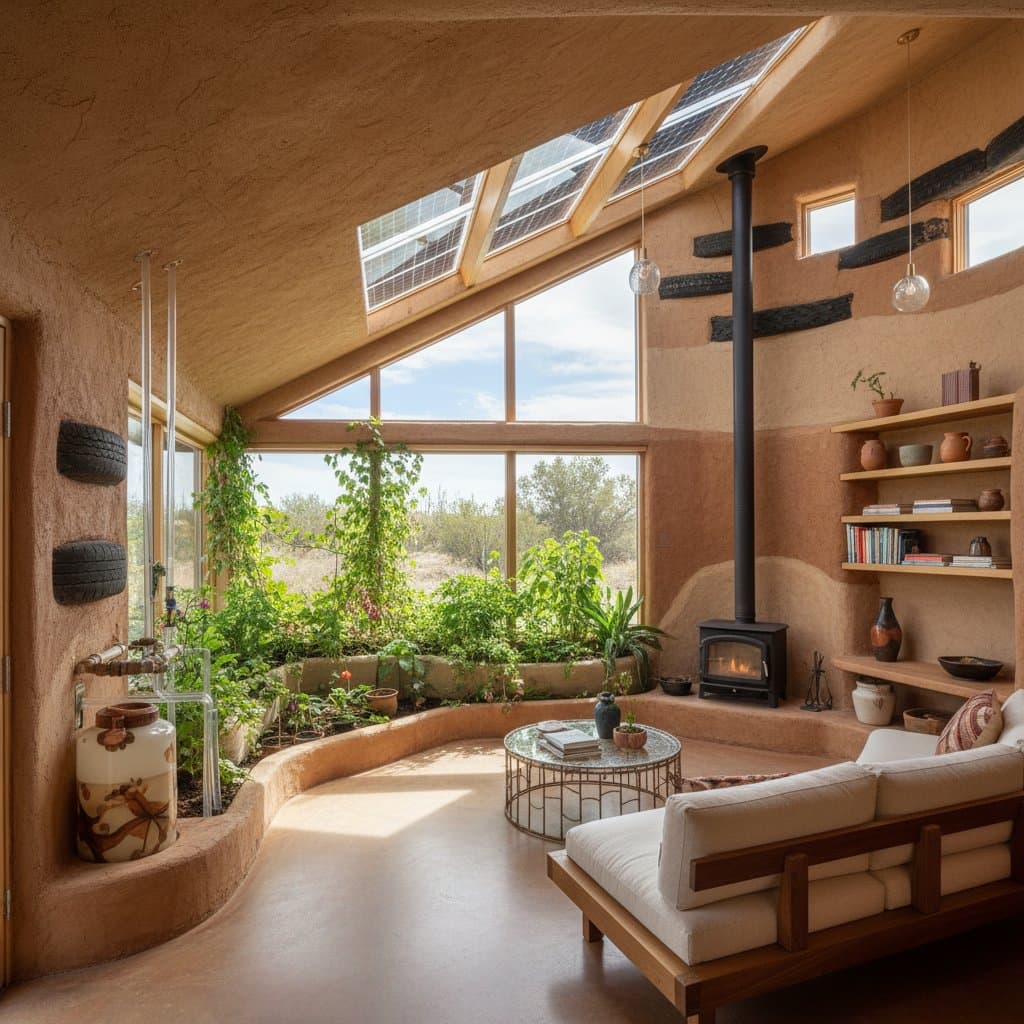
Earthships: Sustainable Tire Homes Enabling Mainstream Off-Grid Independence
Discussions about off-grid living have increased in recent years, prompting curiosity about its practical form. Consider a residence where robust walls of rammed earth and recycled tires withstand intense summer heat, where water circulates through an integrated reuse system, and where solar panels deliver reliable electricity. This scenario represents the expanding practice of Earthship construction, which reshapes perspectives on building methods, residential comfort, and long-term sustainability.
The Core Principles of Earthship Design
Earthship structures initially appear unconventional, featuring stacked tires resembling masonry, glass bottles integrated into walls, and solar arrays on sloped roofs. Their strength emerges from seamless integration with the local landscape. These thick earthen walls absorb daytime heat and release it gradually at night, achieving thermal equilibrium without mechanical intervention. Rainwater harvesting systems collect precipitation, while interior plantings utilize treated wastewater to yield fresh produce.
The philosophy underpinning Earthship design emphasizes harmony between shelter and environment. Components such as south-oriented glazing for optimal solar exposure and the heat-retaining properties of tire-filled walls minimize dependence on municipal services. Consequently, the dwelling functions as a dynamic entity, attuned to environmental cycles and enhancing occupant well-being.
Repurposing Tires as Structural Elements
The construction process commences with tires, which accumulate in vast quantities from daily discards. Rather than contributing to landfill waste, these items serve as core building materials. Workers compact earth into each tire, arranging them in interlocking patterns to form substantial, structural walls capable of supporting roofs and upper levels. This rammed-earth technique creates a thermal mass that moderates indoor temperatures across seasons.
After assembly, crews apply adobe plaster or earthen finishes to the surfaces, concealing the tires beneath a seamless, organic appearance. Although demanding in terms of physical effort, this method appeals to participants who value the tangible involvement in crafting their living space. Each layer represents a direct contribution to a durable, personalized habitat.
Integrated Systems for Self-Sufficiency
Earthships distinguish themselves through interconnected systems that mimic natural ecosystems, managing water, energy, and waste with minimal external input.
-
Water Harvesting and Cycling: Sloped roofs direct rainfall into large underground cisterns for storage. Collected water undergoes filtration for potable uses, bathing, and laundry. Treated effluent irrigates interior hydroponic gardens that cultivate edibles, with final discharge supporting exterior wetland filters for complete purification.
-
Renewable Energy Generation: Photovoltaic panels and optional wind generators produce electricity, which batteries store for consistent supply during low-production periods. Systems include inverters to convert direct current for household appliances, with auxiliary propane units available for rare outages.
-
Passive Climate Regulation: The inherent thermal inertia of earthen walls buffers against external fluctuations. Strategically placed windows admit winter sunlight for warmth, while adjustable vents facilitate convective airflow, drawing cooler evening air inward and expelling excess heat through upper outlets.
-
On-Site Food Cultivation: Graywater-fed planters within the home support diverse crops, from leafy greens to dwarf citrus varieties. This setup not only supplements diets but also enhances air quality and aesthetic appeal, integrating productivity into daily routines.
Key Planning Factors for Earthship Projects
Embarking on an Earthship build demands thorough preparation to address site-specific variables like climate, geology, and regulatory frameworks.
Budget Allocation: Expenses fluctuate based on scale, material sourcing, and owner labor input. Basic single-room units align with entry-level conventional builds, around $100 to $150 per square foot, while comprehensive family dwellings may exceed $200 per square foot. Long-term savings on utilities frequently offset upfront costs within five to ten years.
Regulatory Compliance: Local codes vary, and some jurisdictions lack precedents for tire construction or autonomous utilities. Engage architects or engineers familiar with alternative methods to secure variances or certifications. Pre-submission consultations with planning officials can streamline approvals.
Optimal Site Preparation: Prioritize solar access by aligning the long axis south in the northern hemisphere. Gently sloping land aids gravity-fed water flow, though flat sites require berms for thermal performance. Conduct geotechnical tests to verify soil bearing capacity and drainage potential.
Durability and Upkeep Protocols: Properly sealed tire walls resist degradation, but annual checks prevent moisture ingress. Adhere to electrical standards like NEC for wiring, and service plumbing components quarterly. Routine cleaning of solar arrays and filter media sustains system efficiency.
Factors Driving Earthship Adoption
Earthships have transitioned from experimental prototypes to recognized alternatives, fueled by escalating utility rates, water scarcity concerns, and heightened ecological consciousness. These homes exemplify integrated design that aligns human needs with planetary limits, appealing to diverse motivations.
Many residents prioritize financial autonomy by eliminating recurring bills for power and water. Others embrace the intellectual and physical challenge of non-traditional builds. A significant portion seeks deeper environmental stewardship without compromising modern amenities. Scalable designs accommodate solo retreats or expansive family compounds, each customized to terrain and user preferences.
Selecting Qualified Construction Partners
Owner-builders often handle portions of the project, yet expertise in rammed-earth compaction and system integration benefits from professional input. Collaborate with firms specializing in green architecture to ensure structural integrity and code adherence.
Platforms like Doric South connect projects with vetted local experts in sustainable practices. Professionals undergo background checks and performance reviews, providing reassurance for full-service builds or targeted consultations on plumbing and electrics.
Embracing the Earthship Daily Experience
New inhabitants frequently note the intuitive adaptation to off-grid rhythms, fostering attentiveness to solar patterns, precipitation, and resource flows. This lifestyle promotes equilibrium rather than deprivation, enriching ties to the natural world.
Sunlight diffuses through recycled glass bricks, illuminating interiors with subtle hues. The subtle circulation of water through planters underscores the home's self-regulating nature. These elements operate unobtrusively, allowing focus on the rewards of resilient, harmonious living.
Steps to Launch Your Earthship Build
To initiate an Earthship project, begin by reviewing regional zoning laws and inspecting existing installations for insights. Assemble a team of sustainable design consultants to refine concepts against practical constraints.
Once plans solidify, list your requirements on Doric South at no cost. The platform pairs you with aligned contractors experienced in off-grid innovations, from foundational earthworks to finishing touches. This support accelerates progress toward a realized vision.
Constructing an Earthship extends beyond erecting walls; it establishes a symbiotic habitat that embodies self-reliance, ethical priorities, and ecological attunement. Supported by precise engineering and collaborative expertise, such a sanctuary demonstrates the viability of regenerative living as both attainable and profoundly enriching.