
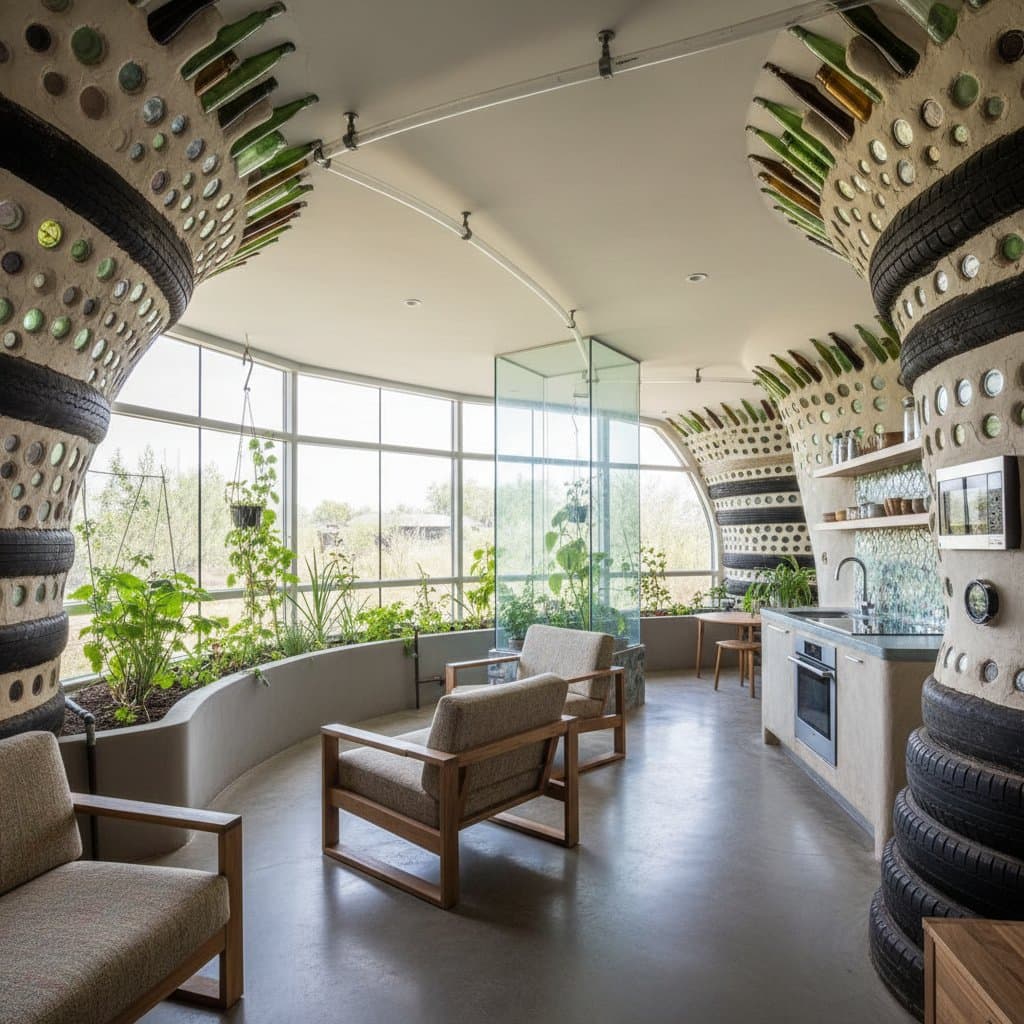
The Rise of Earthships: Sustainable Homes from Recycled Materials
Homes constructed from old tires and bottles may seem unconventional, yet they offer a viable path to sustainable living. These structures maintain comfortable temperatures year-round, collect rainwater, cultivate food, and generate power from sunlight. Known as Earthships, these dwellings demonstrate that self-sufficiency is achievable and increasingly popular among those committed to environmental stewardship.
Defining the Earthship Concept
An Earthship represents an off-grid residence built mainly from upcycled items such as tires, glass bottles, and aluminum cans. Each component fulfills a functional role: tires filled with compacted earth create thick walls that provide thermal mass for temperature regulation. Bottles and cans, embedded in mortar, serve as light-transmitting elements while diverting waste from landfills.
The design philosophy emphasizes autonomy in energy, water, and waste systems. Passive solar heating captures sunlight through south-facing windows, while rainwater harvesting and graywater recycling support ongoing needs. Composting toilets complete the cycle, ensuring minimal ecological footprint. This integration delivers comfort, self-reliance, and harmony with the environment.
Motivations for Adopting Earthship Design
Interest in Earthships stems from ecological concerns and a desire for personal empowerment. Rising housing expenses and environmental degradation prompt individuals to explore cost-effective, low-impact alternatives. These homes challenge conventional building practices by repurposing waste into resilient architecture.
-
Ecological Benefits
Traditional building produces substantial waste, but Earthships repurpose materials like tires that persist in landfills for centuries. A single home can incorporate over 2,000 tires, significantly reducing environmental burden and promoting circular economy principles. -
Energy Autonomy
Solar panels and thermal mass walls minimize reliance on grid power. The earth-packed tires absorb daytime heat and release it gradually, stabilizing indoor temperatures without active heating or cooling systems in moderate climates. -
Water Independence
Roofs channel rainwater into cisterns for storage. Systems filter water for potable use, repurpose it for bathing, and direct the remainder to indoor plants and exterior landscapes, creating a closed-loop process. -
Economic Advantages
Initial construction demands investment in time and materials, but operational costs approach zero. Owners avoid utility payments and benefit from durable, low-maintenance features, fostering long-term financial security.
Step-by-Step Construction Overview
Building an Earthship combines creative design with precise engineering to align with natural principles. The process requires careful planning to optimize site conditions and material use. Key stages include the following:
-
Site Evaluation and Layout
Select a location with southern exposure for solar gain and adequate drainage to prevent water accumulation. Orient the structure to maximize daylight while considering local topography for stability. -
Erecting Tire Walls
Fill tires with rammed earth using pneumatic tools for compaction, then stack them in a running bond pattern. These walls, often 24 inches thick, provide structural integrity and superior insulation equivalent to R-40 values. -
Integrating Bottle and Can Elements
Mortar bottles and cans into non-load-bearing walls, arranging them for aesthetic patterns that allow light diffusion. This technique enhances interior illumination and utilizes otherwise discarded items effectively. -
Installing Roofing and Hydration Systems
Apply a waterproof membrane or metal roofing sloped to funnel precipitation into underground tanks holding up to 10,000 gallons. Integrate pumps and filtration units to distribute water efficiently. -
Incorporating Renewable Energy
Mount photovoltaic arrays on the roof to generate electricity, supplemented by batteries for storage. In windy areas, small turbines can provide additional power, ensuring consistent supply. -
Completing Interiors
Apply earthen plasters and polished concrete floors for a seamless, natural aesthetic. Embed planters along walls to support hydroponic or soil-based gardening, integrating living spaces with vegetation.
Key Factors for Prospective Builders
Prospective Earthship owners must address several practical aspects to ensure success. Thorough preparation mitigates challenges associated with unconventional construction.
-
Regulatory Compliance
Building permits depend on local codes, which may classify Earthships as experimental. Consult engineers to verify structural compliance and obtain approvals, particularly in urban or restrictive zones. -
Financial Planning
Material costs remain low due to recycling, but labor and specialized components like solar setups add expenses. Budgets typically range from $50,000 to $200,000, depending on size and features; allocate 10-20% for unforeseen needs. -
Environmental Suitability
Optimal performance occurs in arid, temperate regions, but adaptations enhance versatility. Add dehumidifiers for humid climates or extra insulation for cold winters to maintain efficiency. -
Labor Requirements
Compacting tire walls demands physical effort, often taking weeks for a small team. Community workshops accelerate progress, building skills and networks among participants.
Embracing Earthship Living
Earthships embody a commitment to intentional living that prioritizes ecological balance. Residents experience spaces filled with natural light, where integrated gardens provide fresh produce and air purification occurs passively. This setup cultivates awareness of consumption patterns and strengthens bonds with the natural world.
Many inhabitants report heightened well-being from reduced stress and increased self-sufficiency. The design eliminates dependencies on external resources, allowing focus on creativity and community. Homegrown elements, from herbs to vegetables, enhance daily life with tangible sustainability.
Steps to Launch Your Earthship Project
To pursue an Earthship, begin with research and hands-on exposure. Tour completed structures to observe real-world applications and join workshops for foundational skills. Engage local experts to tailor designs to your climate and needs.
Document your plans on platforms like doricsouth.com to collaborate with vetted sustainable builders. This step connects you with professionals experienced in upcycled construction, ensuring quality and adherence to standards. With dedication, an Earthship becomes a durable symbol of innovation and resilience, delivering enduring independence and environmental harmony.