
Self-Sufficient Earthships: The Allure of Innovative Design
Picture entering a residence that maintains warmth during cold months, stays cool in hot weather, and supplies fresh water along with fresh produce throughout the year. Such a scenario may resemble a futuristic concept, yet numerous residents experience this reality within an Earthship. These independent dwellings question traditional construction practices and encourage examination of sustainable habitation principles.
Challenges of Standard Residences
Typical contemporary dwellings rely completely on outside networks for electricity, water supply, and waste handling. Escalating service fees, inconsistent power networks, and intensifying ecological issues render this reliance more burdensome. Even residences designed for efficiency continue to depend on distant pipelines and support systems. The potential emerges in crafting a building that sustains itself, managing temperature control, water use, and waste processing on site.
Distinct Features of Earthships
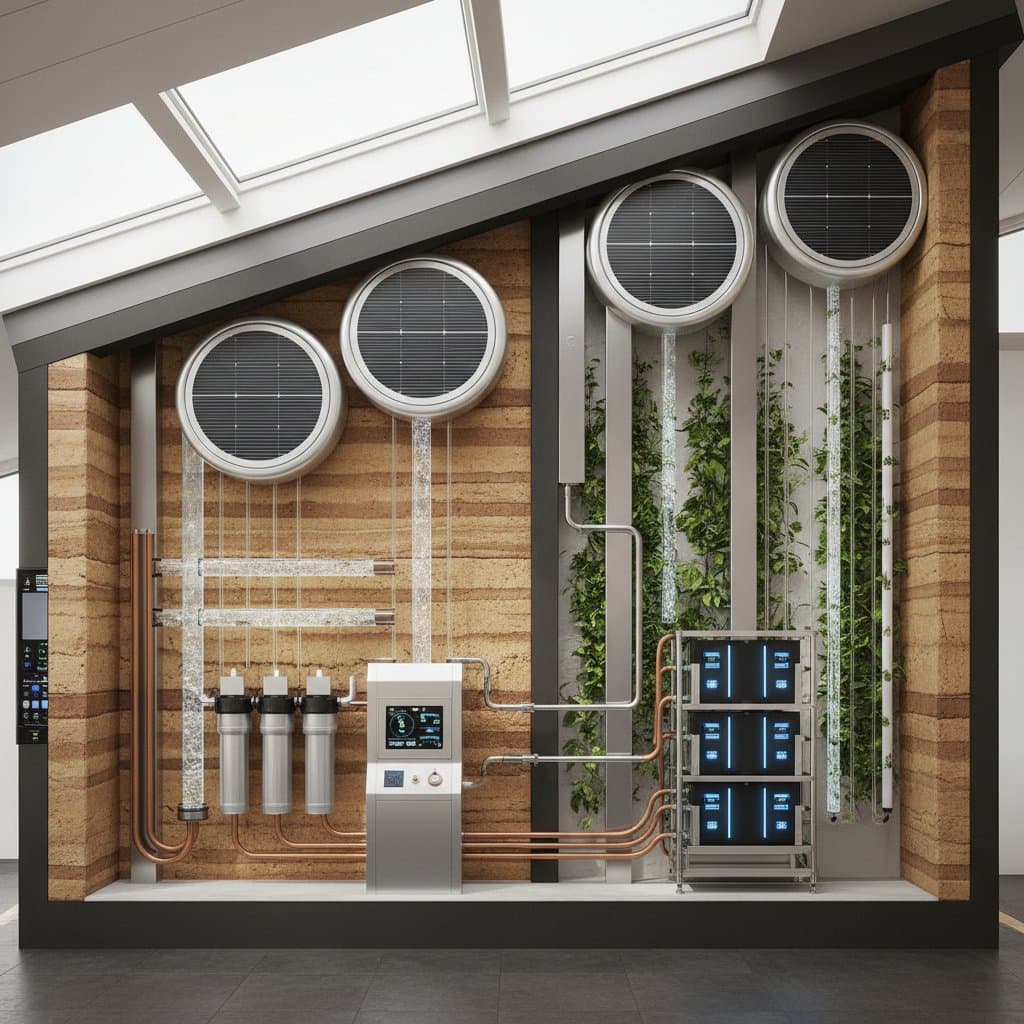
An Earthship functions as a passive solar dwelling engineered to function without connection to public services. The framework employs robust, weight-bearing walls formed from densely packed earth within reused tires. These walls capture solar warmth by day and radiate it gradually after dark, stabilizing internal conditions with limited use of mechanical aids. Sloped roofs gather and purify precipitation. Photovoltaic arrays produce electrical power. Enclosed growing areas yield nourishment and regulate atmosphere. Each element contributes to overall functionality.
Essential Elements of an Earthship
Grasping the operation of an Earthship involves dissecting its primary mechanisms.
-
Thermal Retention and Barrier Properties
The earth-filled tire walls form the foundational support. Construction entails packing discarded tires with firm soil to form substantial, compact units that retain thermal energy. Exterior surfaces receive coatings of organic plaster or cement render for aesthetic appeal and elemental resistance. This thermal capacity, paired with suitable barriers, diminishes requirements for supplemental temperature regulation. -
Photovoltaic Energy and Storage Solutions
Arrays installed on roofs convert sunlight into power, which charges storage batteries to operate illumination, devices, and minor mechanisms. In various weather conditions, a standard setup suffices for routine demands, although residents in overcast areas incorporate auxiliary generators for prolonged low-light scenarios. -
Precipitation Collection and Purification Processes
Surfaces channel rainwater into purification units and reservoirs. The resource cycles through a reuse network that nourishes interior vegetation prior to advanced treatment for sanitary or exterior applications. This integrated circuit enables operation absent from public water sources. -
Waste Processing and Cultivation Integration
Reused water from sinks and showers, along with sewage, undergoes in-place remediation via biological filters and botanical treatments. Contained planting zones serve dual roles as cultivation spaces, supporting herbs, produce, and compact fruit varieties. This arrangement establishes a seamless loop where refuse fosters productivity.
Financial and Building Factors
Erecting an Earthship demands more than arranging soil-laden tires. Precise organization, regulatory compliance, and workforce commitment prove necessary. Expenses vary based on site, resources, and manual involvement levels.
- Resource Expenses: Professional installations range from 150 to 300 dollars per square foot. Owner-led initiatives lower these figures considerably, yet effort may extend over several months.
- Regulatory Approval: Certain locales restrict non-traditional builds or water reuse setups. Verify regional regulations prior to commencement. Jurisdictions might necessitate certified designs or unique clearances for non-standard frameworks.
- Duration: Basic units require six to eight months with a compact team. Expansive designs with intricate features demand extended periods, particularly in isolated or challenging landscapes.
Adjustments for Local Conditions
Earthships excel in dry or moderately dry environments featuring abundant sun and sparse rain. In moist or frigid zones, enhanced barriers and humidity management gain importance. Designers adjust roof angles, wall dimensions, and airflow mechanisms to align with prevailing climates. For example, structures in southeastern regions incorporate air-circulating earth walls and moisture shields to counter dampness, whereas arid versions emphasize sun blocking and reservoir capacity.
Security and Upkeep Protocols
Earthships aim for reduced ongoing care, yet routine inspections remain vital. Seal tire structures to block water penetration. Clean photovoltaic setups and oversee battery health regularly. Periodically cleanse water reuse pathways to avoid sediment accumulation. During assembly, handle dense components and compression tools with safety equipment and adequate instruction. Engage specialists for framework or wiring tasks.
Assessing Financial Viability
Initial expenditures for an Earthship surpass those of conventional builds, yet sustained economies prove substantial. Absence of recurring service charges keeps operational expenses low. A durable installation recovers premium costs over a few years. Owners secure freedom from providers and achieve reduced ecological influence. Although the secondary market stays specialized, rising demand for eco-conscious dwellings elevates property worth.
Steps to Realize an Earthship
For those committed to constructing or acquiring an Earthship, initiate by touring an existing example. Numerous specialists provide guided visits or educational sessions to demonstrate operational elements. Compile details on local regulations, weather profiles, and resource availability. Develop a comprehensive financial plan encompassing building, approvals, land readiness, and reserves. Determine promptly if employing accredited constructors or blending expert and personal efforts suits best.
Earthships transcend mere housing to embody responsive ecosystems attuned to surroundings. Through meticulous strategy and dedication to knowledge, individuals craft residences offering enduring security, efficiency, and self-reliance.