
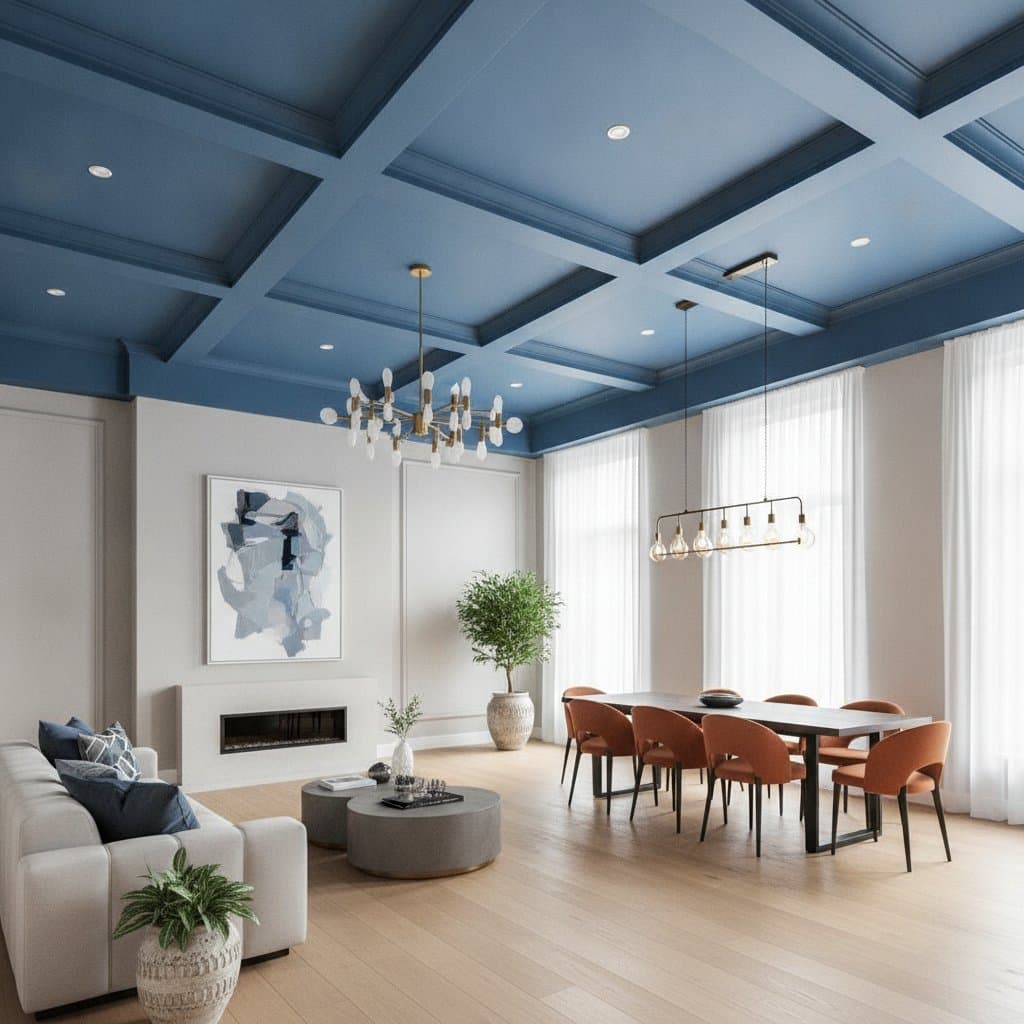
Bold Painted Ceilings Transform Your Interior Spaces
A painted ceiling adds dimension to any room once walls, lighting, and furniture reach completion. The surface overhead often receives little attention yet accounts for one sixth of visual space. Treating it as an active design element produces balance and personality that plain white finishes cannot achieve.
Color on the ceiling alters how people perceive height and volume. Darker tones lower tall ceilings to create intimacy. Lighter shades open smaller rooms and reflect available light. These shifts occur before furniture or accessories enter the conversation.
Select a Color That Matches Room Goals
Color influences mood from the moment someone enters. Match the chosen shade to the feeling each space should convey.
- Soft neutrals such as pale gray or powder blue suit bedrooms that require calm. These tones keep surfaces bright and open.
- Deep shades including charcoal or forest green add weight to living rooms and dining areas. They emphasize crown molding and other architectural lines.
- Warm terracotta or golden tones complement wood and natural textures in family rooms. The result feels welcoming without visual heaviness.
- Unexpected accents like teal or coral work well in compact spaces such as powder rooms. The color registers as a deliberate surprise rather than an overwhelming statement.
Test samples on the actual ceiling surface across different times of day. Light direction and ceiling height change how any hue appears once applied.
Coordinate the Ceiling With Existing Surfaces
A successful ceiling color relates to walls, textiles, or flooring already present. Three approaches maintain visual order.
Apply a lighter or darker value of the wall color to produce a continuous gradient. Introduce strong contrast by placing a dark ceiling above light walls when natural light is plentiful. Echo a fabric or rug tone on the ceiling to create repetition that feels intentional.
Finish choice further refines the effect. Matte paint absorbs light for a quiet presence. Satin or semi gloss reflects light and adds subtle depth.
Prepare the Surface and Workspace
Ceiling work requires more setup than wall painting because of gravity and reach. Follow these steps in order.
- Clear or cover all furniture and lay drop cloths across the floor.
- Remove dust and cobwebs, then apply primer to ensure uniform coverage.
- Use an extension pole on the roller and an angled brush for edges.
- Position bright neutral lighting to reveal missed spots before the paint dries.
Hire experienced painters when vaulted heights or textured surfaces complicate the job. Professionals account for humidity and ventilation that affect drying times in different climates.
Budget and Schedule the Work
Costs remain modest relative to other interior updates. Standard rooms require fewer materials than vaulted or heavily textured ceilings. Two coats usually deliver even color, especially when moving from white to a deeper tone. Allow full drying between coats to prevent streaks.
Room Specific Applications
Living rooms gain refinement from deep emerald that supports warm lighting. Kitchens benefit from pale mint or sky blue above white cabinetry. Bedrooms feel restful under soft lavender. Bathrooms take on a spa quality with glossy aqua that echoes water reflections. Entryways make strong first impressions with burnt orange or sapphire.
Move From Planning to Application
A finished ceiling draws attention upward and highlights architecture that otherwise stays unnoticed. Decide first on the atmosphere each room should support, then select color and finish accordingly. Local painters familiar with regional conditions can execute the plan once the palette is set.