
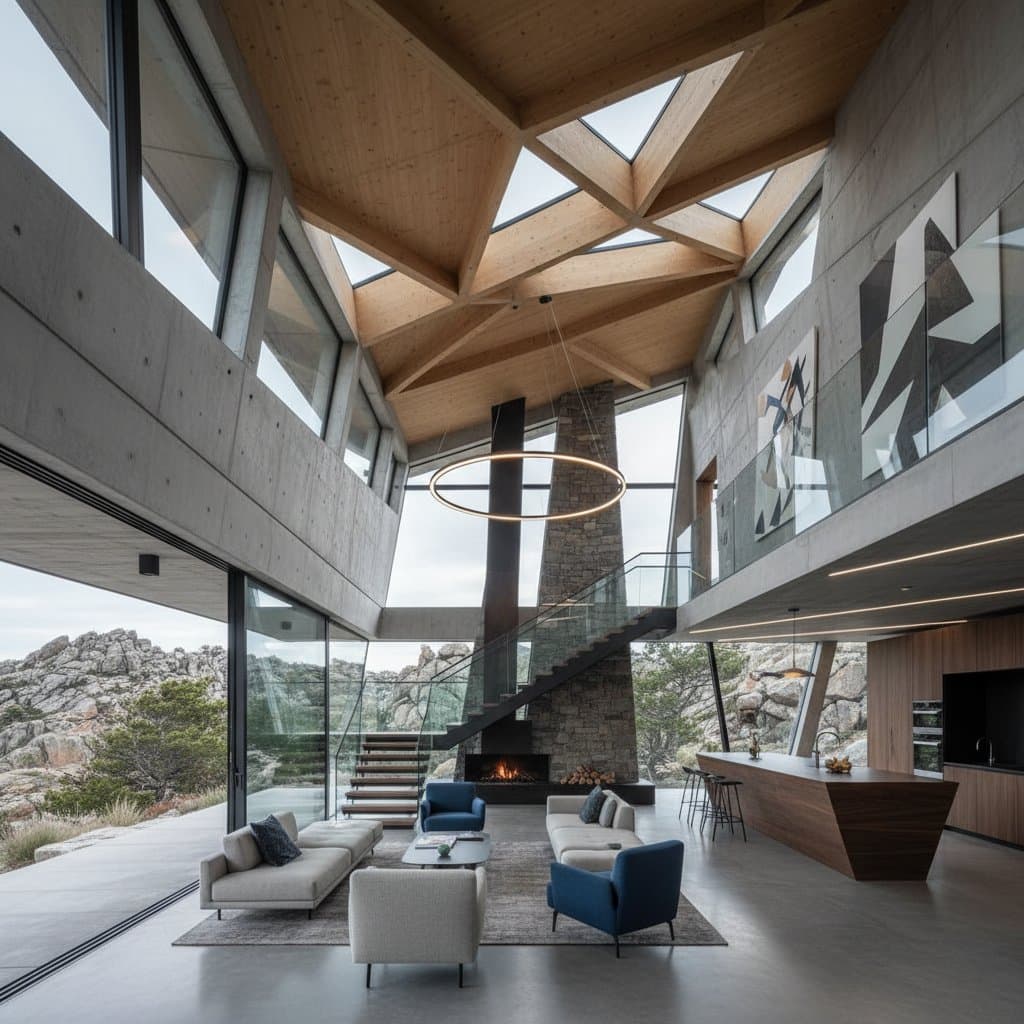
Asymmetry Redefines Home Architecture for 2025
Contemporary residential designs increasingly feature slanted roofs, staggered window placements, and unconventional structural forms. These elements depart from the conventional symmetry of colonial or craftsman styles. The emergence of asymmetry in architecture introduces a fresh perspective on balance, achieved through deliberate contrasts and fluid movements that captivate the eye.
The Shift Toward Asymmetry
Modern homeowners seek residences that embody personal expression and originality. Asymmetric principles provide architects with the flexibility to craft structures aligned with individual preferences, free from imposed uniformity. This movement echoes deconstructivism, which prioritizes irregular geometries, disjointed forms, and surprising configurations. Rather than relying on precise right angles and mirrored exteriors, designs incorporate overlapping surfaces, pitched roof variations, and asymmetrically positioned entries to generate intrigue from multiple viewpoints.
Why Homeowners Embrace Asymmetry
Asymmetric architecture conveys vitality and contemporaneity. It enables adaptable layouts that conform to the natural contours of a property, avoiding the imposition of rigid forms on the landscape. For instance, on a gently sloping site, architects might develop a terraced structure where each level harmonizes with the topography. Internally, spatial transitions occur through natural light flows and volumetric variations, supplanting traditional partitions or hallways. Such strategies yield interiors that promote openness, ventilation, and a profound bond with the external environment.
Key Design Elements
-
Irregular Rooflines
Roofs often slant or cantilever in unconventional manners, forming dramatic profiles that facilitate superior water runoff and daylight penetration into living areas. -
Fragmented Facades
Exteriors eschew uniform planes in favor of material amalgamations, such as brushed metal panels alongside reclaimed wood and expansive glazing, layered across irregular surfaces to impart dimension and tactile richness. -
Offset Windows and Doors
Strategic positioning of fenestration at diverse elevations or in clustered arrangements optimizes diurnal light distribution. Effective implementation not only elevates occupant well-being but also minimizes reliance on artificial heating and cooling systems. -
Layered Interiors
Fluid plans incorporate semi-enclosing partitions, suspended staircases, and graduated ceiling elevations to delineate zones while preserving connectivity and spatial generosity.
Costs and Practical Considerations
Constructing an asymmetric residence typically incurs expenses 10 to 25 percent higher than those for symmetrical counterparts, primarily due to bespoke engineering demands and specialized materials. The intricacies of non-orthogonal geometries necessitate collaboration with experienced contractors and rigorous structural assessments, particularly in jurisdictions with stringent building regulations. In such locales, engaging a licensed architect becomes essential to produce comprehensive plans compliant with zoning and safety standards.
Regarding energy performance, irregular profiles can introduce thermal inconsistencies or shaded areas, yet strategic interventions like high-performance insulation and oriented glazing mitigate these effects. Numerous owners deem the investment justifiable, given the enhanced aesthetic distinction and potential for elevated property values upon resale.
Integrating Creativity with Everyday Utility
Superior asymmetric dwellings transcend mere visual novelty to embody seamless functionality. Prior to finalizing plans, evaluate alignment with routine activities, including furniture arrangement, storage solutions, and upkeep requirements. For example, expansive glazed surfaces demand regular cleaning, while atypical roof configurations may involve periodic inspections by qualified professionals. Competent architects tailor designs to user behaviors, guaranteeing that the residence supports comfortable habitation rather than serving as a mere conceptual exercise.
Steps to Implement Asymmetric Design
To pursue this aesthetic, compile a curated collection of inspirational residences that resonate with your vision. Collaborate with an architect versed in deconstructivist tenets, capable of converting conceptual sketches into viable, code-adherent blueprints. Anticipate an extended ideation period, as bespoke projects demand iterative refinement. Ultimately, a well-realized asymmetric home transcends ornamental appeal; it manifests as an intimate extension of one's daily rhythms, delivering a harmonious equilibrium defined by intentional asymmetry and enduring relevance.