
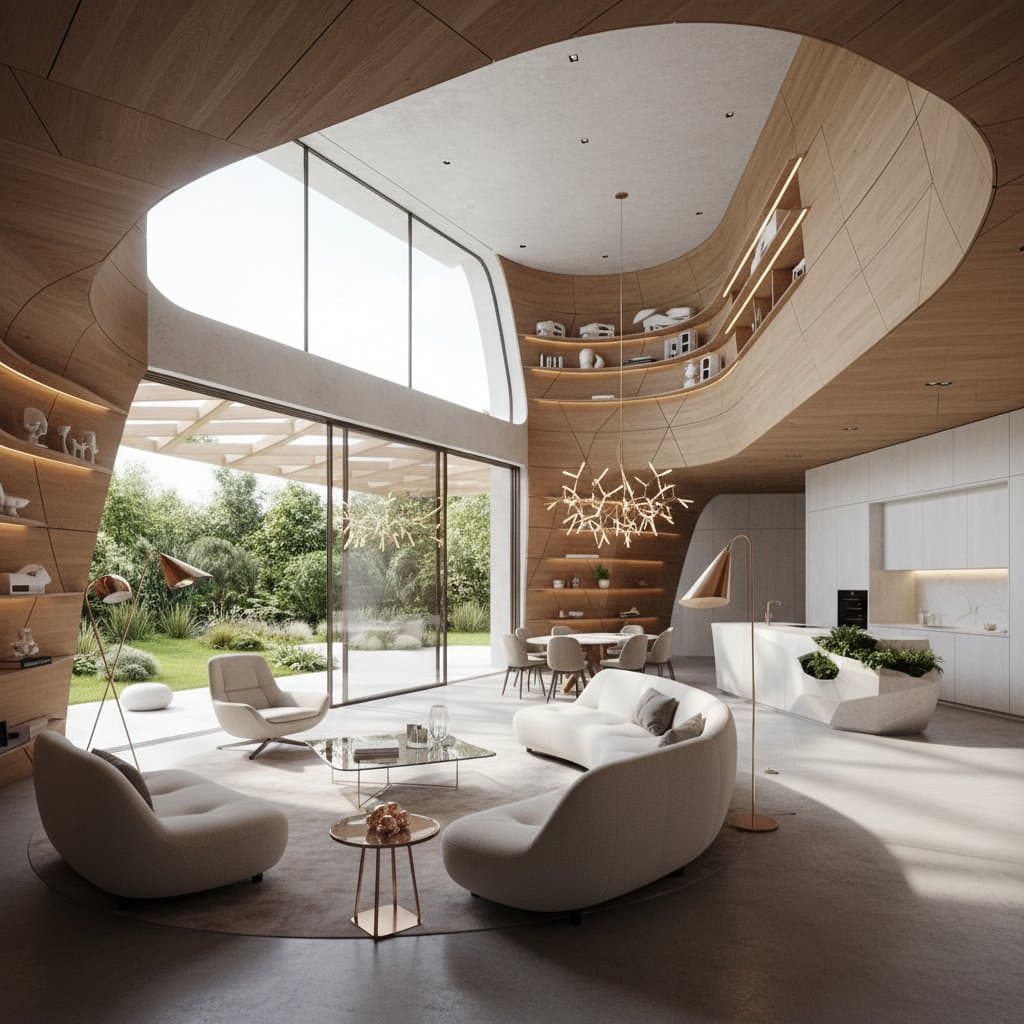
Parametric Design: Algorithms Shaping Personalized Homes
Imagine collaborating with an architect to articulate your ideal residence. You envision abundant natural light that shifts gracefully with the sun, permeable walls for improved air quality, and a roof that harmonizes seamlessly with the surrounding terrain. Traditional sketching methods often limit these visions. Parametric design addresses this challenge by leveraging algorithms and data to develop architecture that aligns precisely with your requirements, site conditions, and creative aspirations.
Foundations of Parametric Design
Parametric design shifts the conventional manual process toward a flexible, relational framework. Designers establish connections among elements through parameters, which serve as computational rules for form generation. A single adjustment triggers automatic model updates. This approach facilitates rapid prototyping, targeted optimization, and inherent precision absent in manual drafting.
For residential clients, the benefits extend to performance-driven outcomes. Parametric models enable fine-tuned window positions for optimal solar exposure, roof configurations for effective rainwater collection, or wall adjustments for superior thermal insulation. Decisions rely on quantifiable metrics rather than intuition.
Core Mechanics Explained
Parametric design relies on algorithms to construct geometric forms. Consider it akin to outlining a formula that yields infinite adaptations from core variables. Architectural parameters encompass site alignment, climatic influences, material properties, and financial constraints.
Specialized tools such as Grasshopper, Dynamo, or Rhino facilitate this process. These platforms process inputs to produce geometries dynamically. Designers evaluate numerous iterations swiftly, from dozens to thousands.
Specific applications include:
- Adapting foundation designs to varying terrain slopes.
- Recalculating shading requirements and energy consumption upon window dimension changes.
- Modifying material selections and span lengths to adhere to budgetary limits.
This interconnected system ensures that alterations propagate consistently across the model.
Relevance for Homeowners
Parametric design impacts residential projects through enhanced personalization and streamlined workflows. Conventional methods demand repetitive manual revisions for each modification. In contrast, parametric techniques deliver instantaneous responses, accelerating option exploration and minimizing design expenses while curbing on-site discrepancies.
Principal benefits encompass:
- Accuracy: Mathematical definitions minimize errors in all components.
- **** Structures achieve superior daylighting, ventilation, and energy efficiency.
- Adaptability: Multiple scenarios receive evaluation prior to finalization.
- Budget Management: Simulations forecast resource needs and overall expenses accurately.
Workflow of a Parametric Project
- Parameter Establishment: Architects collect data on terrain features, financial parameters, regulatory standards, and client preferences to form the model's foundational rules.
- Algorithm Development: Designers program interdependencies among structural, visual, and ecological elements within parametric software.
- Iteration Generation: The system outputs varied designs for client assessment, illustrating impacts on aesthetics and utility.
- Selection and Refinement: Collaboration refines choices to harmonize objectives, functionality, and economics.
- Document Production: Approved designs convert to detailed blueprints and specifications for construction professionals.
This sequence accelerates choices and fosters seamless integration between creative and execution phases.
Aesthetic and Functional Innovations
Parametric techniques excel in facade development, where exteriors balance visual appeal with operational efficacy. Algorithms tailor surfaces to mitigate solar glare, redirect airflow, or ensure privacy. Density-modulated screens exemplify this, preserving sightlines while diffusing light.
In home settings, applications manifest as:
- Sun-filtering perforated exteriors that evolve with daily light patterns.
- Seasonally responsive louvers for dynamic shading.
- Textured walls promoting airflow in tropical zones.
Such features enhance thermal regulation, lower utility bills, and prolong component durability.
Budgeting and Feasibility
Parametric design accommodates diverse financial scopes, contingent on specialized skills. For modest residences, fees typically represent approximately ten percent of construction totals. Elaborate undertakings incur higher charges due to extended simulations and computations. Beyond software licensing, value derives from the designer's proficiency in parameter orchestration.
Influential cost elements include:
- Form Intricacy: Complex shapes demand increased processing and refinement efforts.
- Personalization Depth: Bespoke adaptations necessitate advanced scripting.
- System Integration: Analyses of load-bearing and climatic factors elevate expenses.
Although initial investments exceed standard approaches, savings in performance, error reduction, and estimation accuracy often offset costs by five to fifteen percent over the project lifecycle.
Compliance and Technical Integrity
All parametric outputs adhere to jurisdictional codes and safety protocols. Algorithms identify potential violations proactively, yet licensed experts conduct ultimate validations. Considerations such as load distribution, fire resistance, and wiring configurations follow immutable standards.
Clients must verify that teams comprise certified architects or engineers versed in both digital tools and regulatory landscapes. Responsible application bolsters safety via predictive modeling and exactitude.
Professional Expertise Versus Self-Directed Trials
Individuals with engineering experience may trial introductory parametric features for layouts or furnishings. Accessible platforms like SketchUp or Fusion 360 provide basic variable controls for visualization.
Professional involvement proves indispensable for comprehensive projects involving:
- Modifications to supporting structures.
- Simulations of illumination, aerodynamics, or thermal dynamics.
- Documentation for approvals.
Expert parametric specialists convert abstract preferences into robust, compliant frameworks.
Adapting to Local Contexts
Parametric methodologies flex to geographic variances while incorporating site-specific inputs. In moisture-rich areas, models emphasize dehumidification and airflow pathways. Temperate zones prioritize heat retention and solar optimization. Varied ordinances necessitate parameter adjustments for conformity.
This versatility permits conceptual reuse across locations with minimal reconfiguration.
Enduring Advantages
Data-infused parametric residences simplify subsequent alterations. Embedded models retain exact specifications for measurements, compositions, and efficiencies. Renovations, such as panel replacements, integrate effortlessly without compromising coherence.
Advancing technologies integrate seamlessly, allowing parameter tweaks to incorporate innovations like advanced composites, sustaining relevance and performance.
Integrating Parametric Design into Your Project
For upcoming builds or overhauls, inquire with architects about parametric potential. Articulate priorities, establish measurable targets, and embrace iterative digital explorations.
This methodology amplifies human ingenuity through analytical support. Designers channel focus toward experiential qualities while algorithms manage quantitative demands.
The synergy of artistry and precision yields residences that evolve with inhabitants, fulfilling the vision of adaptive, intelligent architecture.