
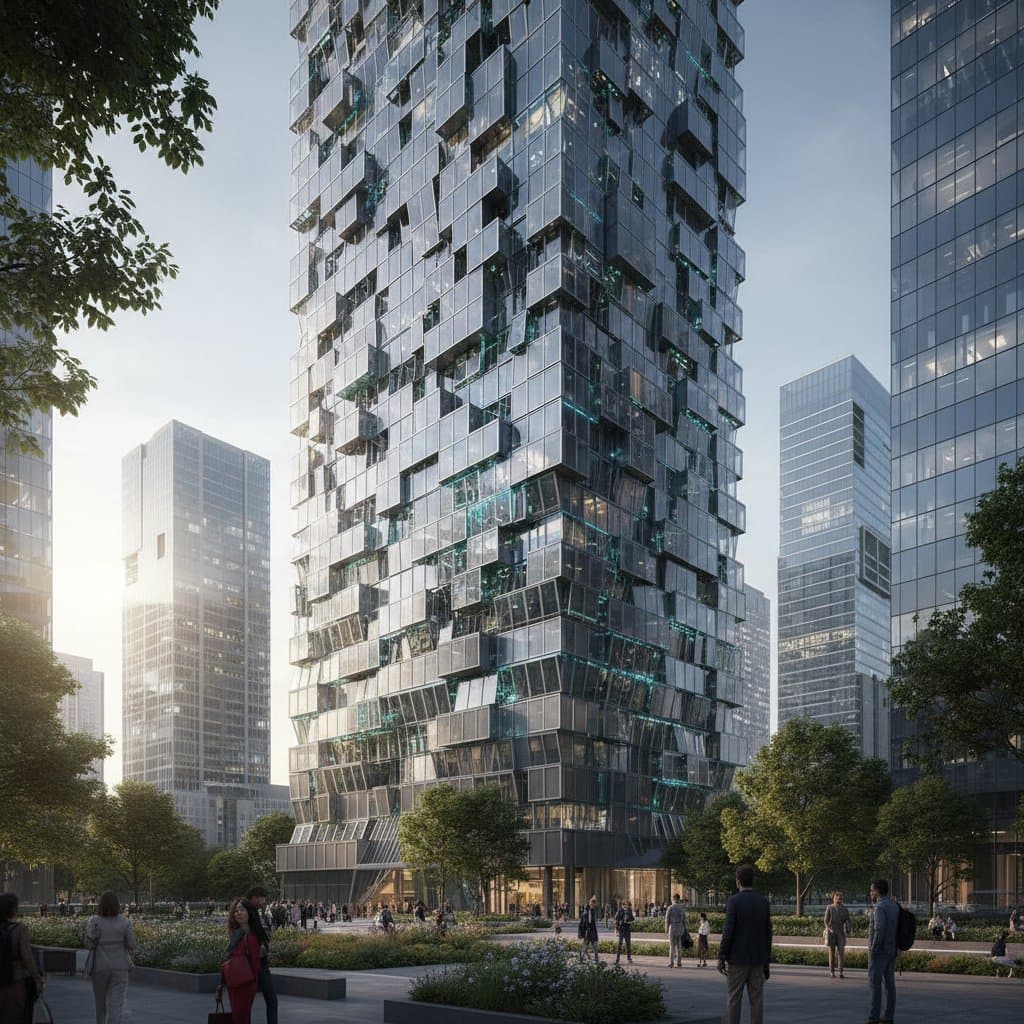
Parametric Facades: Algorithms Redefining Building Exteriors by 2026
Modern buildings often feature exteriors that appear to evolve with shifting sunlight or viewer perspective. These dynamic surfaces and adjustable panels represent more than aesthetic choices. They embody parametric facades, an innovative approach where algorithms precisely design and manage building skins.
This method extends beyond visual effects for architects, engineers, and construction professionals. It integrates technology with environmental factors to optimize material interactions with sunlight and air currents. Building owners benefit from enhanced performance, flexibility, and unique character that surpass conventional designs.
Defining Parametric Facades
A parametric facade constitutes an exterior envelope engineered via algorithms connecting variables like illumination intensity, wind patterns, or user requirements to tangible structures and substances. Architects forgo manual detailing of each element in favor of digital models that self-adjust to parameter shifts. This yields an interactive layer capable of fine-tuning shade, air circulation, and visual harmony either instantaneously or via predefined scenarios.
Practically, such facades deploy retractable panels to minimize thermal influx, channel daylight further indoors, or modify textures for sound control. Underpinning this are computational design platforms, precision manufacturing techniques, and responsive materials.
Key Attractions for Developers and Owners
Developers and property managers gravitate toward parametric facades for several compelling advantages:
-
Energy Optimization
Regulating sunlight penetration and ventilation cuts operational expenses. Automated shading or panel mechanisms lessen reliance on heating, ventilation, and air conditioning units, yielding substantial long-term reductions. -
Unique Architectural Expression
Data-driven and site-specific, no two facades replicate exactly. This customization reflects local contexts, creating bespoke landmarks. -
Enhanced Longevity and Adaptability
Modular constructions facilitate straightforward repairs or enhancements over rigid traditional setups. Individual panels can swap out without disrupting the overall assembly.
The Design and Construction Process
Constructing a parametric facade merges virtual planning, validation, and production. Typical phases encompass:
-
Gathering Site Data
Teams compile metrics on solar trajectories, gust velocities, and thermal fluctuations. These inputs fuel the governing algorithms. -
Developing Parametric Models
Through specialized software, professionals construct three-dimensional representations that react to inputs. A single alteration, like solar positioning, triggers model reconfiguration to uphold efficiency targets. -
Virtual Testing and Refinement
Simulations forecast facade responses pre-build, minimizing on-site adjustments and associated expenses. -
Manufacturing and Assembly
Approved elements undergo machining or additive manufacturing. On-site teams then affix panels, incorporating sensors or actuators for responsive variants.
Essential Factors for Residential and Commercial Projects
While prevalent in corporate structures, parametric facades increasingly suit homes and smaller developments. Consider these aspects prior to adoption:
- Budget Implications: Initial outlays surpass basic coverings. Static variants range from 75 to 100 dollars per square foot; kinetic ones with actuators surpass 200 dollars per square foot.
- Ongoing Upkeep: Active systems demand regular sensor tuning and component inspections. Passive ones require only routine surface care and visual checks.
- Regulatory Compliance: Authorities often mandate comprehensive structural analyses for systems with moving or novel elements.
- Project Duration: Extended upfront modeling precedes swift prefab installation, accelerating overall timelines.
Adapting to Local Environments
Facade efficacy hinges on regional climates. In arid zones, designs emphasize solar deflection and high-albedo surfaces. Temperate areas prioritize insulation and maximized natural light. Cityscapes may incorporate sound-dampening features against urban clamor, whereas seaside installations stress salt resistance and gale tolerance. Early parameter assessment guarantees functional superiority alongside style.
Static Versus Dynamic Configurations
Movement proves optional in parametric designs.
- Static Configurations: These employ immutable shapes tuned to typical exposures. They prove economical, low-maintenance, and ideal for constrained funds.
- Dynamic Configurations: Sensor-linked adjustments enhance operational gains and occupant well-being, though at elevated complexity and price.
Hybrid models often strike optimal balance, blending fixed bases with select movable accents.
Calculating Financial Benefits
Elevated starting investments recoup through diminished utility bills and servicing needs. Elevated property valuations and occupant draw accompany superior envelopes. Certain setups may qualify for reduced insurance rates via bolstered safety profiles.
Steps to Implement Parametric Facades
To pursue this technology, engage architects versed in computational methods alongside fabricators skilled in advanced production. Demand simulations illustrating impacts on thermal, illuminative, and energetic metrics. Secure explicit upkeep protocols and guarantees.
Accessible software now extends these solutions to apartments, storefronts, and bespoke residences beyond elite commissions. Parametric facades signal enduring evolution in intelligent, context-aware building practices.