
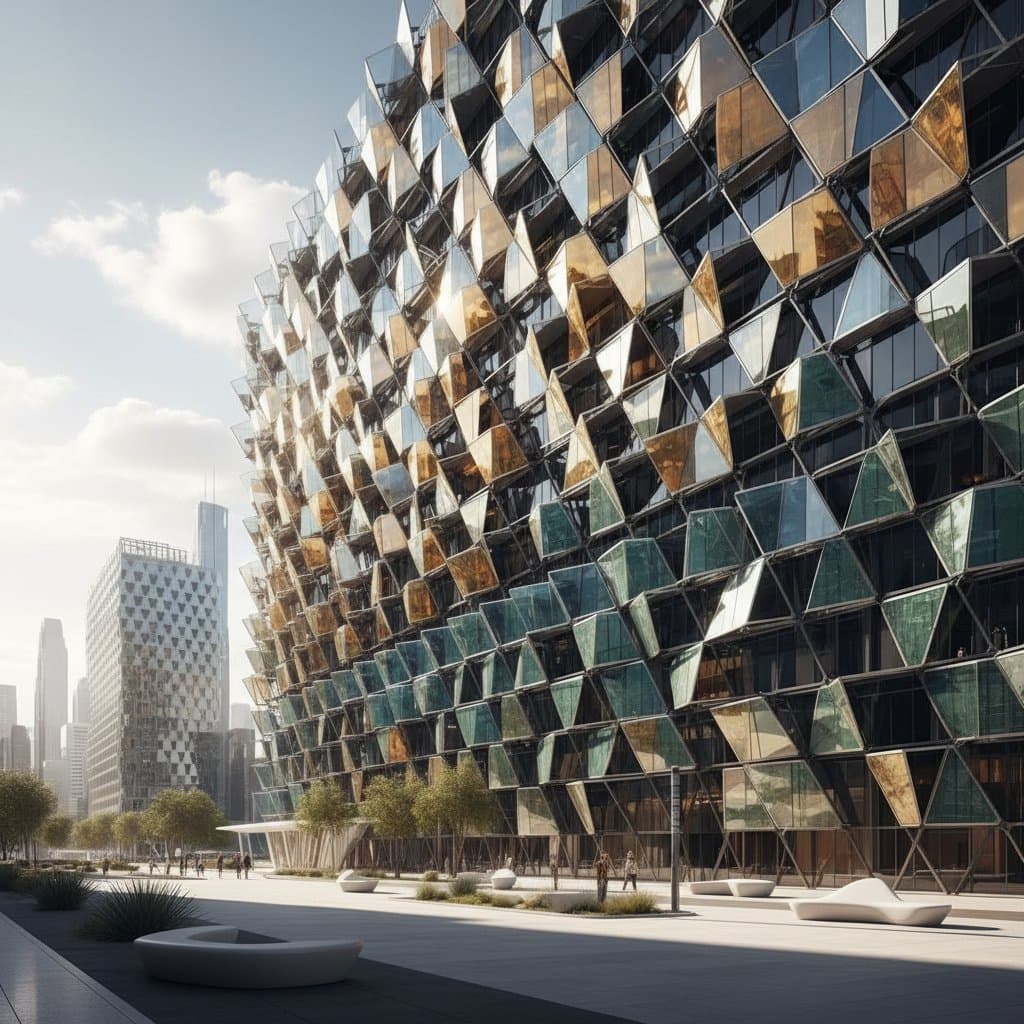
Understanding Adaptive Facades
Adaptive facades represent a breakthrough in architectural innovation, where building exteriors respond dynamically to environmental conditions. These systems employ sensors and algorithms to monitor real-time weather data, such as temperature, humidity, and solar radiation. In response, the facades adjust their configuration to optimize comfort, energy consumption, and structural integrity.
Traditional building skins remain fixed, often leading to inefficiencies like excessive heating or cooling demands. Adaptive designs, however, transform these challenges into opportunities for sustainability. Architects now integrate smart materials and mechanical elements that shift seamlessly with changing conditions.
This evolution stems from the need for resilient structures in an era of unpredictable climates. By 2026, such facades will become standard in urban developments, blending technology with aesthetic elegance.
Core Technologies Driving Adaptation
At the heart of adaptive facades lie sophisticated sensors embedded within the building envelope. These devices collect data on external factors like wind speed, light intensity, and precipitation. Algorithms process this information instantaneously, directing actuators to modify the facade's orientation or permeability.
Parametric modeling plays a crucial role in the design phase. Architects use software to simulate various weather scenarios, creating facades that perform optimally under diverse conditions. Materials such as electrochromic glass or shape-memory alloys enable physical changes, from tinting windows to deploying shading panels.
Integration with building management systems ensures cohesive operation. For instance, when temperatures rise, louvers may open to facilitate natural ventilation, reducing reliance on mechanical HVAC units. This layered approach combines hardware, software, and predictive analytics for precise control.
Key Components
- Sensors: Detect environmental variables with high accuracy.
- Algorithms: Analyze data and issue commands for adjustments.
- Actuators and Materials: Execute changes, such as expanding or contracting elements.
- Control Systems: Coordinate responses across the entire facade.
Benefits for Energy Efficiency and Sustainability
Adaptive facades significantly reduce energy demands by aligning building performance with external conditions. During peak sunlight hours, automated shading prevents overheating, thereby lowering cooling costs by up to 30 percent in simulations. In colder climates, the system seals gaps to retain heat, minimizing heating requirements.
Beyond efficiency, these designs promote sustainability through resource conservation. They decrease the carbon footprint associated with energy production, supporting global efforts to combat climate change. Moreover, by extending the lifespan of building materials through protective adaptations, maintenance needs diminish over time.
Aesthetic advantages further elevate their value. Facades that morph with the weather create visually dynamic structures, enhancing urban landscapes. This fusion of form and function appeals to developers seeking both practical and striking designs.
Real-World Applications and Examples
In urban high-rises, adaptive facades manage airflow to mitigate wind loads, ensuring occupant safety during storms. Consider a scenario where photovoltaic-integrated panels tilt toward the sun for maximum energy harvest while retracting during high winds. Such applications demonstrate versatility across building types, from offices to residential complexes.
Educational institutions benefit from daylight optimization, where facades adjust to diffuse natural light into interiors, reducing artificial lighting use. Hospitals employ these systems to maintain sterile environments by controlling humidity and temperature fluctuations externally. These examples illustrate how adaptive technology addresses sector-specific needs.
Forward-thinking projects already showcase prototypes. Structures with kinetic panels that undulate like leaves in the breeze not only regulate climate but also serve as architectural landmarks. As costs decline, widespread adoption will accelerate.
Steps to Implement Adaptive Facades
Architects begin by assessing site-specific weather patterns using historical data and climate models. This analysis informs the selection of appropriate technologies, ensuring compatibility with the building's overall design. Collaboration with engineers early in the process integrates facade systems into the structural framework.
Next, prototyping through digital simulations validates performance under varied conditions. Stakeholders review these models to refine specifications, balancing initial investment with long-term savings. Installation involves precise sensor placement and calibration to achieve seamless operation.
Post-construction, ongoing monitoring refines algorithms based on actual usage data. Maintenance protocols focus on durable components to sustain reliability. Developers who follow these steps position their projects as leaders in sustainable innovation.
- Conduct environmental analysis.
- Design and simulate parametric models.
- Select and integrate technologies.
- Prototype and test.
- Install and calibrate.
- Monitor and optimize.
The Lasting Impact on Architectural Futures
Adaptive facades herald a new era where buildings actively engage with their surroundings, fostering resilience and efficiency. These systems not only conserve resources but also inspire creative expressions in design. As technology advances, expect further refinements, such as AI-driven predictions that anticipate weather shifts.
For stakeholders in architecture, embracing these innovations yields competitive advantages in a market prioritizing sustainability. The result is environments that enhance well-being while honoring ecological responsibilities. Ultimately, adaptive facades redefine how structures contribute to vibrant, enduring cities.