
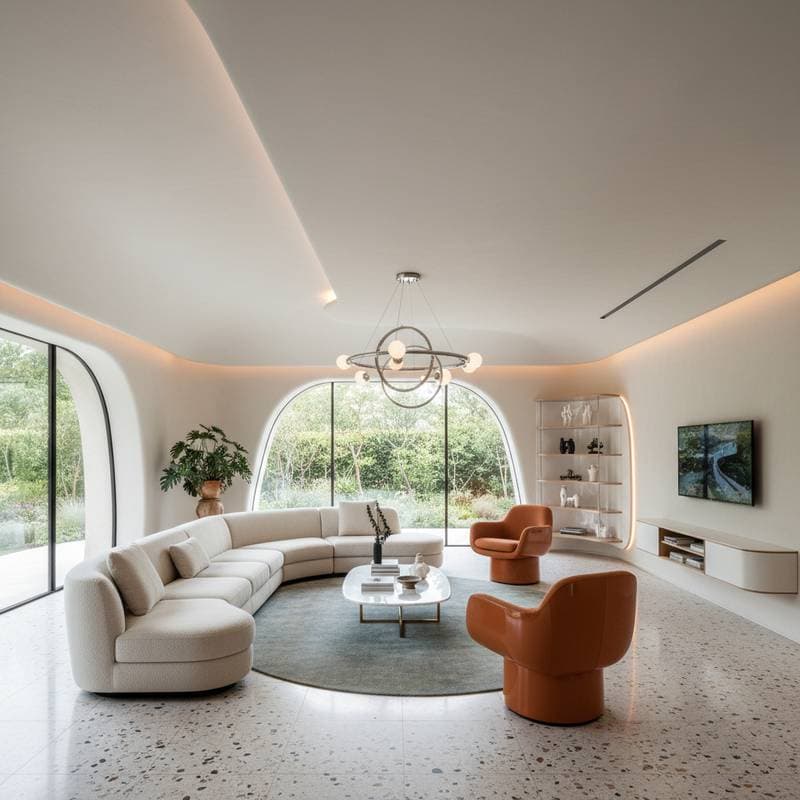
Reviving the 70s Space Age Aesthetic in Modern Architecture
Rounded edges, pristine whites, and chrome accents appear more frequently in residential designs. These fluid lines and forward-looking shapes seem innovative, yet they trace back to the 70s Space Age movement. That era's vision of progress now influences architects and residents, redefining approaches to current interiors.
This resurgence extends beyond mere reminiscence. Designers reinterpret the era's daring innovation through eco-friendly resources, energy-efficient structures, and an emphasis on fluid forms. The Space Age once represented discovery and advancement; now it adapts those ideals to promote enduring, imaginative environments.
Factors Fueling the Space Age Resurgence
Residents seek layouts that inspire creativity while supporting daily routines. The Space Age's polished, exploratory vibe addresses this demand. It departs from stark simplicity of late trends without embracing ornate excess, achieving equilibrium between visionary and approachable.
Multiple influences propel this growing appeal:
- Digital media reintroduces 70s motifs, such as orb-shaped lamps and adaptable seating.
- Progress in construction techniques simplifies crafting arcs and lustrous coatings at reduced expense.
- Environmental priorities favor substances like tempered glass, lightweight alloys, and repurposed polymers that align with the style's signature tones.
Consequently, this trend projects optimism, distinct from simple imitation.
Essential Elements of Space Age Design
The Space Age arose from influences like speculative fiction and cosmic ventures. Builders translated such inspirations into novel experiments with contours, shades, and textures. Current adaptations retain core traits, enhanced by contemporary refinements.
Curved and Fluid Silhouettes
Arcing borders, hemispherical roofs, and orbital openings characterize the style. These contours temper rigid outlines and suggest dynamism. In residences, examples include sinuous prep areas, vaulted portals, or domed overhead vents supplanting straight angles.
Advanced Substances
Early iterations employed molded synthetics, polished metals, and resins. Modern counterparts utilize durable options such as electrostatic-coated metals, honed stone, and non-toxic polymers. These deliver comparable sheen while minimizing ecological impact.
Uninterrupted Contours and Fluid Planes
Effortless shifts among verticals, horizontals, and grounds foster unity. Integrated cabinetry and concealed fixtures reduce visual noise. The aim creates a singular entity from diverse components.
Luminous and Sheened Textures
Metallic highlights persist as focal points. Polished alloys, enduring steels, and textured brasses introduce radiance and depth. Ivory enamels on storage units and mirrored worktops reflect the era's enthusiasm, complementing precise illumination sources.
Vibrant Accents
Neutral silvers and brights form the base, accented by vivid tones like citrus, aqua, or chartreuse. Such elements emerge in seating, focal panels, or fixtures, infusing vitality and whimsy.
Integrating Space Age Elements into Residential Spaces
Adopting this style requires no radical overhaul. Thoughtful choices allow incorporation into conventional frameworks with reasonable effort.
Establish Structural Foundations
During renovations or constructions, incorporate arcing partitions, circular apertures, or projecting awnings. Such features establish the motif instantly. In established dwellings, a bowed threshold or rounded overhead opening yields significant effect.
Select Textures and Coatings
Opt for even, light-refracting planes. Buffed stone bases, transparent barriers, and enameled enclosures suit the aesthetic. Alloy fittings in matte silver or bright metal amplify the advanced ambiance discreetly.
Incorporate Thematic Illumination
Illumination shapes the mood here. Seek suspended globes, disc forms, or loop designs. Embedded linear sources accentuate contours and diffuse softness. Automated controls enable adjustments in intensity and hue for varied atmospheres.
Streamline Interior Pieces
Select items with gentle bends and molded profiles. Streamlined loungers, pedestal seats, and oval surfaces maintain harmony. Steer clear of elaborate ornamentation. Intentional selections enhance the cohesive interior.
Apply Subtle Enhancements
Circular reflectors, geometric prints, and sheened vessels finalize the arrangement. Maintain sparsity in adornments. The objective yields expansive, progressive areas free of congestion.
Budget and Implementation Details
Space Age updates vary from subtle enhancements to comprehensive overhauls, scaled to finances and extent. Anticipate these ranges:
- Surface-level changes like fixtures, coatings, and movable items cost $5,000 to $15,000 for average residences.
- Partial alterations involving fresh textures, bent panels, or embedded units span $25,000 to $60,000.
- Extensive reconfigurations or builds surpass $150,000, particularly with bespoke alloy or transparent integrations.
Location-Based Expenses
Regions rich in vintage properties, such as coastal California or Florida enclaves, often feature specialists in this idiom, reducing workforce fees. In areas dominated by conventional builds, specialized curving or assembly commands higher rates.
Compliance and Oversight
Interior modifications seldom need approvals, but framework shifts, aperture swaps, or wiring overhauls do. Verify with municipal authorities prior to commencement. Arced transparents or alloys demand exact specifications; engage experts accordingly.
Duration Estimates
Minor adjustments complete in weeks; thorough projects extend months, influenced by supply chains. Bent components frequently involve extended preparation periods.
Value Recovery
Unique stylistic traits draw interest and accelerate sales in saturated areas. Quality-executed Space Age features recoup 60 to 80 percent of outlays. Beyond finances, they cultivate inventive, lasting habitats.
Harmonizing Vintage and Current Influences
Proportion guides effective application. Excess advanced details evoke staged scenes; scarcity leaves designs unresolved.
- Blend eras by matching bent loungers with plain timber surfaces or subdued fabrics for stability.
- Deploy illumination to emphasize forms and grains evenly.
- Maintain tonal unity with silvers, neutrals, and select highlights.
- Limit embellishments to allow forms prominence.
Sustaining the Design
Glossy planes reveal marks readily; clean routinely with gentle solutions. Sheened areas warrant careful handling to prevent abrasions. Alloys respond to basic cleansers and rinsing.
Custom arced transparents or panels benefit from yearly reviews of joints and anchors. Diligent care upholds aesthetics and integrity.
Adaptations permit versatility. Alter highlights or sources without eroding the core. Residents often rotate fabrics or visuals seasonally to sustain freshness.
Embracing Forward-Thinking Living
This aesthetic fosters environments that inspire exploration within familiar bounds. Residents gain spaces that evolve with needs, blending historical boldness with present practicality. The result elevates daily life through enduring innovation.