
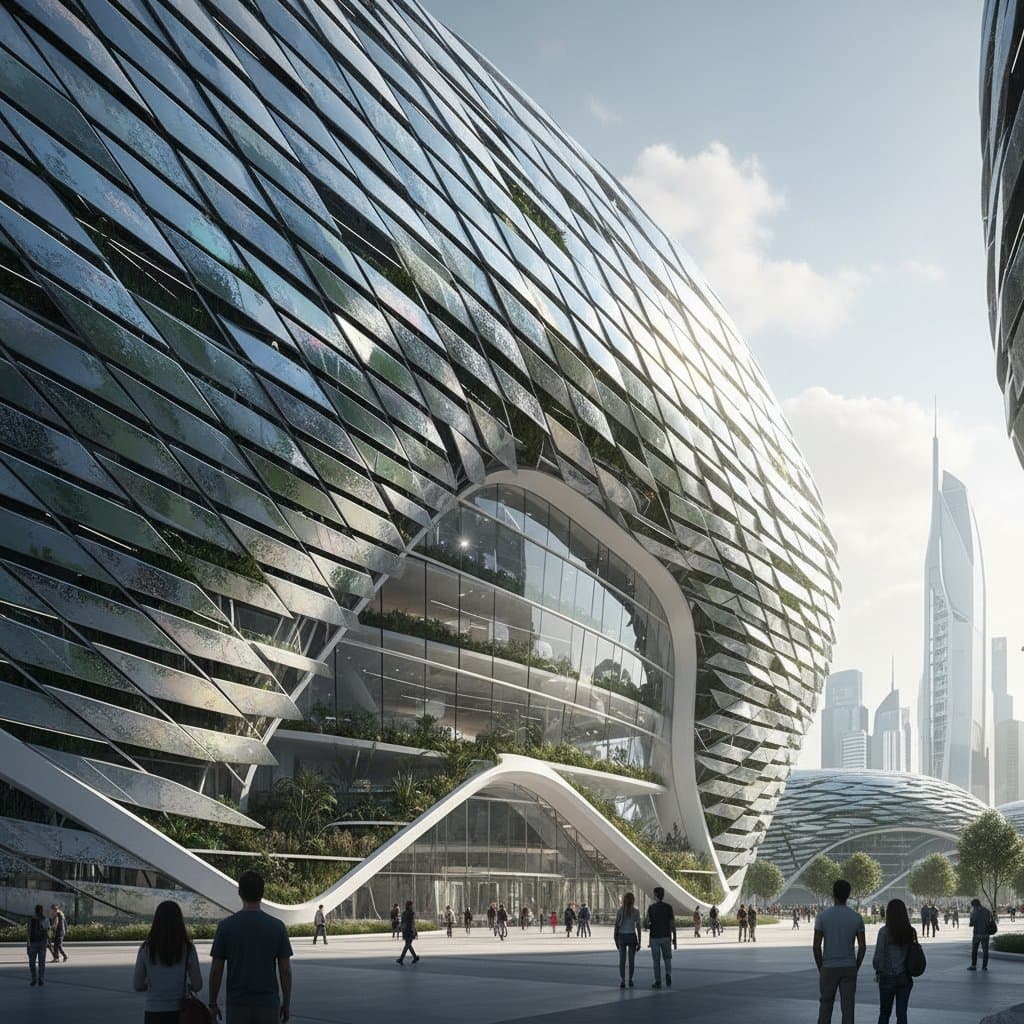
Algorithm-Driven Facades Shaping Architecture’s Next Chapter
Picture a city street where building surfaces shift gently with the passing sun. Glass elements angle to minimize glare, while patterned screens adjust to capture breezes. These facades interact with light, weather, and passersby, creating an illusion of breath and vitality. Such designs mark a shift from inert structures to adaptive systems that enhance urban life.
Traditional facades served as fixed barriers against weather. They provided shelter but ignored dynamic conditions. Modern architecture employs algorithms to manage intricate calculations, enabling facades that respond to environmental cues and improve energy use.
The Opportunity Behind Algorithmic Facades
Facades represent the building's primary interface with the outdoors. They regulate heat, daylight, and airflow, directly affecting occupant comfort and operational costs. Algorithmic approaches optimize these functions by tailoring responses to site-specific factors.
Precision drives this innovation. Algorithms evaluate variables like solar paths and wind patterns to customize each facade element. This method yields designs that balance visual appeal with measurable performance gains, such as reduced energy demands by up to 30 percent in simulated models.
How Algorithms Shape Design Decisions
Parametric design forms the foundation, linking variables to geometric outcomes. Architects input data on climate exposure and material properties, then algorithms generate multiple iterations. Testing reveals how variations perform across seasons, allowing refinements for optimal results.
Technology amplifies human ingenuity rather than supplanting it. Designers set creative parameters, while software processes vast datasets to simulate real-world behaviors. For example, adjusting louver density based on hourly light metrics ensures precise shading without trial-and-error adjustments.
Key Components of Dynamic Facade Systems
Dynamic facades combine advanced materials and controls for seamless operation. The following elements form their core:
- Responsive Panels: Adjustable glass or metal units that tilt via actuators to track solar movement and maintain interior temperatures.
- Smart Shading Devices: Automated louvers or fabrics that deploy to block excess heat, integrated with weather forecasts for proactive adjustments.
- Kinetic Frameworks: Hinged or sliding structures enabling ventilation paths that open during mild conditions to promote natural cooling.
- Sensor Networks: Distributed detectors monitoring humidity, occupancy, and light levels to inform real-time system decisions.
- Energy-Generating Surfaces: Dual-purpose integrations like thin-film solar coatings that harvest power while modulating daylight.
These parts interconnect via software protocols, forming a unified system that anticipates needs and minimizes energy use.
From Concept to Construction
Transitioning designs to reality demands interdisciplinary teamwork. Shared digital models ensure consistency from initial sketches to final assembly. Tools like parametric software facilitate this, exporting files directly to fabrication equipment.
Robotic processes cut and shape components with exact tolerances, minimizing errors and excess materials. Innovations in materials, such as shape-memory alloys or bio-based composites, expand options for durable, lightweight facades. This workflow supports rapid prototyping, where physical tests validate simulations before scaling up.
Balancing Beauty and Performance
Architects must integrate functionality with aesthetic depth. A facade that optimizes efficiency risks appearing sterile if movements lack grace. Effective designs synchronize mechanics with environmental rhythms, creating surfaces that evoke natural flows.
Consider facades programmed to mimic leaf patterns in wind, casting shadows that evolve poetically. Such choreography enhances emotional engagement, making buildings feel integral to their context. Algorithms enable this by embedding narrative elements into performance logic.
The Role of Data and Environmental Intelligence
Data fuels adaptive capabilities. Sensors gather metrics on external conditions and internal usage, feeding them into analytical models. Algorithms process this input to trigger adjustments, such as retracting shades during peak solar hours.
Machine learning refines operations over time. Systems identify trends, like reduced shading needs in overcast regions, to conserve actuator energy. Zoned controls address varying interior demands, ensuring equitable comfort across spaces.
Cost, Maintenance, and Practical Considerations
Initial investments vary by system scope. Basic responsive panels align with standard cladding budgets, around $200 to $400 per square meter. Advanced kinetic setups with full sensor arrays may reach $800 or more, though payback periods of five to ten years arise from energy savings.
Durability addresses upkeep concerns. Sealed mechanisms and weather-resistant coatings extend service life to 20 years or beyond. Integrated diagnostics predict failures, scheduling maintenance to avoid disruptions.
Regulatory hurdles require early planning. Designs undergo structural reviews for seismic and wind resilience, plus energy code validations. Collaboration with certified professionals streamlines approvals, confirming compliance without compromising innovation.
How Algorithmic Design Shapes Urban Identity
On a broader scale, these facades redefine city aesthetics. Coordinated across blocks, they produce evolving lightscapes that heighten pedestrian experiences. Shadows and reflections respond to daily cycles, fostering vibrant public realms.
Cultural integration adds depth. Algorithms can replicate indigenous motifs or landscape forms, embedding local stories into structures. This approach preserves identity while advancing sustainability, turning data into expressions of place.
Implementing Algorithmic Facades
Teams pursuing these designs start with integrated planning. Assemble architects, engineers, and fabricators from project outset to align goals. Use platforms like Grasshopper for iterative modeling that previews both form and function.
Build prototypes to test mechanics under actual loads. Scale findings inform full deployment, ensuring reliability. These steps democratize advanced facades, making them viable for diverse projects and delivering enduring environmental benefits.