
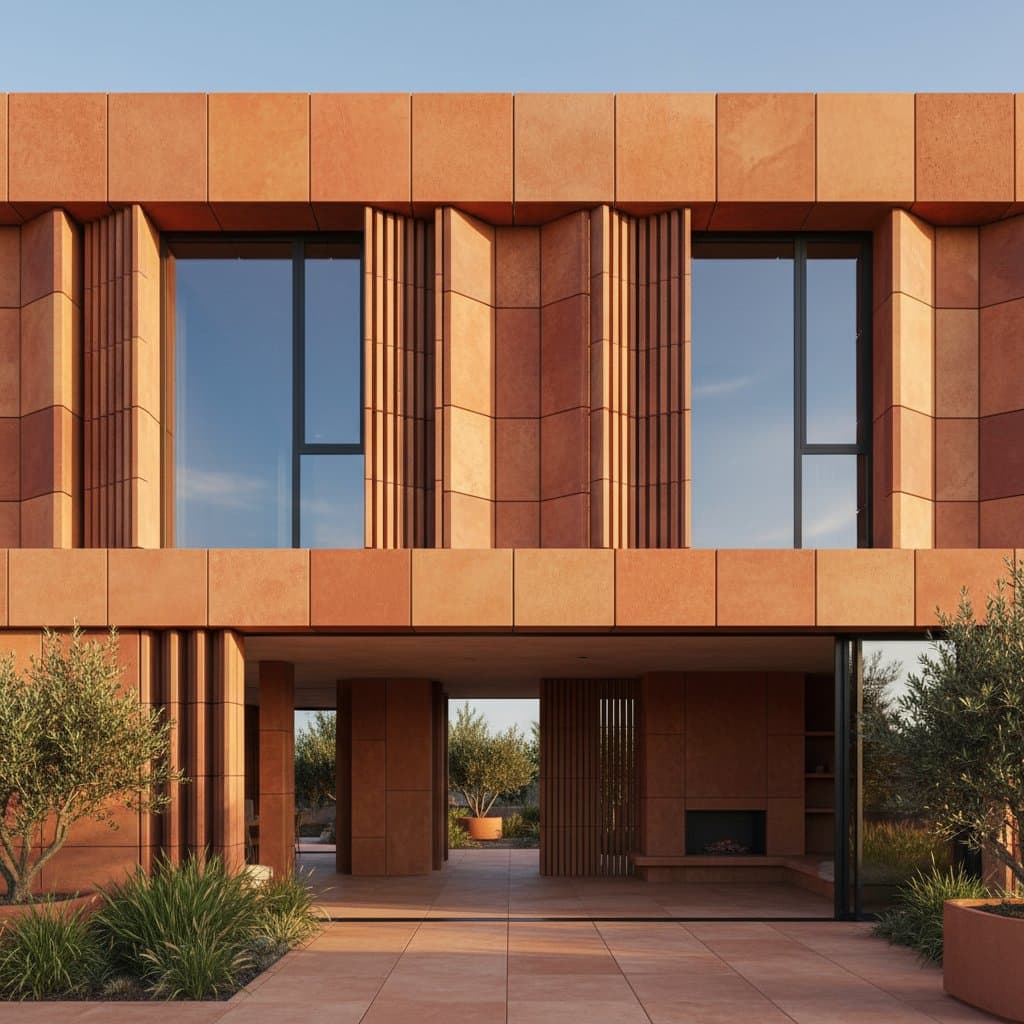
Why Terracotta is Reshaping 2025 Architecture Trends
Contemporary buildings increasingly incorporate warm, earthy hues over stark gray concrete. Terracotta, historically associated with traditional roofs and pottery, experiences a resurgence in modern architecture. This material appears in refined facades, exterior accents, and interior partitions. The appeal lies in its ability to create structures that evoke a sense of nature, stability, and environmental responsibility. Terracotta fulfills these expectations effectively.
For those considering a renovation or new construction, terracotta warrants examination. It merges historical allure with contemporary functionality. The following sections detail the factors driving its influence on design decisions and provide guidance for integration into personal projects.
The Return of Earthy Design
Terracotta derives from natural clay, fired to produce a robust, weather-resistant finish. The term translates to baked earth, capturing its tactile essence. This material delivers an organic texture and palette that aligns with the current emphasis on sustainable, biophilic elements in design.
Architects apply terracotta across residential and commercial settings. It infuses warmth into sparse interiors and tempers the rigidity of steel-and-glass frameworks. Available in shades from pale peach to intense rust, terracotta integrates seamlessly with diverse surfaces. Even in prefabricated forms like panels or tiles, it retains a crafted quality.
Individuals who favor natural palettes find terracotta particularly suitable. It conveys genuineness rather than fabrication and complements wood, stone, and concrete harmoniously. This equilibrium between organic and constructed forms underscores its relevance in current trends.
Why Builders and Designers Are Choosing Terracotta
Terracotta extends beyond visual appeal to deliver substantive performance advantages, rendering it both aesthetically pleasing and utilitarian.
Key factors contributing to its popularity include:
- Durability: Terracotta withstands fading, corrosion, and severe weather conditions. It endures for decades with limited maintenance.
- Energy Efficiency: The clay composition absorbs and releases heat gradually, aiding in temperature regulation. This property reduces expenses related to heating and cooling.
- Sustainability: Sourced from abundant natural clay, often locally, terracotta supports eco-friendly practices. It proves recyclable and generates minimal waste during production.
- Design Flexibility: Advances in manufacturing enable shaping into panels, tiles, or bespoke configurations. Architects employ it for facades, floors, or ornamental features.
- Low Maintenance: Proper sealing ensures that terracotta demands only periodic cleaning.
These attributes position terracotta as a prudent investment for property owners prioritizing form and function over the long term.
Where You Can Use Terracotta
Terracotta transcends its conventional roles in roofing or rustic outdoor areas. Innovations in production broaden its applications significantly.
Versatile applications encompass:
- Exterior Cladding: Terracotta panels serve as alternatives to metal or stone on building exteriors. They impart a organic aesthetic alongside superior protection against the elements.
- Interior Walls: Textured tiles introduce coziness to living areas, kitchens, or foyers.
- Flooring: Glazed variants offer resilience and slip resistance, suiting high-traffic zones like kitchens or patios.
- Accent Details: Incorporate terracotta in planters, moldings, or window surrounds to infuse subtle coloration into residential designs.
This adaptability allows for modest implementations or comprehensive overhauls, scaled to financial and visionary parameters.
Pros and Cons to Keep in Mind
All materials involve compromises, and terracotta follows suit. A balanced evaluation informs optimal selections.
Advantages:
- Derived from renewable, natural resources
- Superior longevity and thermal regulation
- Enduring style adaptable to diverse aesthetics
- Immunity to mold growth and ultraviolet degradation
Disadvantages:
- Greater weight compared to certain cladding options
- Necessity for skilled installation expertise
- Potential moisture absorption in unsealed forms
- Elevated initial expense relative to synthetic alternatives like vinyl or fiber cement
Consult contractors regarding structural capacities, mounting techniques, and protective sealants. Professionals familiar with terracotta navigate these aspects proficiently.
Practical Considerations Before You Start
Incorporating terracotta into a residential or commercial endeavor requires foresight on logistical elements.
Cost: Expenses fluctuate based on design and origin. Basic tiles range from 5 to 10 dollars per square foot, whereas bespoke panels may climb to 20 to 30 dollars per square foot. Labor for installation escalates costs, particularly for expansive exteriors.
Maintenance: Sealed surfaces simplify upkeep, involving gentle soap and water applications seasonally. Unsealed options may develop a patina through natural darkening, an effect appreciated by some for its authenticity.
Time and Labor: Small-scale installations span a few days, while full facade projects extend over weeks. Although the timeline surpasses that of vinyl or aluminum, the outcome yields superior depth and character.
Permits and Codes: Verify requirements with local authorities prior to commencement. Exterior modifications or load-bearing alterations often necessitate approvals. Terracotta systems typically comply with fire safety and insulation standards, yet confirmation ensures adherence.
How to Choose the Right Terracotta Finish
- Unglazed: Features a matte, natural surface suited to rustic or biophilic schemes. Its porosity benefits from sealing to enhance longevity.
- Glazed: Provides a glossy, impervious coating resistant to stains and dampness. This option excels in moisture-prone areas such as kitchens, bathrooms, or exterior walkways.
- Textured Panels: Employed in contemporary facades, these incorporate ridges or patterns that interact dynamically with illumination.
- Handmade Tiles: Characterized by uneven borders and tonal variations, they impart personality to intimate spaces.
Integrating Terracotta into Your Project
To incorporate terracotta effectively, align selections with budgetary constraints and objectives. Examine samples at regional distributors or galleries to assess tactile and visual qualities. Inquire about performance in local weather patterns and routine care protocols.
The growing adoption of terracotta signals a pivot in architecture toward materials that foster human-scale connections and environmental stewardship. From patio refreshes to facade renewals or comprehensive builds, terracotta delivers enduring style paired with practical advantages.