
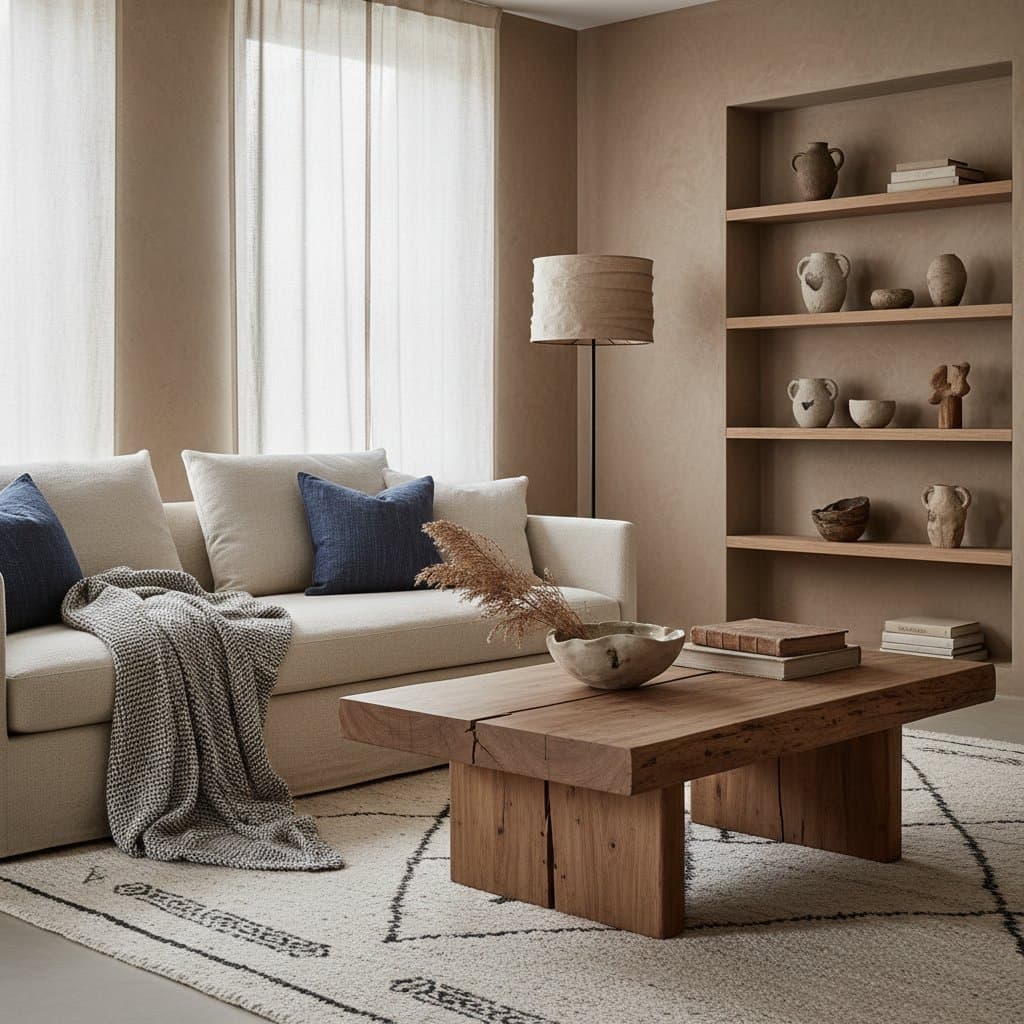
Wabi-Sabi: Imperfect Beauty Reshaping Homes in 2026
New homes frequently feature flawless finishes, smooth surfaces, and uniform fixtures. This perfection often results in spaces that appear cold and lifeless. Many homeowners seek ways to make their environments feel more natural, lived-in, and emotionally resonant. An increasing number of individuals adopt Wabi-Sabi, a design philosophy that celebrates imperfection, simplicity, and authenticity.
Understanding Wabi-Sabi in Home Design
Wabi-Sabi extends beyond fleeting style trends or coordinated color schemes. It emphasizes the beauty in time-worn marks, irregular textures of genuine materials, and the sincerity of artisanal work. In an era dominated by polished exteriors and technological accuracy, this philosophy encourages a deliberate pause to engage with tangible realities.
When incorporated into interiors, Wabi-Sabi promotes selections of materials that develop character over time and convey narratives. Consider options such as aged timber, unrefined stone, exposed plaster, and artisan-crafted ceramics. Rather than concealing irregularities, these elements integrate them as essential aspects of appeal.
The outcome yields living spaces that exude stability, warmth, and individuality. This mindset views imperfection as an inherent facet of existence, rather than a condition requiring correction.
Aligning Wabi-Sabi with Contemporary Lifestyles
Contemporary residences prioritize symmetry, efficiency, and flawlessness. However, such standards frequently render environments impersonal. Wabi-Sabi counters this by embracing asymmetries and honoring manual craftsmanship in every element.
This perspective aligns seamlessly with evolving residential preferences. Individuals desire serene settings, eco-friendly resources, and durable furnishings. Instead of pursuing ephemeral fashions, they favor areas that enhance with maturity.
A Wabi-Sabi-inspired residence prioritizes solace over spectacle. The distinction lies between a display space and a nurturing retreat.
Key Principles of Wabi-Sabi Design
To implement Wabi-Sabi effectively, grasp its foundational tenets.
-
Simplicity
Eliminate superfluous items. Retain essentials. This principle supports expansive areas, restrained ornamentation, and emphasis on utility. -
Naturalness
Select earth-derived substances. Allow timber, rock, and earthenware to display inherent patterns and surfaces. Steer clear of artificial coatings that obscure authenticity. -
Impermanence
Recognize inevitable transformation. Finishes dull, lumber deepens in hue, and textiles mellow. These evolutions contribute to the narrative, not as flaws to eliminate.
Designing under these guidelines produces environments that resonate with genuineness and vitality.
Incorporating Wabi-Sabi Elements
Establish a Subdued Base
Wabi-Sabi schemes employ restrained hues drawn from the natural world, such as gentle grays, warm beiges, subtle creams, and soil-inspired browns. These shades foster tranquility and accentuate organic textures.
No need for comprehensive repainting. Target a single area initially. A surface treated with limewash or clay plaster introduces nuanced irregularity and dimension. Professional application ranges from $3 to $6 per square foot, though patient individuals can undertake it themselves with care.
Select Materials with Character
Opt for substances that disclose their provenance. Salvaged timber flooring reveals knots, indentations, and tonal shifts. Artisanal tiles exhibit asymmetrical borders that enhance visual intrigue.
Pricing fluctuates. Salvaged wood surfaces average $7 to $15 per square foot, based on type and state. Custom tiles span $10 to $25 per square foot; integrate them sparingly in highlighted zones to control expenses.
Blend Vintage and Contemporary Pieces
Wabi-Sabi thrives without extensive overhauls. It excels through organic combinations of eras. Position a streamlined couch alongside a vintage console. Place a crafted vessel next to a minimalist fixture. Such juxtapositions infuse coziness and dynamism.
Incorporate inherited artifacts or secondhand discoveries. A marked bureau or nicked container transforms into a centerpiece when arranged thoughtfully.
Layer Textures for Depth
Surfaces provide the dimensionality central to Wabi-Sabi. Merge coarse and refined elements, dull and lustrous sheens, pliable and rigid forms. Incorporate interlaced coverings, flax drapery, and fleece floor mats.
Prioritize selections that mature attractively. Flax creases yet refines with handling. Hide softens into a sheen. Earthen pottery acquires distinction through regular interaction.
Streamline Arrangements
Wabi-Sabi areas remain airy, orderly, and intentional. Discard surplus appointments and adornments. Preserve solely functional and cherished objects.
For reconfiguration, commence modestly. Empty a single ledge or plane. Relocate or recycle outdated possessions. The objective involves equilibrium, not void.
Source Artisanal and Regional Creations
Factory items seldom capture Wabi-Sabi's distinctive unevenness. Consult nearby makers for ceramics, fabrics, and joinery. Though pricier, these offerings provide relational depth and singularity.
An artisan mug prices at $30 to $50, while a regional timber perch falls between $150 and $400. Favor enduring quality. Gradually, these acquisitions weave into your residence's chronicle.
Illuminate for Ambiance
Illumination significantly shapes Wabi-Sabi atmospheres. Shun intense, stark beams. Pursue diffused, multi-tiered glows via pedestal lights, mounted fixtures, and tapers to cast lenient shades.
For upgrades, select substances like rice paper, flax, or patinated alloy. Budget $150 to $300 for a bespoke hanging or affixed light.
Weighing Self-Directed and Expert Assistance
Certain Wabi-Sabi modifications suit independent efforts. Coating, limewashing, and elementary woodworking prove feasible with suitable equipment and diligence. For resurfacing grounds, natural coating applications, or electrical adjustments, engage specialists to ensure security and precision.
Essential Precautions
- Don safety equipment during abrasion, division, or sealing processes.
- Ensure airflow when applying botanical oils or colorants.
- Verify regional regulations prior to altering wiring or frameworks.
Expert involvement might increase outlays by $500 to $2,000, yet it delivers proficiency and prevents costly errors.
Key Practical Aspects
Financial Planning and Returns
Wabi-Sabi enhancements accommodate diverse allocations. A modest renewal with coatings, textiles, and trimmings spans $500 to $1,500. Extensive work involving bespoke treatments or craftsman inputs reaches $10,000 to $20,000.
Though centered on personal ease, this aesthetic appeals to prospective purchasers who value sincere substances and perennial forms. Residences conveying natural stewardship often distinguish themselves competitively.
Upkeep Routines
Wabi-Sabi settings mature elegantly, yet demand attention. Employ botanical cleansers to safeguard surfaces. Embrace light abrasions and subtle aging as enhancements. Renew timber with oil yearly to sustain vitality.
Environmental and Locale Adaptations
In moist zones, select humidity-tolerant options like limewash or earthen tiles for verticals. Arid areas may cause unsealed timber to splinter; apply permeable sealants accordingly.
The Appeal of Embracing Imperfection
Perfection often proves draining for many. Wabi-Sabi provides respite by alleviating the need for immaculacy. It permits natural progression in living spaces.
This method also supports ecological practices. Honoring existing assets minimizes excess. Repurposing, mending, and acquiring selectively align with these values.
More than visual, Wabi-Sabi shapes daily existence. Acknowledging allure in a flawed cup or irregular plank reduces tension over minor inconsistencies. The dwelling mirrors serene tolerance over perpetual amendment.
Pitfalls to Sidestep
Wabi-Sabi grants latitude, yet certain errors warrant caution.
-
Excessive Spareness
Vacant expanses soothe, but extremes chill. Maintain sufficient tactility and glow for welcome. -
Imposed Aging
Simulated patina seldom convinces. Permit organic development. -
Neglecting Ease
Restraint need not sacrifice comfort. Allocate for yielding seats, mild beams, and enveloping fabrics. -
Overloading Influences
Harmony matters. Anchor with select materials, recurring across the space for unity.
Sustaining Wabi-Sabi Spaces
With completion, emphasize tender maintenance and deliberate evolutions. Cycle accents by season to refresh without accumulation. Mend rather than substitute. Your environment will cultivate an irreplaceable subtlety.
Upon resale, underscore the caliber and artisanship. Purchasers gravitate toward authentic, meticulously crafted abodes.
Experiencing Wabi-Sabi Daily
Adopting Wabi-Sabi transcends decoration. It cultivates perspective. Ceasing the pursuit of flawlessness allows your residence to echo authentic moments. Abraded paths, subdued weaves, and asymmetrical contours cease as shortcomings. They serve as testaments to candid grace.
For overhauls or minor tweaks, initiate modestly. Introduce a single crafted object, salvaged plane, or flawed highlight. Observe the shift in mood. Gradually, your space attains poise, rootedness, and personal essence.
Wabi-Sabi evades trend cycles. It discovers tranquility in the present, enabling your home to accompany your journey.