
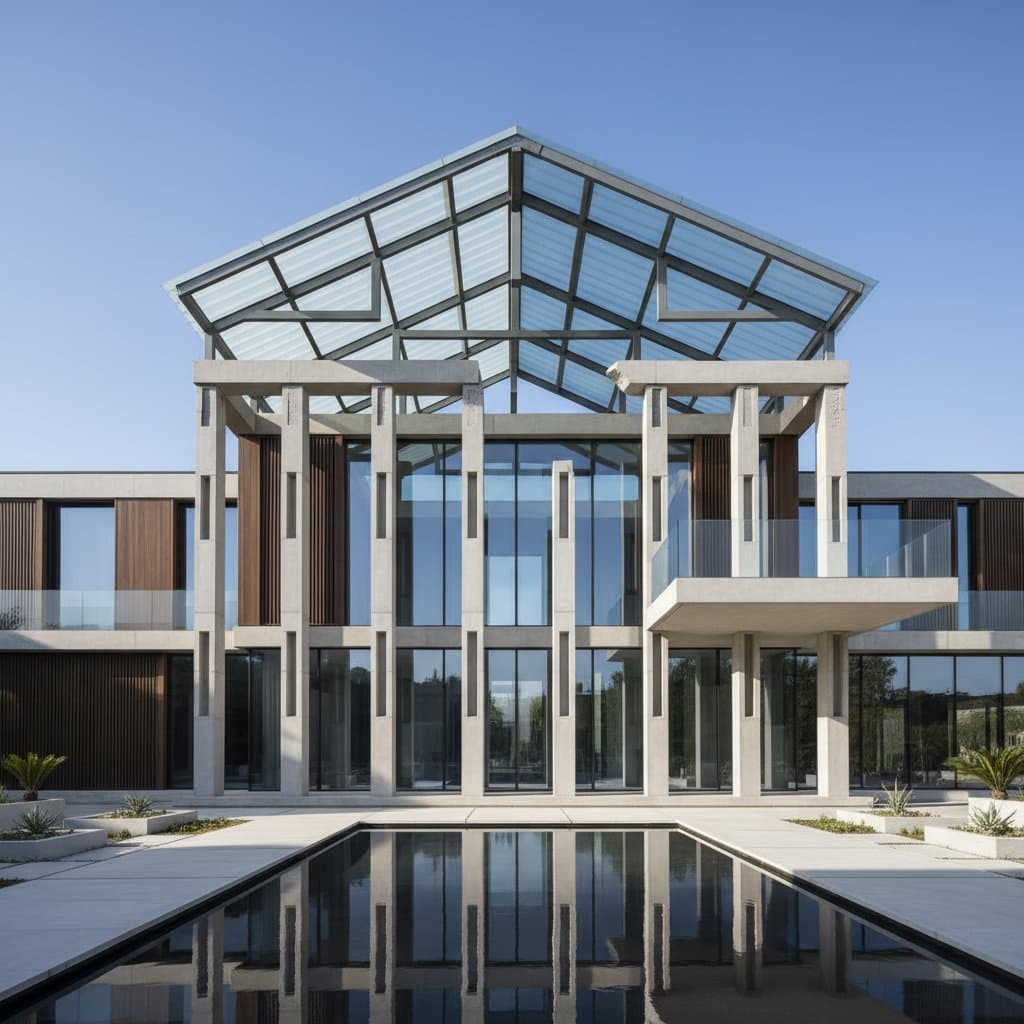
Revitalizing Greek Revival Through Modern Deconstruction
Grand white columns and symmetrical facades evoke the grandeur of ancient Greek temples in the Greek Revival style. This architectural tradition endures for its precise lines and imposing dignity. Contemporary homeowners, however, often seek greater openness and reduced formality. Modern deconstruction addresses this desire by disassembling and reconfiguring core Greek Revival elements in innovative configurations. The outcome blends classical solidity with forward-thinking expression, yielding spaces that feel both rooted in history and attuned to today.
Opportunities in Merging Heritage with Innovation
Admirers of Greek Revival aesthetics who desire a more airy and adaptable atmosphere find modern deconstruction an effective solution. This method preserves the style's fundamental character while permitting exploration of shape, scale, and substances. Individuals retain the commanding presence of columns and pediments without the sensation of inhabiting a preserved artifact.
The technique applies to both residential and commercial endeavors. It proves particularly suitable for renovations that honor historical integrity while enhancing usability. For instance, one might retain a Greek Revival residence's balanced arrangement but substitute substantial wooden accents with refined metal or transparent glass. The intent lies not in replicating the past but in adapting it to suit current lifestyles. Such adaptations often involve consulting structural engineers to ensure stability during modifications.
Defining Features of Modern Deconstruction
Deconstructed architecture dismantles conventional components into fundamental units, then reconstructs them in novel arrangements. Within Greek Revival contexts, this involves isolating columns, entablatures, and pediments that typically characterize the form. Examples include a portico divided into discrete column segments or a pediment transformed into a translucent glass awning that filters natural light.
Designers employ several key strategies to achieve these effects:
-
Fragmented Structures
Traditional continuous colonnades give way to isolated columns positioned at strategic intervals. This arrangement establishes visual cadence and promotes spaciousness, all while nodding to classical proportions. In a residential entryway, for example, spaced columns might frame a pathway without enclosing it fully. -
Exposed Frameworks
Structural beams and connections remain visible, emphasizing the building's assembly process over concealment. This transparency conveys authenticity and artisanal quality. Exposed steel trusses supporting a pediment, for instance, add an industrial edge to the classical motif. -
Contrasting Materials
Classic stone or plaster integrates with steel, poured concrete, or reclaimed wood. These pairings reduce perceived mass while anchoring the design in solidity. A facade might feature marble bases transitioning to lightweight aluminum cladding, creating dynamic textural interplay. -
Asymmetrical Balances
Greek Revival's equilibrium persists, yet elements may elongate or relocate for emphasis. One facade portion could display a complete pediment, whereas the adjacent area hints at it through abstracted lines. This selective application maintains harmony without rigid uniformity.
Additional techniques include scaling elements proportionally to the site's context. In urban settings, oversized fragments draw attention amid dense surroundings, while rural applications favor subtler integrations to blend with natural landscapes.
Incorporating the Style into Residential Spaces
Implementing modern deconstruction requires no extensive overhaul; modest interventions can evoke its spirit. Focus on select emblematic features to initiate the transformation.
-
Redesigning Columns
Employ truncated columns as spatial partitions or illumination fixtures. A solitary column, coated in vibrant matte finish, functions as a striking artistic element in a living area, drawing the eye without dominating the room. -
Enhancing Facade Permeability
Substitute portions of opaque walls with expansive glass inserts or perforated metal screens. This preserves proportional symmetry while inviting abundant illumination and ventilation. In a sunroom addition, such screens might echo column spacing to unify interior and exterior views. -
Streamlining Ornamentation
Retain Greek Revival's crisp contours but eliminate elaborate carvings. Opt for unadorned plaster panels or polished timber moldings to impart a contemporary sharpness. These choices simplify maintenance and allow personalization through subtle color variations. -
Blending Surface Treatments
Pair pristine white stucco with satin-finish steel accents or untreated timber grains. The juxtaposition introduces tactile warmth and prevents the aesthetic from appearing overly austere. Consider a dining nook where wooden beams intersect plaster walls, fostering an intimate yet grand ambiance.
For larger projects, extend these principles to outdoor areas. A deconstructed peristyle around a patio, using modular concrete pillars, extends the home's classical dialogue into leisure zones.
Essential Practical Factors
Prior to embarking on modifications, evaluate expenses, engineering requirements, and material selections. Comprehensive renovations incorporating bespoke columns or oversized glazing typically incur moderate to substantial costs, often ranging from $50,000 to $200,000 depending on project scope and location. Structural alterations, such as reinforcing foundations for added glass elements, elevate expenses further. In contrast, targeted enhancements like resurfacing existing columns or installing decorative fragments remain budget-friendly, frequently under $10,000.
Permitting processes apply to exterior or load-bearing changes. Consult municipal codes to confirm compliance before dismantling or reconfiguring features. Historic properties demand additional oversight from preservation boards to safeguard cultural value.
Project timelines fluctuate with intricacy. Extensive redesigns span three to six months, encompassing design phases, procurement, and construction. Interior refinements, such as molding replacements, conclude in two to four weeks. Engaging an architect versed in deconstructive principles ensures seamless execution. Such professionals navigate zoning constraints and integrate sustainable practices, like energy-efficient glazing, to future-proof the design.
Budget for unforeseen elements, including site-specific soil tests or weather delays, to maintain progress.
Harmonizing Aesthetics with Everyday Usability
Modern deconstruction prioritizes intentional design over arbitrary disruption. Optimal outcomes arise from meticulous foresight. Consider the residence's dimensions: compact dwellings benefit from restrained accents to avoid visual clutter, whereas expansive properties accommodate multiple statement pieces for equilibrium.
Usability remains paramount. Select durable, touch-friendly materials and configure flows that facilitate routine activities. For families, ensure deconstructed elements do not impede movement; in professional spaces, emphasize acoustics and lighting integration. This balance yields environments that inspire without compromising convenience.
Realizing Your Deconstructed Vision
To actualize the fusion of classical refinement and modern ingenuity, pinpoint the Greek Revival aspects that resonate most deeply, such as proportional grace, columnar strength, or orderly composition. Envision adaptations using ethereal substances or fluid arrangements that align with personal needs. Collaborate with a specialist proficient in historical precedents and deconstructive liberties. Through this partnership, transform admiration into a personalized sanctuary that endures across generations.