
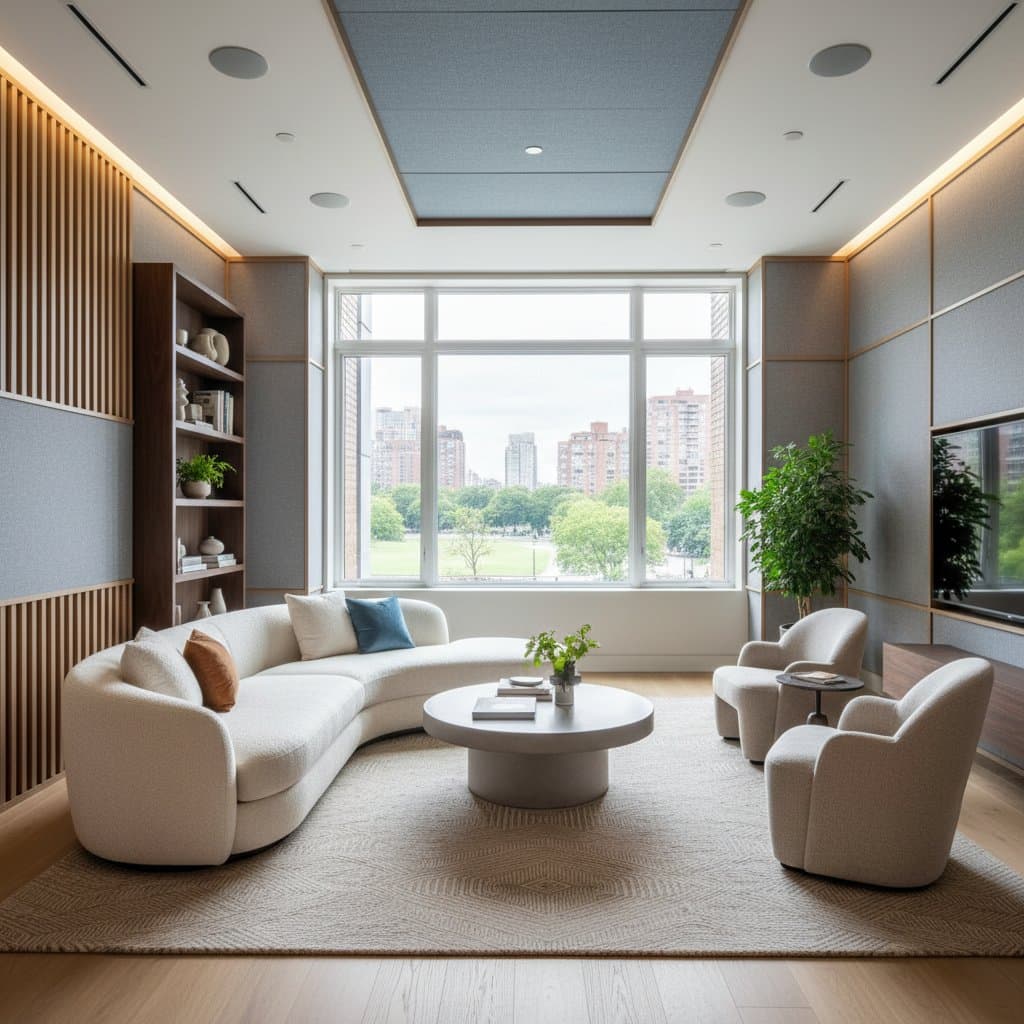
Acoustic Design Strategies for Reducing Noise in Modern Homes
Homeowners often face disruptions from external traffic or internal echoes that hinder relaxation and productivity. Modern acoustic design addresses these issues by integrating sound control into everyday living spaces. This approach extends beyond professional studios to create practical, comfortable homes.
Noise impacts sleep quality, stress levels, and daily efficiency. Advances in materials and building techniques now simplify sound management. Homeowners planning renovations or new constructions can apply these principles to foster quieter environments.
How Sound Propagates in Residential Spaces
Sound moves through air and solid structures. Without adequate insulation, vibrations transfer readily between rooms via walls, floors, and ceilings. Hard materials such as tile, glass, and bare drywall amplify echoes by reflecting sound waves.
Kitchens, hallways, and open layouts often amplify noise due to these surfaces. Effective control requires targeting specific noise categories:
- Airborne noise, including voices, media playback, and music.
- Impact noise, such as footsteps, object drops, and door slams.
Superior designs incorporate blocking, absorption, and diffusion elements to handle both types comprehensively.
Key Design Strategies for Sound Management
1. Fortify the Building Envelope
The home's exterior forms the first defense against outside noise. Dense wall insulation, multi-pane windows, and sealed doors can reduce external sounds by as much as 50 percent. In high-traffic areas, opt for windows with laminated glass for enhanced performance; costs range from $800 to $1,500 per unit based on dimensions and features.
Seal crevices around frames, vents, and electrical outlets to prevent sound infiltration. Acoustic caulk, priced at approximately $10 per tube, offers a straightforward application for DIY enthusiasts.
2. Strengthen Interior Partitions and Overhead Surfaces
Interior walls benefit from soundproofing compounds or resilient channels that decouple drywall from structural framing, minimizing vibration passage. Professional setup for a typical room costs $1,200 to $2,500, varying by area and selections.
Ceilings require comparable enhancements. Layer acoustic insulation over drywall or install drop ceilings to absorb inter-floor sounds. This proves particularly valuable in multi-story residences or apartments.
3. Incorporate Absorptive Surface Treatments
Hard surfaces promote reverberation even in well-insulated rooms. Textiles like carpets, cushioned seating, and thick drapery naturally dampen mid- and high-frequency sounds. Acoustic panels or fabric-covered sections further regulate reflections while serving decorative purposes; expect prices of $50 to $200 per panel according to size and composition.
For understated integration, apply acoustic plaster or specialized paints that curb echoes without altering aesthetics. These options run $6 to $10 per square foot, delivering a cohesive finish.
4. Mitigate Inter-Floor Sound Transmission
Impact noises challenge control efforts most rigorously. Vibrations from steps, falls, or furniture shifts penetrate flooring easily. Underlayments of cork, rubber, or foam beneath hard surfaces like wood, laminate, or tile attenuate these effects, at $1 to $3 per square foot.
During remodels, integrate acoustic subflooring for added rigidity and low-frequency blocking. Such panels enhance overall structural damping.
5. Optimize Spatial Arrangements
Layout influences acoustics profoundly. Position restful areas like bedrooms and workspaces distant from noise sources such as utility rooms or HVAC units. Cluster serene zones while isolating active areas; these choices incur no expense in initial planning yet yield substantial comfort gains.
Open-concept designs facilitate sound travel over expansive areas. Introduce partial barriers, shelving units, or screens to interrupt paths. Greenery placements also contribute to absorption and scattering of waves.
Evaluating Expenses, Implementation, and Benefits
Acoustic enhancements span from accessible fixes to comprehensive overhauls. Consider this overview:
- Entry-level modifications, including seals, area rugs, and weighted curtains, total under $500 and yield immediate reductions.
- Intermediate efforts, such as specialized drywall, panels, or insulation, span $2,000 to $6,000 across multiple spaces.
- Premium interventions, featuring structural decoupling and cutting-edge materials, surpass $10,000 in bespoke applications.
Quiet features appeal to prospective buyers, particularly in dense urban or communal settings. Although not always translating to equivalent financial uplift, these upgrades elevate habitability and alleviate tension, justifying the outlay.
Compliance, Safety, and Regulatory Aspects
Soundproofing alterations may affect load-bearing elements, wiring, or airflow. Verify that added weight to partitions or ceilings aligns with frame capacities. Consult local codes prior to extensive modifications, as permits often apply to substantial interior alterations.
Ventilation remains critical when installing insulation or seals to preserve air quality. Materials like fiberglass or mineral wool demand protective gear during handling. Engage certified professionals for expansive undertakings to ensure safety and efficacy.
Adapting to Local Conditions
Noise profiles vary geographically. Proximity to roadways or aviation hubs demands robust perimeter barriers, whereas rural settings prioritize internal resonance. Humid environments necessitate mold-resistant acoustics, while cold climates leverage dual-purpose insulation for heat and sound retention.
Collaborate with regional experts to select climate-appropriate options. Suppliers increasingly offer tailored products compliant with area standards.
Essential Guidance for Optimal Results
- Integrate acoustics from the outset. Early incorporation minimizes costs and complications.
- Target all planes. Address ceilings and floors alongside walls for comprehensive coverage.
- Layer defenses. Merge isolation, damping, and absorption for superior outcomes.
- Select quality components. Inferior products underperform in noise attenuation.
- Verify effectiveness. Measure acoustics prior to final enclosures when feasible.
Building Enduring Serenity
A sound-managed home promotes tranquility, privacy, and satisfaction. These designs elevate routine experiences beyond mere volume control.
Grasp sound dynamics and select apt solutions to approach builds or updates assuredly. The returns manifest in restored calm, superior sleep, and enriched living for all occupants.