
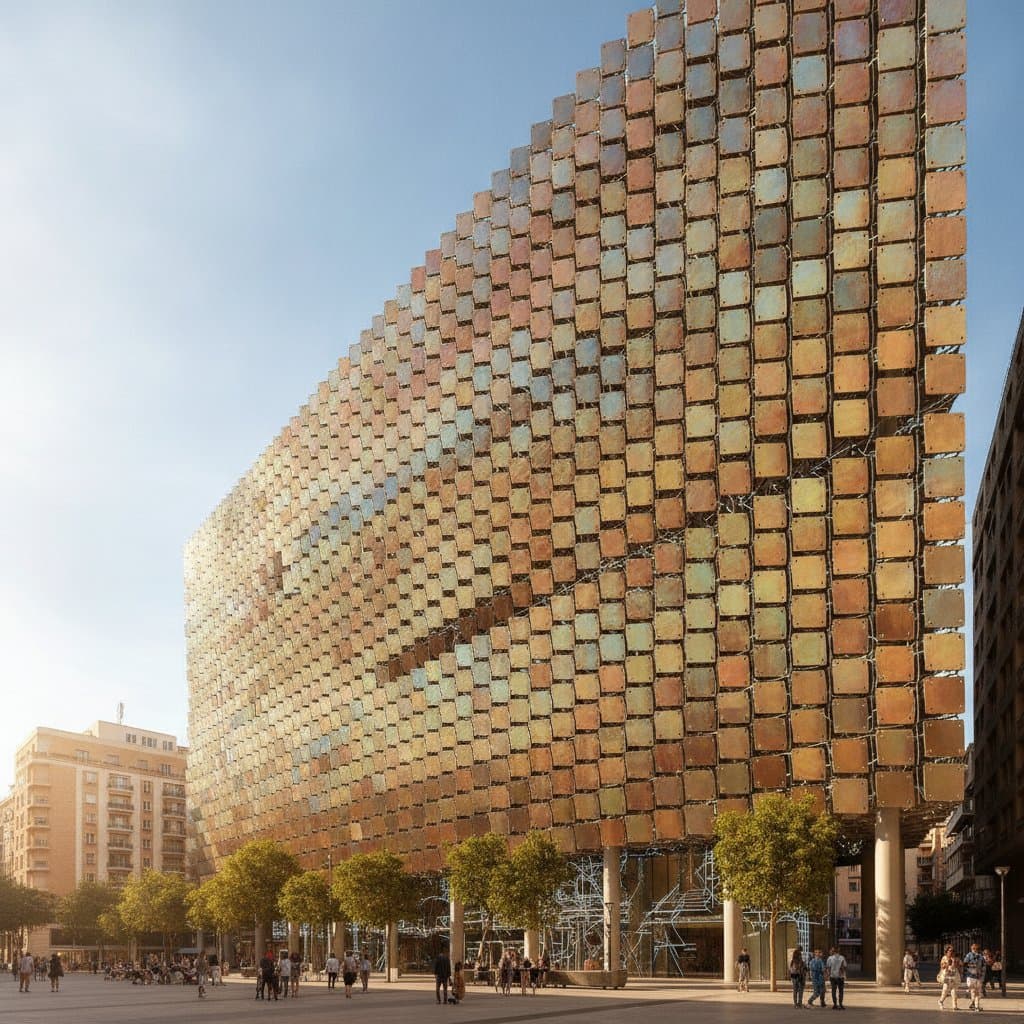
Parametric Facades: Algorithmic Design for Responsive Exteriors
Parametric facades use computational algorithms to generate building exteriors that adapt to environmental conditions. These systems replace fixed surfaces with dynamic assemblies that adjust to sunlight, wind, and temperature. The approach merges data inputs with design rules to produce forms that improve both performance and appearance.
Transitioning from Fixed to Adaptive Building Envelopes
Traditional facades function as protective barriers with limited interaction with their surroundings. Parametric methods introduce rules that link geometry to real-time data such as solar angles or occupancy patterns. This shift allows exteriors to modify shading or ventilation without manual intervention.
Designers define parameters that control panel angles, perforation density, and material thickness. The software then produces multiple iterations that meet stated performance targets. Each resulting surface carries a direct relationship between its shape and its intended function.
Core Mechanics of Parametric Facade Generation
A parametric facade begins with explicit relationships among variables. Architects establish constraints for daylight penetration, structural loads, and energy use before any geometry appears. Once these rules exist, the algorithm explores thousands of configurations that satisfy the constraints.
The process yields surfaces where every joint and curve serves a measurable purpose. Manual drafting cannot replicate the same density of informed variations. The outcome remains visually coherent because the underlying logic stays consistent across the entire assembly.
Balancing Performance Goals with Visual Outcomes
Algorithms receive clear objectives such as reduced cooling demand or improved airflow. They calculate panel orientations and opening sizes that meet those targets while preserving views. The designer retains authority over aesthetic priorities that the computation cannot define alone.
Fixed perforated screens can block direct sun in equatorial climates. Motorized louvers can redirect prevailing winds into occupied spaces. Both solutions emerge from the same rule set yet produce distinct appearances suited to their sites.
Measurable Benefits of Parametric Approaches
- Environmental responsiveness: Panels sized according to local solar data cut peak cooling loads by measurable percentages.
- MaterialAlgorithms calculate exact thicknesses required for wind resistance, reducing overall mass and waste.
- Distinct identity: Each project receives a unique pattern derived from its specific climate and context.
- Integrated systems: Shading, structure, and ventilation occupy the same surface layer, simplifying later maintenance.
Stepwise Implementation Sequence
- Establish performance targets such as glare reduction or energy generation.
- Import site data including solar paths, wind roses, and adjacent building heights.
- Define relational rules that link variables to desired outcomes.
- Run simulations to compare variants on cost, daylight, and thermal metrics.
- Fabricate prototypes using CNC or additive methods to verify tolerances.
- Install sensors that allow real-time adjustment after occupancy begins.
Planning Requirements and Cost Factors
Simpler fixed parametric screens add modest expense over conventional cladding. Kinetic systems require additional investment in actuators, controls, and weatherproofing. Early review of local building codes prevents delays when adaptive elements fall outside existing provisions.
Maintenance access must be designed into the system from the start. Moving components need scheduled inspection paths and replacement strategies. Safety provisions for overhead elements remain mandatory regardless of technological sophistication.
Adoption Drivers for Developers and Design Teams
Parametric facades communicate environmental responsibility while creating recognizable building identities. Developers gain marketable differentiation and potential valuation premiums. Design teams obtain a collaborative workflow that incorporates engineering input at the concept stage.
As software interfaces simplify, these methods extend beyond signature projects into routine commercial and residential work. Office towers can modulate shading throughout the day. Residential buildings can display air-quality patterns through illuminated surfaces.
Applying Parametric Methods to New Projects
Begin with measurable targets rather than formal preferences. Test multiple rule sets against the same data set to reveal trade-offs. Coordinate fabrication and control strategies before final documentation. The resulting envelopes deliver measurable efficiency alongside distinctive architectural character.