
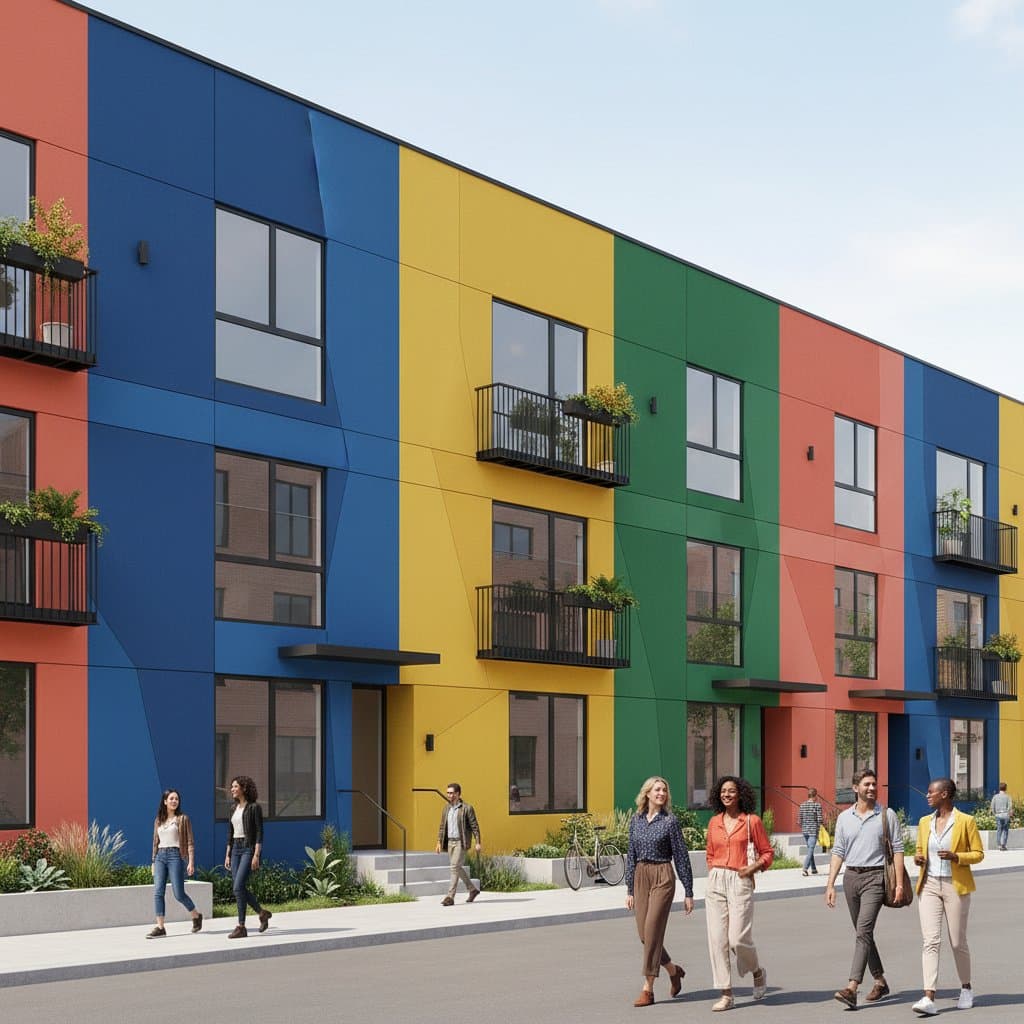
Color-Blocked Facades Bring Joy to City Streets
Color-blocked facades represent a vibrant shift in urban and residential design. This approach uses bold geometric patterns of color to create visual interest on building exteriors. Architects and homeowners alike embrace these designs to infuse personality into otherwise neutral structures.
The trend draws from modernist principles, where clean lines and contrasting hues produce striking effects. In city streets, such facades stand out against monochromatic surroundings, adding energy to neighborhoods. Homeowners achieve similar results on private properties, turning houses into expressions of creativity.
Understanding Color-Blocked Designs
Color-blocking involves dividing a facade into distinct sections, each painted in a different shade. Geometric shapes like rectangles, triangles, or stripes guide the layout. The result combines simplicity with impact, suitable for both contemporary and traditional architecture.
Chromatic maximalism elevates this style by incorporating multiple bold colors rather than subtle tones. Designers select palettes that harmonize while maintaining contrast. For instance, pairing a deep navy with sunny yellow creates a dynamic interplay that catches the eye from afar.
Permits and Local Restrictions
Before starting any exterior project, check local regulations. Some areas impose limits on color choices, particularly in historic districts where preservation rules apply. Contact your municipal planning office to review guidelines on hue intensity and pattern complexity.
In neighborhoods with homeowners associations, additional approvals may be necessary. These groups often maintain aesthetic standards to ensure cohesion. Prepare samples or digital renderings to demonstrate how your design aligns with community expectations.
Budget and Time Considerations
Implementing a color-blocked facade varies in expense based on project scale, surface materials, and finish quality. Basic painting projects remain accessible for most budgets, while incorporating diverse textures increases investment.
Cost Breakdown
- Painting alone: Budget ranges from several hundred dollars for small areas to a few thousand for full coverage, including premium exterior paint and labor charges.
- Incorporating mixed materials: Elements such as metal panels, ceramic tiles, or stucco accents add to expenses, potentially doubling or tripling the total.
- DIY approach versus hiring experts: Self-application reduces costs but demands skill in masking and application. Professional services guarantee even application and durability, justifying the added fee.
Time requirements depend on the structure's size and design intricacy. Preparation and painting for a modest single-story home typically span a few days. Larger buildings or those with varied surfaces may require a week or more. Factor in drying intervals between coats to achieve seamless results without color bleed.
Essential Tips for Successful Implementation
Approach color-blocking with preparation to ensure professional outcomes. Begin with smaller elements to build confidence before tackling the entire facade.
- Apply painter's tape with precision. Secure edges firmly to achieve sharp demarcations between colors.
- Prime all surfaces thoroughly. A quality primer promotes adhesion and maintains color vibrancy over time.
- Account for light exposure. Walls facing south receive more sunlight, which can lighten shades; opt for richer tones in those positions.
- Select understated trim details. Simple moldings prevent visual overload and allow color blocks to dominate.
- Integrate with surrounding landscape. Choose hues that enhance rather than conflict with foliage, blooms, and hardscape features.
Test combinations using sample boards placed around the property at different times of day. This step reveals how colors interact with natural light and adjacent elements.
Engaging Professional Assistance
Complex projects benefit from expert involvement, especially those involving heights, intricate details, or blended materials. Experienced painters specializing in architectural color schemes often use software to simulate designs digitally. This visualization confirms proportionality and smooths transitions before physical work begins.
Professionals select durable, weather-resistant paints and apply protective sealants. Such choices withstand environmental stresses, extending the lifespan of the finish by years. Although initial costs rise, the reduced need for repairs provides long-term value.
Upkeep for Lasting Appeal
Regular maintenance preserves the freshness of color-blocked exteriors. Schedule inspections annually or biannually to identify wear such as peeling or discoloration. Gentle cleaning with soap and water removes accumulated grime without damaging the surface.
Steer clear of high-pressure washing near painted areas, as it risks eroding the coating. In regions with intense sun or salt air, plan for repaints every three to five years. Focus touch-ups on prominent accents to revitalize the look efficiently.
Experiencing the Transformation
A completed color-blocked facade alters perceptions of your property. Daily interactions with the vibrant exterior foster a sense of uplift and pride. Neighbors may draw inspiration, sparking broader conversations about innovative home expressions.
The design also enhances curb appeal, potentially increasing property value. It reflects a commitment to individuality in an era of standardized aesthetics.
Steps to Launch Your Project
Evaluate your home's architecture to identify ideal blocking patterns. Experiment with color swatches on inconspicuous sections to gauge real-world effects. Consult a professional for tailored advice if uncertainties arise.
With thoughtful planning, color-blocking elevates ordinary facades into captivating features. This process reveals the potential in even basic structures, moving beyond conventional neutrals to embrace bold, joyful design.