
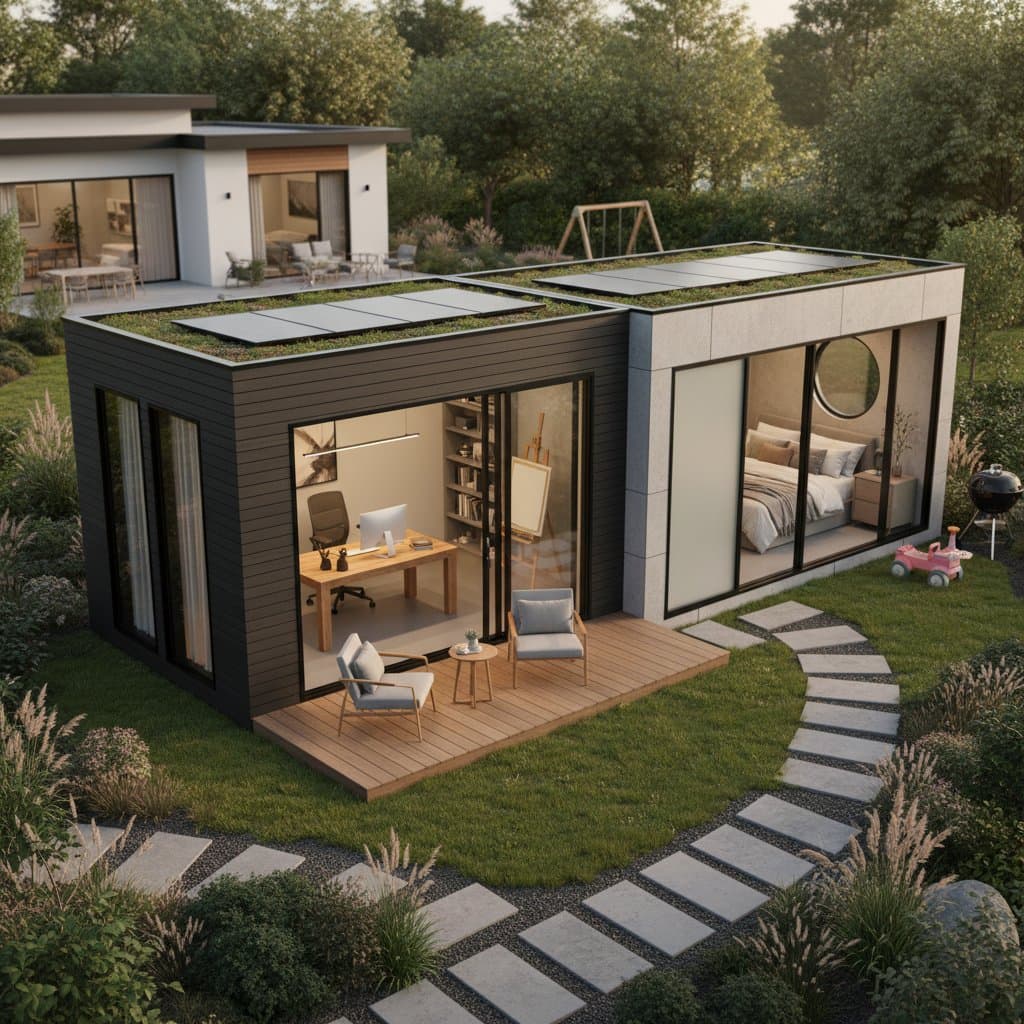
Hybrid Pods: Versatile Backyard Living Redefined
Homeowners often gaze at their backyards and envision untapped potential. The desire for a dedicated home office, a welcoming guest suite, or an inspiring studio arises frequently, yet traditional expansions demand significant investment and disruption. Hybrid pods address this by providing standalone, adaptable structures that integrate seamlessly into outdoor spaces.
The Problem: Limited Space, Expanding Needs
Indoor living areas frequently fall short as families evolve. Repurposing a bedroom disrupts daily routines, while basement conversions introduce moisture and accessibility challenges. A hybrid pod resolves these issues by creating an independent, insulated enclosure in the backyard. This setup maintains privacy and allows the space to shift functions over time, such as from a playroom to a professional workspace.
The Solution: A Flexible, Modern Backyard Structure
Hybrid pods merge conventional construction techniques with advanced prefabrication processes. Manufacturers assemble the core structure in a factory environment to ensure precision and quality control. Upon delivery to the site, customization occurs, including selections for exterior cladding like cedar siding or metal panels, roofing options such as standing seam or asphalt shingles, and interior elements like hardwood flooring or built-in shelving.
These structures support diverse applications:
- Dedicated home offices equipped with ergonomic setups and high-speed internet access points
- Guest suites featuring compact bathrooms and sleeping areas for visitors
- Fitness rooms with reinforced flooring for equipment and ample ventilation
- Creative studios bathed in natural light through large, energy-efficient windows
- Adolescent retreats designed for studying or socializing with integrated tech zones
The inherent modularity enables disassembly and reconfiguration. For instance, adding modular extensions can expand square footage as requirements increase, or the unit can relocate within the property if landscaping changes.
Step-by-Step: Planning Your Hybrid Pod
-
Define the purpose. Assess primary and secondary uses to guide specifications. An office demands multiple electrical outlets, adjustable lighting, and HVAC systems for year-round comfort, whereas a guest suite prioritizes plumbing for a half-bath and soundproofing for tranquility.
-
Check local regulations. Consult municipal zoning laws, as many classify pods as accessory dwelling units. Secure permits for utilities like electricity from the main panel or water lines, and evaluate foundation requirements to comply with seismic or wind load standards.
-
Choose the right size. Options span 120 to 300 square feet to match yard constraints. Compact 120-square-foot models suit simple installations on gravel pads, avoiding concrete pours, while 250-square-foot versions benefit from pier foundations for stability on uneven terrain.
-
Select materials and finishes. Opt for durable, low-maintenance composites for walls that resist weathering, paired with double-glazed windows to minimize energy loss. Interior choices include moisture-resistant drywall and LED lighting to enhance efficiency and aesthetics.
-
Plan installation and access. Map the yard to optimize placement, ensuring at least a 10-foot buffer from property lines for privacy. Incorporate paved walkways for easy access and position near utility hookups to reduce trenching costs.
Practical Considerations
Cost: Entry-level pods for offices or studios range from $20,000 to $45,000, encompassing delivery and basic setup. Advanced models with full plumbing, kitchenettes, and premium insulation climb to $60,000 through $120,000, influenced by regional labor and material pricing.
Timeline: Factory-built shells arrive in 4 to 6 weeks, with on-site assembly completing in 2 to 4 weeks for standard units. Projects involving custom foundations or utility extensions may extend to 8 weeks, depending on weather and permitting delays.
Difficulty level: Moderate involvement suits handy individuals for tasks like painting or landscaping integration. Professionals must handle electrical wiring to meet National Electrical Code standards and structural anchoring to prevent shifting.
Safety: Prioritize inspections for load-bearing elements capable of supporting roofs under snow accumulation. Implement proper sealing around doors and windows to avert water intrusion, and install smoke detectors and carbon monoxide alarms in habitable spaces.
Return on investment: Permitted pods enhance resale appeal by adding usable square footage, potentially increasing home value by 5 to 10 percent. As rental units, they generate income streams, or as home offices, they cut external commuting costs and boost productivity.
Making It Happen
Begin by drafting a yard diagram that highlights sunlight patterns, soil drainage, and distances to the house. Evaluate natural slopes to position the pod for optimal views and airflow. Engage a certified pod specialist for an on-site assessment, detailing your budget constraints and usage goals to receive tailored recommendations on models, utilities, and enhancements.
Hybrid pods deliver intelligent expansion without the burdens of large-scale builds. Through deliberate design, they foster enduring comfort and versatility, aligning with your family's progression.