
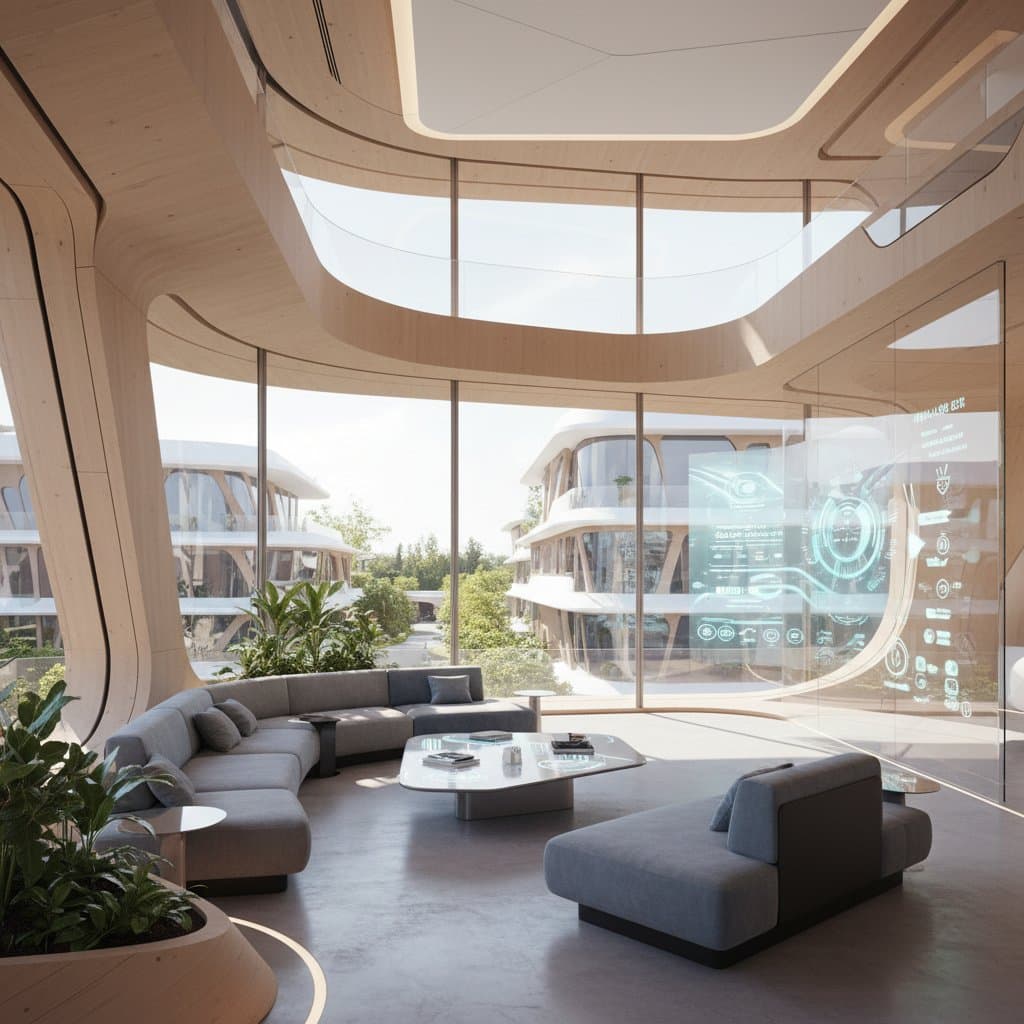
Parametric Homes: Algorithms Reshaping Design in 2026
Picture entering a residence where walls adjust light levels organically, the roof contours to weather patterns, and spatial arrangements align perfectly with daily routines. This experience stems from parametric design, an approach that employs algorithms to craft architecture attuned to its surroundings, occupants, and objectives with remarkable accuracy.
Parametric design challenges the notion of architecture as mere sketches or rigid plans. It views structures as dynamic equations that respond to variable inputs. The outcome transcends visual appeal; it delivers intelligent, adaptable living spaces that align precisely with individual lifestyles.
The Shift from Blueprint to Code
Conventional architecture relies on a static initial idea, refined amid challenges like terrain, resources, and finances. Parametric methods commence with defined parameters outlining essential outcomes. These include sunlight penetration, ventilation dynamics, or occupant circulation.
Algorithms evaluate these elements to produce optimized configurations. For instance, specify a living area that maintains illumination without excess warmth, and the software models solar trajectories, modifying eaves, inclines, or glazing until equilibrium is achieved. This process integrates empirical data with creative input.
Designers develop adaptable digital prototypes rather than singular drafts. Alter a single variable, such as property alignment, and the model updates seamlessly. This flexibility fosters innovation while upholding structural integrity.
Why It Matters for Homeowners
Parametric design offers homeowners residences that address specific requirements beyond superficial style. It eliminates reliance on standardized layouts indifferent to local weather, acoustics, or habits. Structures emerge customized to precise circumstances.
Key applications include:
- Climate Adaptation: In coastal areas, algorithms optimize roof profiles to direct breezes and minimize thermal buildup.
- Material Efficiency: Computations determine minimal resource use for equivalent durability, lowering expenses and environmental impact.
- Natural Light Optimization: Simulations trace illumination routes to distribute sunlight evenly across interiors.
- Acoustic Comfort: Configurations shape surfaces to dampen echoes, fostering serene atmospheres in expansive areas.
- Energy Savings: Integrations of insulation metrics, air currents, and solar angles substantially decrease consumption.
Such designs enhance livability through tangible performance gains.
The Algorithm as a Design Partner
Central to parametric design, algorithms process inputs to yield forms. Far from supplanting human ingenuity, they complement it by managing intricate calculations beyond manual capacity. This liberates architects to emphasize sensory and experiential qualities.
View the relationship as symbiotic. Software explores vast iterations rapidly, highlighting viable options. Designers select iterations that evoke desired ambiance. The synergy yields efficient, artistic, and individualized results.
Examples abound: a facade echoing landscape contours or a compact stairwell inspired by folding geometry. Logic underpins each element, yet artistry infuses vitality.
How Parametric Homes Are Built
Construction initiates with comprehensive data gathering, encompassing terrain analysis, meteorological data, material properties, and resident inputs. Architects define constraints like elevation limits, load capacities, or illumination targets. Algorithms then iterate prototypes.
The sequence unfolds as follows:
- Define Objectives: Prioritize usability, resource conservation, and stylistic coherence.
- Set Parameters: Specify sizes, ecological aims, and substance selections.
- Run Simulations: Programs evaluate numerous configurations for compliance.
- Select and Refine: Architects pick and polish iterations balancing function and form.
- Fabrication: Models convert to build directives, leveraging CNC machining or additive manufacturing for exactness.
This method minimizes discrepancies, enables intricate geometries, and streamlines assembly. Prefabricated components arrive ready for integration, accelerating timelines and enhancing precision.
Practical Considerations for Homeowners
While parametric residences may appear elite, accessibility increases steadily. Expenses vary by intricacy, substances, and tools employed. Initial outlays for modeling and expertise often offset through material economies and operational savings.
Essential factors include:
- Budget Planning: Reserve allocations for simulation tools and advisors; long-term reductions in inefficiencies justify costs.
- Permits and Compliance: Nonconventional forms may demand extra regulatory submissions; skilled practitioners manage this adeptly.
- Construction Expertise: Engage teams versed in computational fabrication; offsite preparation cuts labor while necessitating accurate installation.
- Maintenance: Bespoke elements require tailored replacements; retaining model files facilitates ongoing care.
Thorough preparation unlocks enduring advantages, with homes demonstrating superior functionality and adaptability over time.
Where Parametric Design Meets Lifestyle
Parametric architecture embodies personal rhythms. Envision a culinary space reconfigured for optimal workflow or an outdoor canopy oriented for prevailing winds. Prototypes worldwide demonstrate these integrations.
Benefits manifest in intuitive navigation, balanced luminosity, and refined ventilation. Dwellings collaborate with inhabitants, forging emotional bonds. Designers highlight this interplay as pivotal to contemporary habitation.
Sustainability integrates inherently. Environment-responsive forms curtail energy demands via strategic shading, circulation, and sourcing. Cumulative optimizations promote ecological harmony.
Local Adaptations and Cultural Fit
Parametric principles excel in contextual responsiveness. Coastal dwellings emphasize moisture deflection and breeze capture; alpine variants harness geothermal retention. Universal algorithms yield locale-specific solutions.
Cultural resonance amplifies through motif integration or heritage techniques. Facades might align patterns with airflow studies, blending tradition with performance. This duality honors analytics alongside identity.
The Evolving Role of the Architect
With computation assuming analytical burdens, architects reclaim narrative and interpretive roles. Machines quantify efficacy; humans discern resonance.
Professionals liken the practice to orchestrating variables: establishing cadence, refining elements, and allowing logic to harmonize with vision. This paradigm shift embraces partnership over dominance.
Making It Happen
To pursue a parametric residence, identify specialists in computational architecture with proven implementations. Inquire about data protocols, performance validations, and production partnerships.
Collaborate via platforms connecting visionaries with experts. Articulate site details, aspirations, and constraints to secure tailored guidance. This engagement crafts environments attuned to evolving needs.
Living with Your Design
Inhabited parametric spaces convey deliberate dynamism. Daily light variations appear purposeful; layouts facilitate effortless transitions. Subtle computational influences underpin comfort and ingenuity.
Such dwellings redefine habitation as interactive evolution. They listen, adapt, and engage, illustrating how innovation amplifies human-centered design for enhanced well-being.