
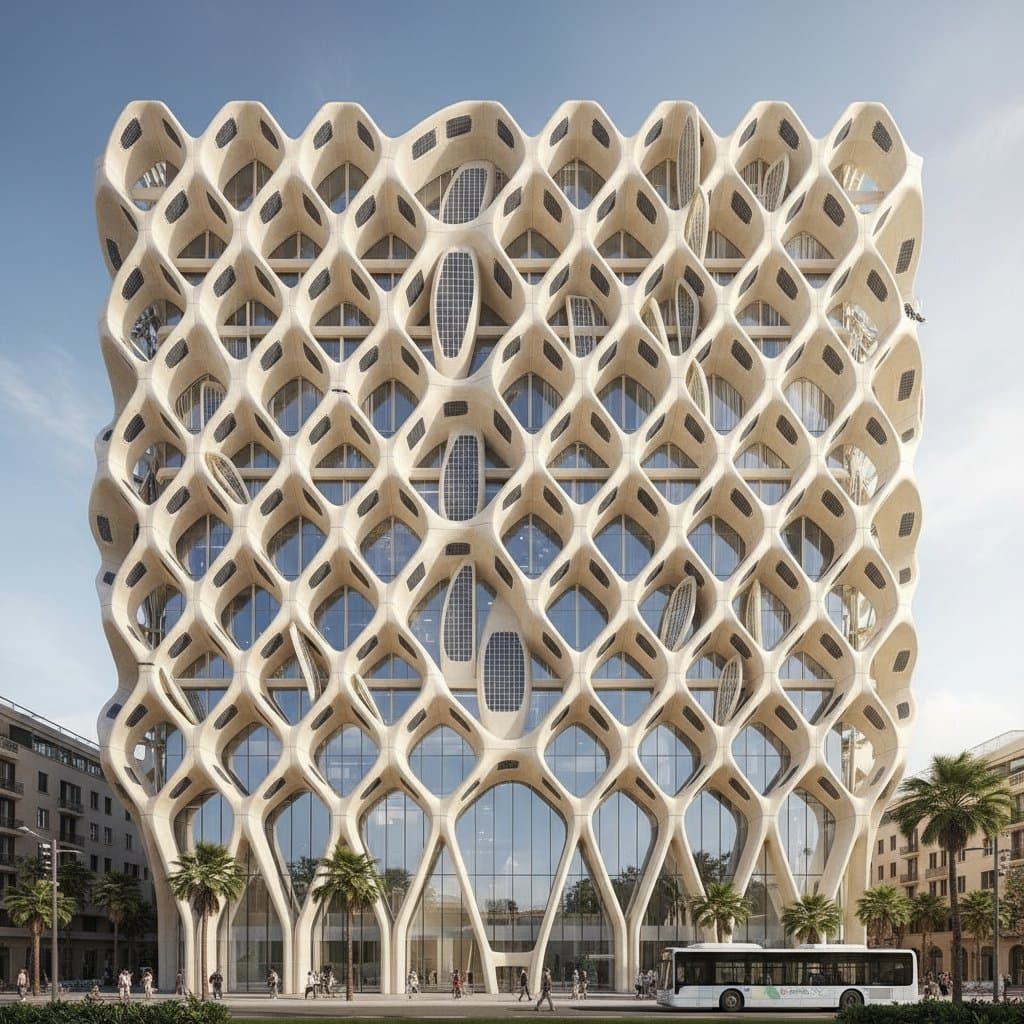
Adaptive 3D-Printed Facades: Responding to Climate Data in Architecture
Picture a urban landscape where building exteriors undulate in response to shifting sunlight, optimize airflow during breezy afternoons, and adjust to seasonal temperature variations. This scenario moves beyond conceptual renderings into practical reality through 3D-printed parametric facades. These innovative systems elevate architecture by enabling structures to engage dynamically with their surroundings and inhabitants.
Unlocking Potential Through Parametric Design
Architects pursue harmony between aesthetic appeal and operational efficiency in every project. Conventional facades constrain this pursuit with standardized panels produced via labor-intensive methods. Parametric design disrupts this pattern by employing algorithms to craft intricate forms based on environmental inputs like solar exposure, wind patterns, and sound levels.
Integrated with 3D printing, parametric approaches yield bespoke components that enhance both form and function. For instance, one section of a facade might incorporate louvers angled to diffuse harsh midday light, while adjacent areas feature porous textures to facilitate natural ventilation. Site analysis drives these decisions, ensuring that each element aligns with local climate demands rather than applying generic templates.
Integrating 3D Printing into Facade Development
Additive manufacturing bridges the gap between digital concepts and tangible outcomes. Designers bypass the need for multiple identical molds by fabricating parts straight from parametric models, which cuts down on excess materials and accelerates timelines. This method supports elaborate features, such as curved profiles or embedded channels, unattainable through traditional casting.
- Conceptualization: Teams input variables including solar paths, heat transfer rates, and visual preferences into specialized software. The system generates and iterates models instantaneously to reflect adjustments.
- Material Choices: Options include durable composites like fiber-reinforced polymers for flexibility or geopolymer concretes for load-bearing capacity. Properties such as UV resistance or water repellency guide selections.
- Production: Industrial-scale printers deposit layers progressively, forming panels up to several meters wide without joints or supports.
- Assembly: Lightweight modules snap into prefabricated frameworks on-site, yielding a unified appearance that mimics organic contours.
Key Factors in Implementing Parametric Facades
Budget considerations vary with project scope; pilot-scale applications on single elevations may cost under $500,000, whereas full-building integrations demand millions for custom tooling and prototypes. Returns manifest in reduced energy use, with some designs slashing HVAC demands by 30 percent through passive solar control and shading.
Regulatory adherence forms a cornerstone of any installation. Designs undergo rigorous testing for seismic resilience, flame spread, and wind loads to satisfy codes in diverse locales. Collaboration with structural engineers ensures that printed elements integrate securely with core building systems. In arid zones, hydrophobic coatings prevent erosion, while temperate areas benefit from insulating infills to maintain thermal stability.
Project schedules reflect this technology's nuances. Although printing phases conclude in weeks, upfront modeling requires multiple reviews to validate performance simulations. This investment minimizes on-site adjustments and extends the facade's service life beyond 50 years with proper maintenance.
Embracing Responsive Building Surfaces
Structures featuring 3D-printed parametric facades exhibit vitality through interplay of light and shadow across their contours. Textural variations encourage closer interaction, fostering a sense of environmental attunement. Prototypes already grace museums in Europe, office towers in Asia, and residential complexes in North America, demonstrating scalability across sectors.
For architects eyeing forward-thinking solutions, parametric facades offer a pathway to merge ingenuity with ecological stewardship. Consult experts in algorithmic modeling and large-format printing to align these tools with your objectives. List your initiative on Doric South at no charge to link with qualified specialists ready to bring adaptive designs to life. Layer by layer, these facades construct the responsive cities of tomorrow.