
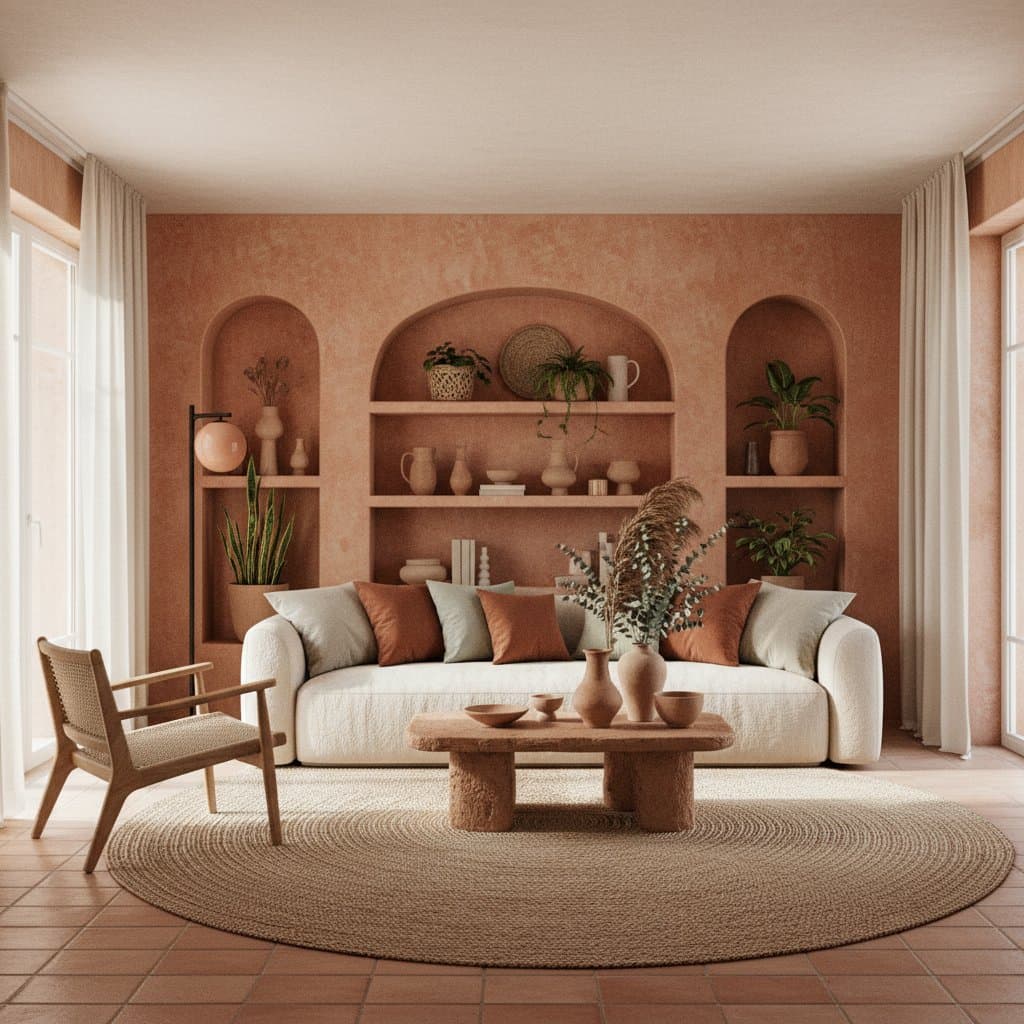
Why Terracotta and Clay Dominate Earthy Interiors
Interiors adorned with warm reddish-brown hues and subtle textures often evoke an immediate sense of grounding and ease. Terracotta and clay exert this profound influence. These elemental materials reclaim prominence in residences where authenticity, depth, and tranquility hold value. For those inclined toward earthy designs that harmonize opulence with subtlety, terracotta and clay merit close consideration.
The Allure of Authentic Materials
Contemporary finishes frequently mimic natural elements, yet terracotta and clay stand authentic without artifice. Terracotta, derived from baked earth, emerges from clay subjected to moderate firing temperatures. This process yields a matte, porous finish that absorbs illumination softly, imparting a gentle, unhurried ambiance to spaces. Clay plasters and tiles exhibit comparable organic variability, with shades transitioning fluidly among reds, browns, and oranges.
These substances embody humanity through their inherent imperfections. Individual tiles or objects display nuanced variations in color and surface, infusing warmth devoid of excess. Such qualities render them perfect for earthy or maximalist environments, where tactile presence rivals chromatic impact.
Practical Applications in Home Design
Terracotta and clay integrate seamlessly across domestic settings, offering enduring functionality. Consider these targeted implementations:
-
Flooring Solutions: Terracotta tiles endure as staples in kitchens, sunrooms, and foyers. Budget approximately 5 to 10 dollars per square foot for conventional varieties, with artisanal selections commanding premiums. Apply sealant diligently to avert discoloration, particularly in moisture-prone zones.
-
Wall Treatments: Clay plaster delivers a plush, satin-like surface that moderates ambient humidity and conceals subtle flaws. Professional application typically ranges from 3 to 8 dollars per square foot. The resultant aesthetic appears innate and perpetual.
-
Fireplace Surrounds and Focal Walls: Terracotta tiles or clay bricks impart dimension and coziness to communal areas. Their inherent palettes harmonize with timber, masonry, and fibrous accents.
-
Decorative Elements: Unglazed clay vases, planters, and luminaires unify the scheme affordably, bypassing extensive overhauls.
Harmonizing Earthy Tones with Maximalist Layers
Homeowners occasionally equate earthy palettes with austerity, yet clay and terracotta excel in multifaceted, vibrant compositions. Their subdued warmth stabilizes vivid pigments, ornate fabrics, and diverse assemblages. Maximalist enthusiasts benefit from employing terracotta bases or clay backdrops as understated scaffolds. Layer vibrancy via furnishings and artwork thereafter. The elemental shades maintain unity and allure.
Managing Expenses, Upkeep, and Longevity
Terracotta and clay demand modest attention rather than intensive labor. Renew sealant on terracotta surfaces biennially to shield against dampness and marks. Clay plaster facades mend readily with fresh overlays. Both withstand thermal fluctuations adeptly, suiting diverse regional conditions.
Assembly complexity spans moderate to advanced levels. Amateurs manage modest endeavors, such as custom planters or highlight tiles, yet comprehensive flooring or plastering warrants expert intervention. Engage skilled practitioners to guarantee precise sealing and sustained performance. A complete chamber undertaking may span multiple days, contingent on dimensions and refinements.
Sustainability and Wellness Advantages
Among interior options, clay and terracotta rank highly for ecological integrity. Devoid of artificial adhesives or toxins, they naturally equilibrate moisture levels. Clay plaster excels by capturing and dispersing vapor, enhancing atmospheric quality. Individuals prioritizing low-emission environments find these selections prudent.
To maximize benefits, source from regional suppliers to minimize transport emissions. Opt for low-fire processes that conserve energy during production. These choices amplify the materials' green credentials without compromising aesthetic or functional merits.
Embracing the Patina of Time
Upon integration, terracotta and clay subtly mold spatial perception. Their thermal properties diffuse light tenderly, while surfaces beckon tactile exploration. Gradually, they accrue personality via faint patination, akin to aged timber or rock. This evolution constitutes their intrinsic allure.
Incorporate maintenance rituals, such as periodic dusting with soft brushes, to preserve vibrancy. Avoid harsh cleaners that erode natural oils. Such practices ensure the materials retain their inviting essence across seasons.
Implementing Your Earthy Vision
Commence transformations modestly by substituting select tiles or introducing a clay accent panel, observing interplay with existing illumination and pieces. For ambitious redesigns, collaborate with specialists versed in these substances. Terracotta and clay reciprocate thoughtful investment. They infuse interiors with tangible depth, thermal embrace, and terrestrial affinity.