
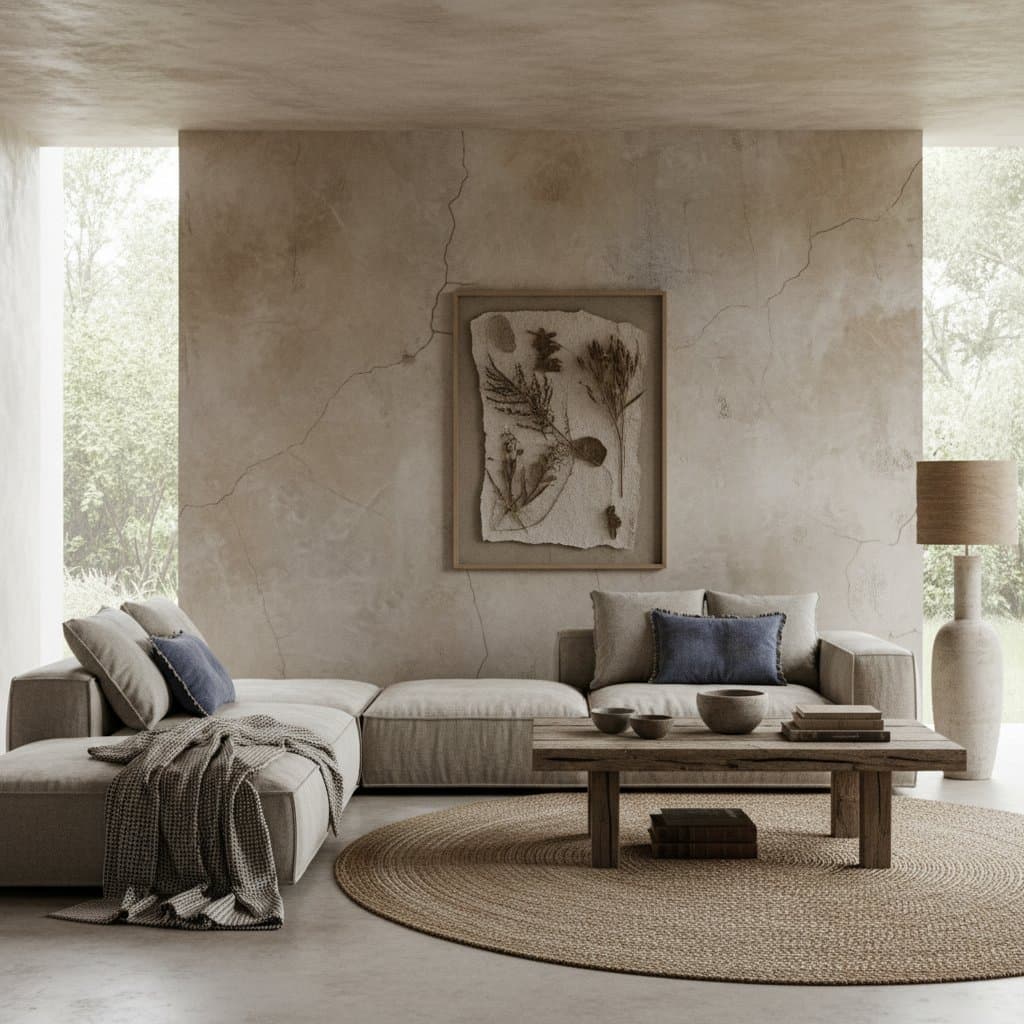
Why Imperfection Defines 2025 Wabi-Sabi Interiors
Perfect homes often appear stunning in photographs yet lack genuine warmth upon entry. Homeowners increasingly seek designs that convey honesty and comfort. Wabi-Sabi interiors embody this shift, drawing from Japanese philosophy to highlight beauty in the imperfect, textured, and aged.
The Drawbacks of Pursuing Perfection
Interior design trends for decades emphasized symmetry, high-gloss surfaces, and uniform color schemes. Such spaces projected modernity and cleanliness, yet they frequently felt sterile and disconnected from daily living. Homeowners faced constant pressure to conceal every minor imperfection, from scuff marks on floors to chips in paint.
This relentless quest for flawlessness inflated renovation expenses and fostered exhaustion. Furniture required replacement at the slightest scratch, while walls demanded repainting after minimal wear. The focus remained on upholding an idealized appearance rather than fostering environments that mirrored authentic lifestyles.
Introducing the Wabi-Sabi Approach
Wabi-Sabi interiors honor imperfection as a core principle. They incorporate materials that mature elegantly, surfaces that reveal history, and layouts that prioritize ease over ostentation. Rooted in ancient Japanese aesthetics, this philosophy values simplicity, genuineness, and the transient nature of existence.
Practically, this translates to displaying the natural knots and grains in wood, selecting pottery with subtle asymmetries from artisanal hands, or retaining the organic undulations in plaster walls rather than erasing them. The result yields rooms that inspire tranquility, stability, and a sense of habitation rather than curation.
Core Principles of Wabi-Sabi Design
Integrate Wabi-Sabi into your space by emphasizing three foundational elements: simplicity, natural materials, and authenticity. The following details practical applications for each.
-
Simplicity
Edit out excess items to foster openness. Retain only pieces with functional utility or sentimental value. Refrain from overcrowding shelves or surfaces; ample negative space allows visual breathing room and promotes serenity. -
Natural Materials
Select substances that evolve with time and disclose their inherent qualities. Opt for unrefined woods like oak or cedar, breathable fabrics such as linen or wool, solid stones like limestone, and earthen clays. Reclaimed barn wood for shelving, hand-loomed rugs from natural fibers, and patina-developing metals like aged brass enhance the aesthetic while building character through use. -
Authenticity
Prioritize objects crafted with evident skill and intention. A wheel-thrown vase with fingerprint impressions or a dining table hewn from sustainably sourced lumber imparts deeper resonance than factory replicas. Surround yourself with items that engage the senses and hold narrative weight, favoring substance over superficial flawlessness.
Actionable Implementation for Homeowners
Transition to Wabi-Sabi without overhauling your entire residence. Target a single area, such as a living room wall or kitchen countertop, to test the waters.
- Walls and Surfaces: Forsake glossy enamels for matte or mineral-based coatings. Apply limewash for its soft, mottled finish that mimics aged stucco, or tadelakt plaster for a subtle, water-resistant sheen derived from Moroccan traditions.
- Furniture: Restore rather than discard worn items. For an oak console, lightly sand to reveal grain patterns while preserving dents as patina; apply tung oil to nourish without masking history.
- Textiles: Invest in organic linens, cottons, or wools that soften and crease naturally. Drape a throw blanket over a sofa to introduce relaxed folds that echo the philosophy's embrace of transience.
- Lighting: Install fixtures with amber-toned LEDs or incandescent equivalents to cast gentle glows. Position sconces with exposed bulbs or paper lanterns to diffuse light softly, minimizing shadows that accentuate uniformity.
- Decorative Accents: Curate a modest collection of artisanal or heirloom objects. Incorporate a raku-fired sculpture with crackled glazes or a vintage brass tray etched by years of handling, each evoking personal connections.
Budgeting and Project Timelines
Wabi-Sabi transformations accommodate diverse financial scopes. Leveraging current furnishings keeps expenses low, perhaps limited to $200 for paints and oils. Incorporating bespoke elements, such as custom clay tiles or reclaimed wood paneling, may range from $1,000 to $5,000 for a mid-sized room.
Engaging a specialist in organic design adds expertise, typically charging 10 to 15 percent of the project budget for consultations and oversight. Weekend endeavors like wall treatments and furniture revival suit quick updates. Larger undertakings, including flooring overhauls with cork or terracotta, require two to four weeks, factoring in material curing and installation.
Ensuring Safety and Upkeep
Natural elements demand mindful integration to uphold well-being. Employ low-volatile organic compound (VOC) formulations in paints and finishes to safeguard air quality. When refinishing antiques, don a respirator and test for hazardous substances like lead paint, common in pre-1978 items.
Protect permeable surfaces with beeswax or linseed oil sealants that preserve tactility while repelling moisture and spills. Upkeep proves straightforward compared to sleek alternatives; patinas integrate wear seamlessly. Dust with microfiber cloths and refresh woods seasonally with natural balms to sustain vitality without aggressive interventions.
Adapting to Local Conditions
Environmental factors shape material performance. In coastal or tropical zones, unsealed timbers might expand with humidity, forming subtle waves that align with Wabi-Sabi's ethos—plan for breathable finishes to mitigate mold. Arid climates prompt contraction cracks in clays or joints, which enhance rustic appeal; use flexible mortars during installation to accommodate shifts.
Collaborate with regional makers for tailored solutions. Artisans in the Pacific Northwest often specialize in driftwood integrations, while Southwestern craftspeople excel in adobe-inspired elements. This local sourcing bolsters genuineness and curtails carbon footprints from transport.
Enduring Advantages
Wabi-Sabi residences mature harmoniously, weaving usage into their narrative. Imperfections become assets, curtailing the need for frequent updates and minimizing environmental impact through durable choices. Owners report heightened contentment, as these homes cultivate introspection and ease, affirming that living spaces thrive through occupancy, not exhibition.
Bringing Wabi-Sabi to Life
Adopting Wabi-Sabi involves recalibrating perspectives toward appreciation of the extant. Mend fractures in cherished items to extend their tenure. Prioritize enduring craftsmanship over fleeting trends, permitting your environment to unfold organically. Communicate these priorities clearly to any hired experts, seeking textures that honor material truths. Approach personal projects deliberately, savoring the process as part of the design's soul.