
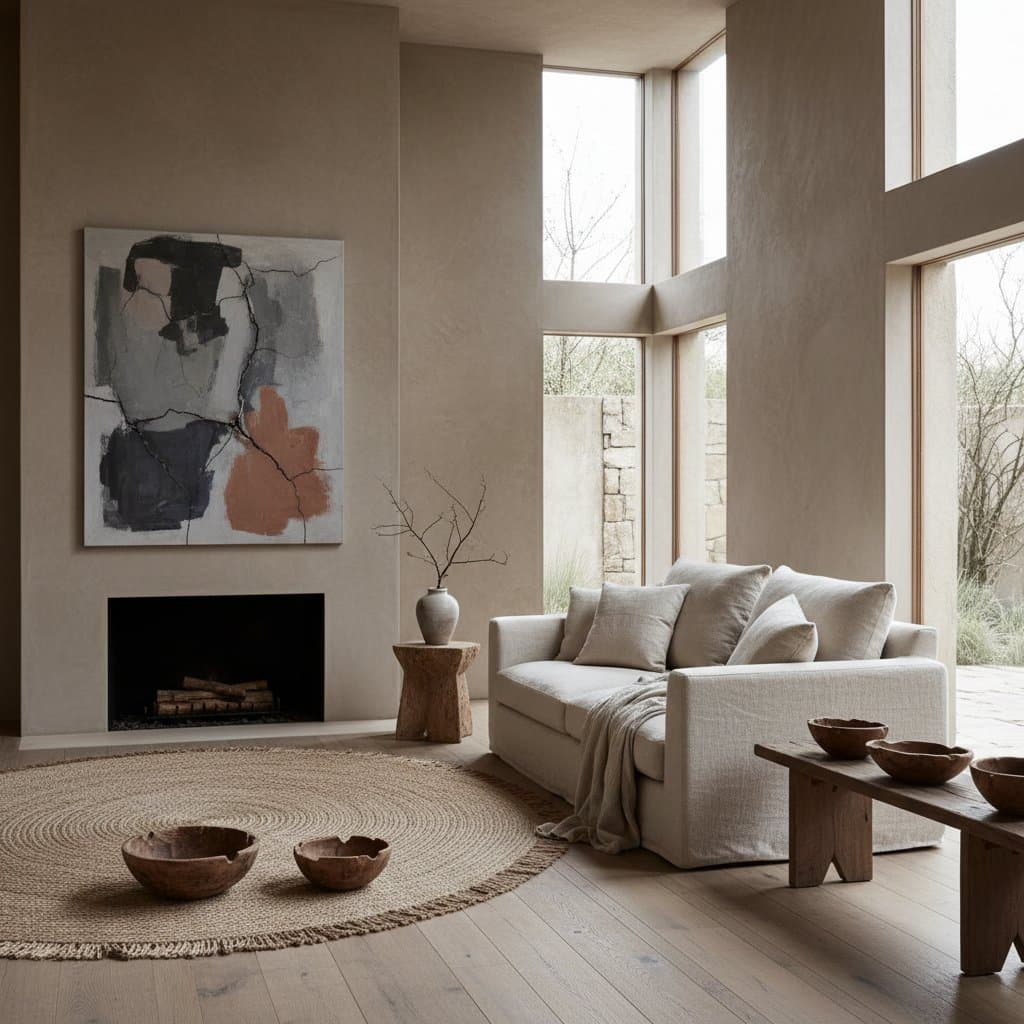
Embrace Imperfect Beauty: Wabi-Sabi Design Inspiration
Homeowners often notice details such as chipped paint, uneven wood floors, or mismatched dish collections. Many view these elements as flaws requiring immediate correction. Consider an alternative perspective: these marks represent stories of daily use, passage of time, and genuine character. Wabi-Sabi design invites this shift in viewpoint.
The Opportunity in Imperfection
Pursuing flawless interiors frequently leads to spaces that appear cold and detached. Homeowners invest effort in precise color matching and swift replacement of aged items. Wabi-Sabi design counters this by honoring simplicity, impermanence, and natural wear. It prioritizes authentic materials, visible repairs, and straightforward craftsmanship.
The true value emerges in recognizing appeal within existing features. Rather than erasing every imperfection, accentuate the natural grain of aged wood or the irregular surface of handmade pottery. This method achieves a harmony of restraint and invitation, fostering environments that convey lived experience and human connection.
What Wabi and Sabi Mean in Practice
Rooted in Japanese aesthetics, this philosophy values transience and asymmetry. Wabi embodies simplicity, modesty, and satisfaction in unpretentious forms. Sabi captures the allure of maturation, exposure to elements, and developed patina. Combined, these principles promote a lifestyle attuned to natural rhythms and understated grace.
In residential settings, Wabi-Sabi manifests through natural materials, subdued hues, and minimal arrangements. Emphasis falls on ambiance and truthfulness rather than opulence or uniformity. Such homes project serenity, equilibrium, and ease, free from contrived or excessive styling.
How to Bring Wabi-Sabi into Your Home
Implementing Wabi-Sabi requires no complete overhaul or lavish spending. Focus on enhancing current possessions and permitting the residence to reveal its inherent qualities. Proceed incrementally, guided by intuition and fiscal prudence.
1. Simplify Your Space
Excess obscures inherent charm. Eliminate nonessential decorations lacking personal significance. Retain objects that anchor emotions or recount histories. A solitary ceramic vessel or timeworn stool often commands greater impact than numerous factory-made ornaments.
- Maintain clear tabletops and airy volumes.
- Organize utilitarian goods out of sight instead of constant display.
- Select sparse, durable elements that mature attractively.
2. Choose Natural and Honest Materials
Wabi-Sabi favors organic surfaces and restrained coatings. Consider fabrics like linen and wool, alongside clay, stone, and unprocessed timber. These substances acquire depth through handling, enhancing rather than diminishing appeal.
For surface treatments:
- Apply limewash or flat paints over glossy alternatives.
- Opt for salvaged or regional timber in flooring and furnishings.
- Permit brass or copper to form patina without frequent buffing.
Initial costs for organic options may exceed synthetics slightly, yet longevity compensates. Reclaimed oak planks, for instance, typically cost between $8 and $14 per square foot, compared to engineered variants at lower rates. Prioritize selections exhibiting tangible grain and soundness.
3. Highlight Imperfection Through Repair
Address fractures or blemishes with deliberate attention instead of concealment. The Japanese technique of kintsugi, which joins shattered ceramics using lacquer mixed with metallic powder, illustrates this ethos. Apply similar care by mending over discarding.
- Mend plaster surfaces rather than undertaking full resurfacing.
- Revive vintage pieces via light abrasion and plant-based oils, avoiding thick varnishes.
- Showcase restored articles as emblems of engagement and recollection.
Such practices prove economical versus outright substitution and infuse sentimental worth. A mended seat gains profundity beyond a freshly purchased counterpart.
4. Embrace Subtle Color and Light
Wabi-Sabi schemes employ grounded, softened tones. Envision pale grays, creamy whites, earth tones, and softened foliage shades. These evoke stone, earth, or dunes. Illumination contributes equally; favor diffused sources over stark ceiling lights to promote tranquility.
Implement via:
- Translucent rice paper lampshades or fabric drapes that temper daylight.
- Incandescent-style LEDs or flame sources that mellow contours.
- Adjustable controls to modulate brightness across daily cycles.
These modifications demand minimal expenditure while altering spatial perception profoundly. Gentle radiance minimizes distractions and invites repose.
5. Mix Old and New Thoughtfully
Wabi-Sabi accommodates contemporary alongside antique without demanding uniformity. Aim for harmonious juxtaposition. Position a fresh upholstered piece adjacent to a patinated table, provided palettes and grains align. Shun coordinated ensembles; integrate layers sharing subtle warmth or restraint.
- Pair sleek profiles with seasoned exteriors.
- Preserve nonglossy finishes throughout.
- Blend artisanal works with modern forms.
This combination anchors the environment, steering clear of the rigidity associated with rigid minimalism.
Practical Considerations for Homeowners
Cost and Budget Planning
Wabi-Sabi proves accessible financially, emphasizing adaptation and moderation. Develop personality absent extensive alterations. Principal outlays cover organic substances and skilled labor. Anticipate figures like:
- Salvaged timber brackets: $80 to $200 each
- Artisanal ceramics or accents: $30 to $100
- Bespoke plaster or limewash applications: $4 to $8 per square foot
Engage applicators for finishes and insist on prototypes. The nuanced finish of limewash or tadelakt hinges on execution; experts guarantee uniformity and resilience.
Safety and Maintenance
Conventional coatings often incorporate botanical oils or dyes. Confirm adequate airflow during application and drying. Steer clear of artificial barriers that shift tones or retain dampness. During piece restoration, don protective gear for dust-generating tasks.
Given the accent on organic evolution, upkeep involves tender handling. Wipe timber with diluted soap solution. Allow alloys to progress unaltered, bypassing abrasive agents. Preserve essence without imposing flawlessness.
Permits and Codes
Surface enhancements in Wabi-Sabi style seldom necessitate approvals. Nonetheless, structural, hydraulic, or wiring modifications demand compliance review. Consult specialists to ascertain prerequisites prior to commencement.
The Emotional Benefit of Wabi-Sabi Living
Wabi-Sabi extends beyond visual appeal to shape daily habitation. It cultivates awareness and tolerance. Residents value the now over unattainable ideals. A floor abrasion evolves into narrative element, not error to obliterate.
This mindset often alleviates anxiety regarding upkeep or presentation. Shift attention from perpetual enhancements to modest enhancements yielding solace. Gradually, the dwelling assumes intimate resonance, mirroring authentic existence.
Bringing It All Together
Cultivate Wabi-Sabi by viewing the home as an ongoing companion. Initiate modestly: reorganize a niche, renew a plane, or position a restored artifact prominently. Note shifts in sentiment and ambiance.
Core tenets sustain unity:
- Restraint above abundance. Retain essentials.
- Genuineness above refinement. Permit substances to express.
- Organic flow above flawlessness. Engage ambient glow, tactile quality, and mutability.
Dwellings remain dynamic. Facades weather, shades mellow, components adapt. Wabi-Sabi encourages reception of this flux. The outcome yields sincere, rooted sanctuary.
Living with Imperfect Beauty
Adopting Wabi-Sabi redirects from idealized realms to purposeful ones. The irregular, subdued, and crafted emerge as wellsprings of invitation. Each trace and contour recalls that allure thrives amid asymmetry.
Commence endeavors through assessment. Survey possessions prior to acquisitions. Mend feasibly, adapt usefully, and let organic selections direct. Eventually, serenity and individuality prevail, rooted in reality rather than illusion.