
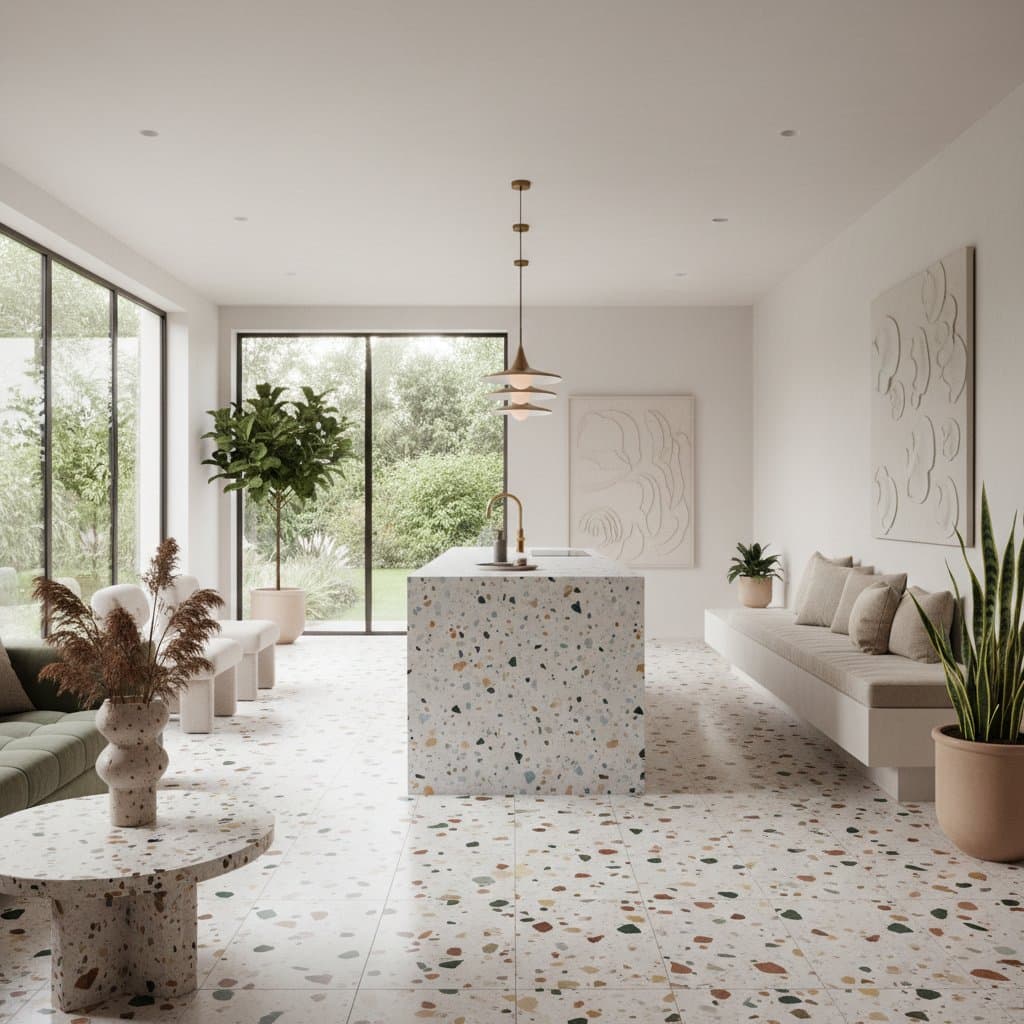
Terrazzo's Revival: The Timeless Texture Leading 2025 Design Trends
Terrazzo has reemerged as a standout material in interior design, capturing attention with its unique speckled patterns and robust qualities. This composite surface, made from chips of marble, quartz, or glass embedded in cement or resin, offers a blend of aesthetic versatility and practical endurance. Designers and homeowners alike appreciate how terrazzo bridges classic craftsmanship with contemporary innovation, making it ideal for floors, walls, and decorative elements.
The appeal lies in its ability to adapt to various styles, from minimalist spaces to vibrant, eclectic rooms. As sustainability becomes a priority, terrazzo stands out for its longevity and recyclability. In 2025, expect to see it featured prominently in residential and commercial projects, signaling a shift toward materials that endure both in form and function.
The Origins and Evolution of Terrazzo
Terrazzo traces its roots to ancient times, with early forms appearing in Roman mosaics and Egyptian decorations. The modern version developed in Italy during the 16th century, when workers in Venice began grinding marble scraps into sun-baked terraces, or "terrazzos," to create durable outdoor floors. This resourceful technique quickly gained popularity for its cost-effectiveness and visual charm.
By the 20th century, terrazzo had spread globally, adorning iconic structures like the Hollywood Walk of Fame and mid-century modern buildings. Art Deco and Mid-Century Modern movements embraced its bold patterns, cementing its status as a symbol of sophistication. Today, advancements in epoxy binders have made terrazzo lighter and more colorfast, reviving interest among architects and designers.
The material's evolution reflects broader design philosophies. Initial applications focused on functionality, but recent iterations emphasize customization, allowing for infinite combinations of aggregates and hues. This adaptability ensures terrazzo remains relevant across eras.
Factors Driving Terrazzo's 2025 Comeback
Several key elements fuel terrazzo's resurgence in 2025. First, the growing emphasis on sustainable design aligns perfectly with terrazzo's eco-friendly profile. Composed of up to 80 percent recycled content in some formulations, it reduces waste while providing a surface that lasts decades without frequent replacement.
Second, the trend toward textured, tactile elements in interiors counters the sleek minimalism of recent years. Terrazzo delivers subtle depth and movement, adding warmth to otherwise sterile spaces. Its speckled finish creates visual interest without overwhelming the eye, making it suitable for both large-scale installations and subtle accents.
Market data supports this momentum. Industry reports indicate a 25 percent increase in terrazzo installations over the past two years, driven by demand for authentic, non-mass-produced materials. High-profile collaborations between designers and manufacturers have introduced innovative finishes, such as metallic flecks and organic shapes, broadening its appeal.
Finally, terrazzo's versatility in color palettes—from earthy neutrals to vivid primaries—caters to diverse tastes. This flexibility encourages experimentation, positioning it as a go-to choice for trend-forward projects.
Practical Applications in Contemporary Homes
In residential settings, terrazzo excels on floors, where its seamless installation creates expansive, low-maintenance surfaces. Kitchen countertops benefit from its resistance to stains and heat, outperforming traditional stone in durability. Bathroom vanities and shower surrounds leverage its water-resistant properties, ensuring hygiene and longevity.
Beyond functional areas, terrazzo appears in creative ways. Wall panels in living rooms provide a backdrop that reflects light and adds texture without dominating the decor. Furniture pieces, such as coffee tables or sideboards with terrazzo tops, introduce the material on a smaller scale, ideal for renters or those testing the trend.
For outdoor spaces, poured terrazzo patios offer a non-slip, weatherproof option that enhances curb appeal. Its ability to mimic natural stone at a fraction of the cost makes it accessible for renovations. Consider pairing it with greenery or metallic accents to amplify its modern edge.
Selecting and Integrating Terrazzo into Your Design
Choosing the right terrazzo begins with assessing your space's needs. For high-traffic areas, opt for cement-based versions with larger aggregates for added strength. Epoxy terrazzo suits lighter applications, like tabletops, due to its thinner profile and quicker curing time.
Color selection plays a crucial role. Neutral bases with colorful chips create a balanced look, while monochromatic schemes offer understated elegance. Consult with a designer to view samples under your home's lighting conditions, as this affects the final appearance.
Integration tips include layering textures for cohesion. Combine terrazzo floors with wooden cabinetry or fabric upholstery to soften its industrial vibe. In open-plan layouts, use it to define zones, such as delineating a dining area with a contrasting pattern.
Professional installation ensures optimal results. Hire certified artisans who follow industry standards for pouring, grinding, and sealing. Budget for this expertise, as it prevents common issues like cracking or uneven finishes.
Maintaining Terrazzo for Lasting Beauty
Proper care keeps terrazzo looking pristine for years. Daily sweeping removes debris that could scratch the surface, while damp mopping with a pH-neutral cleaner preserves its polish. Avoid harsh chemicals, which can etch the sealant.
For deeper cleaning, use a soft brush and mild soap solution annually. Resealing every three to five years protects against wear, especially in kitchens or bathrooms. Address spills immediately to prevent staining, particularly with pigmented varieties.
In high-use areas, consider adding rugs or mats to minimize abrasion. Regular inspections for chips allow for timely repairs, often as simple as patching with matching epoxy. With these habits, terrazzo maintains its luster and value over time.
Transform Your Home with Terrazzo's Enduring Charm
Incorporating terrazzo elevates any space by merging practicality with artistic flair. Its resurgence in 2025 underscores a return to materials that tell a story of craftsmanship and resilience. Whether through a full renovation or targeted accents, terrazzo delivers timeless style that adapts to your lifestyle.
Homeowners who embrace this trend enjoy not only aesthetic upgrades but also long-term savings on maintenance and replacements. Explore options from local suppliers to find pieces that resonate with your vision. The result is a home that feels both current and enduring.