
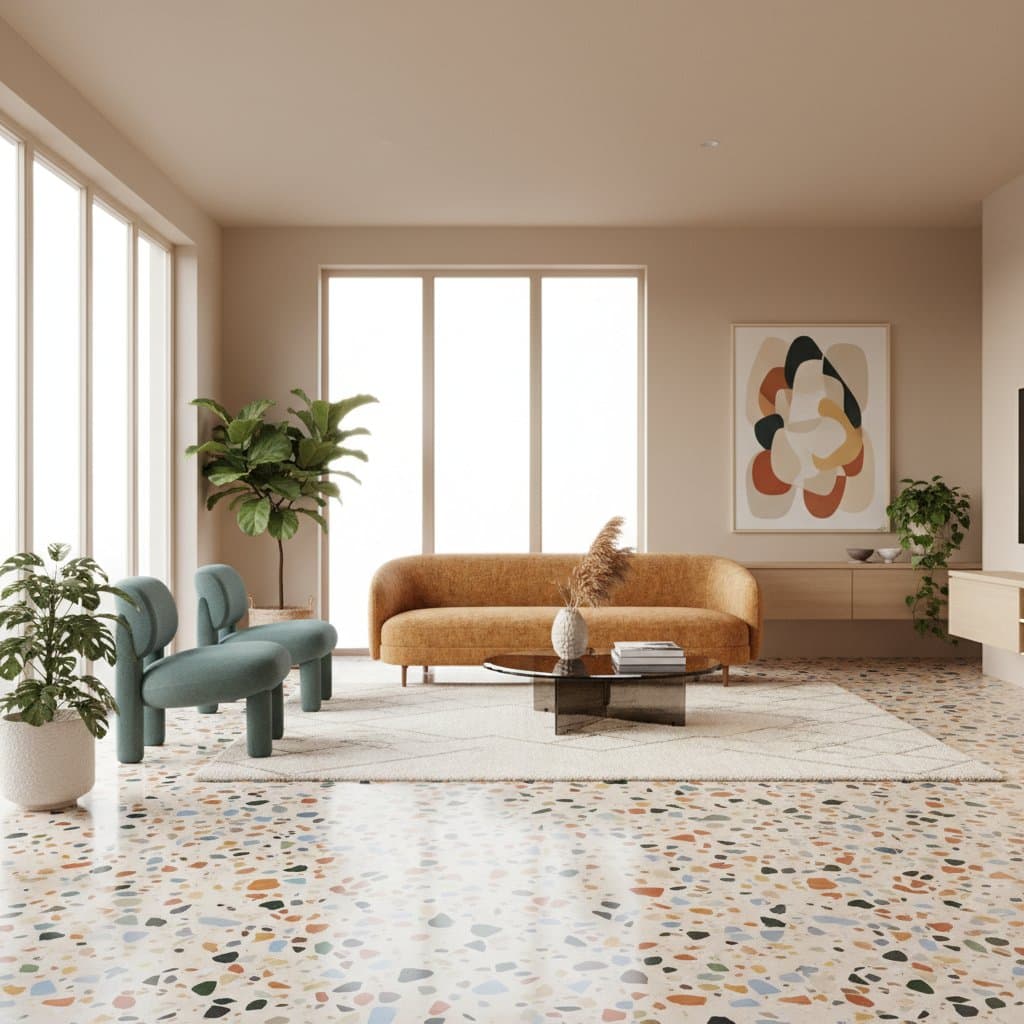
Terrazzo's 70s Revival: Sustainable Trends for 2025
Recall the speckled terrazzo floors in grandparents' homes, cool to the touch and remarkably resilient. These surfaces faded from favor amid the rise of affordable vinyl and laminate alternatives. Terrazzo now reemerges, valued for its nostalgic allure alongside contemporary sustainability and adaptability. Consider terrazzo closely for any remodel or construction project.
Why Terrazzo Endures
Homeowners seek flooring that withstands time, demands minimal care, and minimizes environmental impact. Terrazzo satisfies these priorities through time-honored techniques enhanced by eco-conscious innovations. Artisans embed chips of marble, quartz, glass, or granite into a cement or epoxy matrix, then polish the result into a continuous mosaic expanse.
Installations from past decades retain their vibrancy, underscoring terrazzo's robustness. This endurance positions it as a prudent choice; a properly executed floor endures fifty years or longer with basic maintenance.
The Sustainability Edge
Contemporary terrazzo stands among the greenest flooring choices. Producers incorporate recycled elements like post-consumer glass, marble remnants, and salvaged stone fragments. The manufacturing method generates scant waste, while the completed product avoids volatile sealants that emit toxins.
Key factors that align terrazzo with eco-design include:
- Recycled components: Aggregates may comprise up to 70 percent reclaimed materials.
- Extended service life: Infrequent replacement curtails long-term waste.
- Minimal VOC output: Installation supports superior indoor air standards.
- Thermal regulation: The material's mass moderates temperatures, lowering energy demands for climate control.
Terrazzo suits pursuits of green certifications or reduced ecological footprints alike.
Design Versatility and Current Aesthetics
Today's terrazzo transcends subdued palettes of yesteryear. Creators employ vivid aggregates, expansive chips, and patterned arrangements to craft striking floors and surfaces. Applications extend to furniture, wall treatments, and accents.
Emerging styles encompass:
- Monochromatic variants with harmonious chips for understated elegance.
- Contrasting compositions featuring stark black-white pairings or bold hues for dramatic effect.
- Micro-scale patterns with delicate flecks evoking sleek modernity.
- Oversized aggregates echoing 70s opulence, refined for present tastes.
Tailored mixes permit selection of hues, chip dimensions, and gloss levels. Such options render terrazzo fitting for kitchens, baths, foyers, or patios.
Installation Process Overview
Terrazzo demands expert craftsmanship across multiple phases:
- Substrate readiness: Ensure the base remains flat and secure; address fissures or dampness issues upfront.
- Binder application: Pour and level the cement or epoxy foundation.
- Chip placement: Disperse marble, glass, or stone fragments uniformly.
- Finishing operations: Grind the cured layer smooth, then polish to expose aggregates.
- Protective treatment: Apply a sealant to boost luster and simplify upkeep.
Precision extends timelines; a modest home floor requires days, while elaborate or expansive projects demand weeks.
Investment and Long-Term Worth
Upfront expenses for terrazzo seem substantial, yet its durability yields superior returns. Budget $25 to $80 per square foot, influenced by aggregate types, pattern intricacy, and specialist rates. Epoxy versions, slimmer and lighter, typically cost less than cement counterparts.
Ceramic tiles range from $10 to $20 per square foot installed but often require renewal after two decades. Terrazzo doubles that span while preserving aesthetics. Porcelain or vinyl imitations offer economical approximations, though they forfeit seamless integrity and resilience.
Upkeep Essentials
Terrazzo proves straightforward to preserve. Sweep routinely and mop with a pH-neutral solution to sustain clarity. Steer clear of acidic or caustic agents that erode polish. Professionals restore marred or faded areas via buffing and resealing, avoiding full overhauls.
Its non-absorbent nature repels stains and water, suiting high-use zones like kitchens and baths. Enhance longevity with entry mats and protective pads under furniture.
Ensuring Safe Traction
A glossy terrazzo finish risks slips in moist settings, such as baths or thresholds. Mitigate this by integrating finer particles or textured additives during pouring. Honed or satin finishes enhance grip for exteriors. Consult installers on traction needs prior to selecting the surface.
Ideal Applications in Homes
Terrazzo adapts seamlessly to diverse spaces:
- Kitchens: Withstands wear, repels spills, and adds refined style.
- Bathrooms: Resists humidity for a serene, luxurious ambiance.
- Foyers and utility areas: Manages foot traffic and debris effectively.
- Common rooms: Fosters continuity and amplifies light.
- Exterior terraces: Endures elements when sealed appropriately.
Beyond floors, integrate it into counters, splash guards, surrounds, or bespoke furnishings. It complements modern and classic interiors equally.
Adapting to Local Conditions
Match terrazzo type to regional demands. Epoxy suits controlled indoor environments. Cement, denser and permeable, excels in exteriors or damp climates.
In humid zones, install vapor barriers to avert delamination. For cold areas, embed hydronic systems beneath for warmth.
Integrating Aesthetics and Eco-Principles
This terrazzo resurgence signals a preference for harmonious, accountable materials. Recycled inputs and prolonged use diminish ecological burdens, all while delivering refined visuals.
To maximize green benefits:
- Source aggregates nearby to cut transport emissions.
- Engage certified experts adhering to sustainable protocols.
- Choose low-emission sealants for healthier interiors.
- Design with enduring appeal over fleeting fashions.
Such decisions yield installations that honor both form and planet.
Steps to Select and Install
Begin with a seasoned contractor versed in both binder systems. Review portfolios, secure referrals, and scrutinize bids for material quality. Early design decisions lock in patterns, as on-site pouring limits alterations.
Evaluate hues against lighting and adjacent elements like cabinets or walls. Expert execution infuses homes with enduring grace, resilience, and ethical design alignment.