
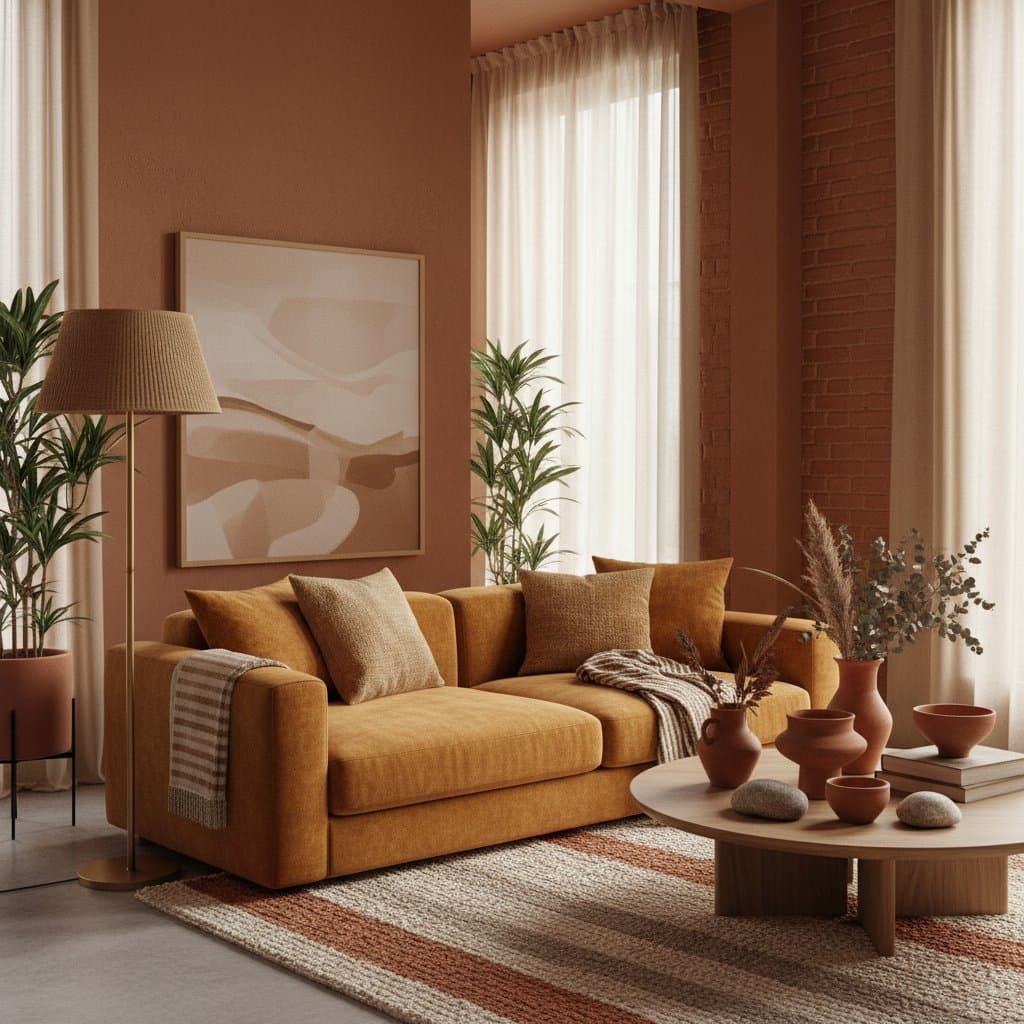
Introduction to Earthy Maximalism
Minimalist design has long favored clean lines and neutral palettes, yet recent shifts reveal a desire for more inviting environments. Terracotta and ochre emerge as pivotal hues in this evolution, softening stark spaces with their grounded, sun-baked essence. These colors draw from natural earth tones, fostering a sense of timeless habitation.
In 2026, interior trends pivot toward earthy maximalism, where minimalism meets subtle abundance. Designers layer these warm shades to create depth without overwhelming simplicity. The result offers rooms that feel both serene and soulful, bridging modern aesthetics with organic vitality.
Understanding Terracotta and Ochre
Terracotta evokes the rich, reddish-brown of baked clay, reminiscent of ancient pottery and sun-drenched landscapes. Its warm undertones range from soft rust to deeper sienna, providing a versatile base for interiors. This color absorbs light gently, casting a cozy glow that counters the coolness of whites and grays.
Ochre, on the other hand, captures the golden-yellow spectrum of mineral pigments, often with subtle green or red hints. It mirrors desert sands and aged linens, adding a luminous quality to spaces. Together, these tones form a palette that enhances minimalism by introducing subtle variation and emotional resonance.
Their appeal lies in authenticity; both derive from natural sources, aligning with sustainable design principles. In minimalist contexts, they prevent sterility, inviting occupants to linger. Consider how terracotta walls can transform a sparse living room into a nurturing retreat.
The 2026 Design Trend: Why Now?
Forecasts for 2026 highlight a backlash against overly austere minimalism, propelled by global emphasis on wellness and connection. Earthy maximalism responds by incorporating warm neutrals like terracotta and ochre to evoke comfort. This trend reflects broader cultural moves toward biophilic design, where nature's palette soothes the modern psyche.
Industry experts note increased demand for textured, lived-in spaces post-pandemic. Terracotta and ochre fit seamlessly, offering durability alongside visual interest. They pair well with sustainable materials such as linen, wool, and reclaimed wood, reinforcing eco-conscious choices.
Minimalism evolves here, retaining its essence of less-is-more while adding layers of personality. Spaces designed this way promote mindfulness, as the hues subtly shift with daylight, creating dynamic yet calming atmospheres.
Incorporating Terracotta and Ochre into Minimalist Foundations
Begin with foundational elements to ensure cohesion. Select terracotta for accent walls in living areas, where it grounds the space against crisp white trim. This application maintains openness while introducing warmth, especially in north-facing rooms that lack natural light.
Ochre works effectively on textiles, such as upholstery or curtains, to soften edges. Use it sparingly in bedrooms for throw pillows or area rugs, allowing the color to diffuse gently. The key lies in proportion: limit bold applications to 20 percent of the palette to preserve minimalist clarity.
Furniture selection amplifies these tones. Opt for ochre-dyed leather chairs or terracotta ceramic vases as focal points. These pieces add artisanal flair without clutter, enhancing the room's narrative of thoughtful curation.
Layering Textures for Depth
Texture elevates color application in earthy maximalism. Pair terracotta walls with woven jute rugs in neutral tones for tactile contrast. This combination invites touch, making spaces feel more intimate.
Incorporate ochre through matte finishes on tabletops or frames, avoiding glossy surfaces that compete visually. Layer sheer linens over ochre cushions to create subtle shadows, adding dimension. Such details ensure minimalism remains uncluttered yet engaging.
Natural materials like rattan or stone complement these hues. A terracotta planter beside an ochre sofa introduces organic flow, blurring indoor-outdoor boundaries.
Actionable Styling Steps
-
Assess your space's light: In dim areas, apply lighter ochre variants to brighten; reserve deeper terracotta for sunlit zones.
-
Build a mood board: Collect swatches of terracotta pottery, ochre fabrics, and minimalist neutrals to visualize balance.
-
Start small: Introduce one terracotta accessory, such as a vase, then layer ochre elements like artwork to test harmony.
-
Balance with neutrals: Anchor warm tones with greige floors or ivory walls, ensuring no single color dominates.
-
Experiment with scale: Use larger ochre patterns in rugs for subtle pattern play, keeping walls plain.
-
Maintain flow: Extend terracotta accents from entryways to adjacent rooms for seamless transitions.
These steps provide practical entry points, allowing gradual transformation without disrupting established minimalism.
Harmonizing Light, Color, and Texture
Light plays a crucial role in revealing terracotta and ochre's nuances. Position fixtures to highlight these tones during golden hours, enhancing their warmth. Dimmable LEDs in soft white mimic natural illumination, preventing harsh contrasts.
Color balance requires intentional pairing. Offset terracotta's intensity with cool accents like sage green plants, creating equilibrium. Ochre's brightness tempers deeper shades, fostering visual rest.
Texture integration ties elements together. Rough-hewn terracotta tiles on floors pair with smooth ochre linens, offering sensory variety. This approach enriches minimalist spaces, making them feel curated over time.
Creating Enduring, Inviting Homes
Embracing terracotta and ochre transforms cold minimalism into warm sanctuaries. These colors not only beautify but also nurture well-being through their natural affinity. Homeowners gain versatile designs that adapt to seasons and lifestyles.
The beauty of this trend rests in its accessibility; simple swaps yield profound impact. Spaces evolve into reflections of personal stories, where every hue contributes to comfort. Invest in these tones for interiors that endure beyond fleeting fashions, fostering lasting serenity.