
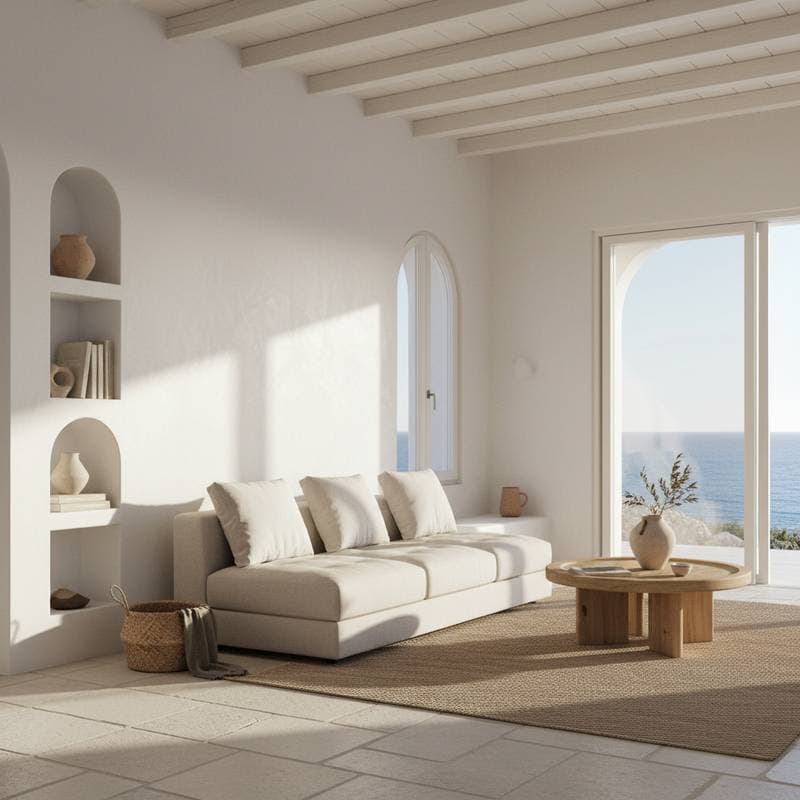
The Sunlit Essence Redefining Coastal Interiors
Imagine entering a seaside residence where tranquility envelops you immediately. The environment appears expansive, luminous, and unforced. Clutter yields to precise lines, gentle textures, and sunlight cascading over subdued walls. This sensation captures the essence of Mediterranean minimalism, a design philosophy that honors sunlit simplicity.
Individuals drawn to the casual allure of coastal lifestyles often seek organized, enduring spaces over ornate or thematic ones. The advantage lies in adapting this aesthetic to any residence, regardless of proximity to the shore or financial constraints.
The Rising Appeal of Mediterranean Minimalism
Conventional coastal aesthetics frequently incorporate maritime motifs, azure hues, and embellishments that risk excess. Mediterranean minimalism eliminates such elements. It emphasizes whitewashed surfaces, organic substances, and unadorned forms, positioning light and texture as focal points.
This method suits those who value straightforward upkeep, subtle elegance, and restorative environments. The philosophy prioritizes space over accumulation, allowing illumination, ventilation, and artisanal quality to convey the narrative.
Foundational Principles: Light, Texture, and Harmony
The central tenet of Mediterranean minimalism asserts that restraint amplifies when materials prove genuine and illumination abundant. The objective involves crafting environments that feel anchored yet ethereal. Pale walls in white or cream bounce back sunlight, while stone or timber flooring introduces tactile interest, and sparse furnishings sustain serenity.
Success hinges on integrating three key components:
- Light: Position natural illumination as the protagonist. Employ expansive windows, translucent drapery, and fluid layouts to facilitate its circulation.
- Texture: Incorporate organic elements such as plaster, rattan, linen, and terracotta to provide dimension absent visual overload.
- Simplicity: Maintain sleek contours and low-profile furnishings. Ensure each item serves a distinct function.
Implementing the Aesthetic: Step-by-Step Guidance
Transformation requires no comprehensive renovation. Incremental adjustments yield significant impact. Select a single area, like the living room or kitchen, as the starting point and expand gradually.
Step 1: Establish a Luminous Foundation
Whitewashed walls define this aesthetic. Beyond cleanliness, they enhance sunlight penetration, rendering compact areas more spacious. Opt for matte or limewash applications over glossy coatings to achieve a velvety, light-receptive surface.
For those finding stark white overwhelming, select gentle neutrals such as sand, cream, or faint beige. These tones preserve warmth while optimizing reflectivity.
Step 2: Eliminate Excess
This style flourishes with ample circulation. Systematically assess each area and discard unused or unappreciated items. Maintain surfaces largely unobstructed, favoring select significant objects over numerous minor ornaments. A crafted vase, interlaced basket, or unpretentious ceramic vessel communicates more effectively than a crowded display.
Step 3: Select Organic Materials
Authenticity arises from reliance on elemental substances. Evaluate these choices:
- Floors: Opt for stone, concrete, or timber finished in a subdued sheen.
- Fabrics: Choose linen, cotton, or wool in subdued palettes.
- Furniture: Select pale woods, cane, or metal exhibiting patina.
- Accents: Integrate terracotta vessels, woven rugs, or jute mats.
Such materials develop patina gracefully, enhancing character progressively without obsolescence.
Step 4: Maintain a Restrained Color Scheme
Adhere to whites, beiges, and warm neutrals. Introduce variation via tactile contrast rather than chromatic shifts. For subtle coloration, incorporate softened blues, olive greens, or mild browns. The aim ensures composure and unity, avoiding agitation or ephemerality.
Step 5: Harness Illumination Effectively
Replace dense drapery with airy textiles that sway with air currents. Preserve window clarity and accessibility. Mirrors distribute light in dimmer zones. For supplemental sources, install warm-toned bulbs within straightforward fixtures, such as interlaced pendants or pared-down wall lamps.
Advantages and Drawbacks
All design approaches involve compromises. Awareness facilitates informed decisions.
Advantages
- Generates luminous, soothing atmospheres
- Simplifies ongoing care post-initial organization
- Adapts to diverse residences, from urban dwellings to seaside retreats
- Promotes discernment in selecting decor
- Endures beyond fleeting fashions
Drawbacks
- Risks austerity without sufficient tactile balance
- Pale surfaces demand regular attention to maintain pristine appearance
- Organic elements incur higher initial expenses
- Certain pieces require tailored dimensions for confined areas
Consider these factors to align selections with personal habits and resources.
Essential Planning Factors
Prior to undertaking extensive changes, address logistical aspects.
Budget:
This aesthetic accommodates varied financial levels. For economical refreshes, prioritize painting, organization, and organic additions. Comprehensive overhauls may involve flooring or bespoke furnishings from timber or stone, ranging from several hundred to thousands of dollars based on scope.
Timeline and Labor:
Repainting, sorting, and repositioning occur over weekends. Substantial alterations like flooring replacement or fixture updates span weeks. Proceed methodically to avoid haste.
Upkeep:
Simplicity underpins the appeal. Routine weekly tasks suffice: dust surfaces, launder textiles, and cleanse walls as required. Timber or stone occasionally necessitates resealing, yet withstands consistent attention robustly.
Regulatory and Expert Assistance:
Structural modifications, window alterations, or utility adjustments in kitchens or baths may require municipal approvals. Engage designers or contractors versed in Mediterranean principles for intricate endeavors to ensure efficiency and accuracy.
Experiencing Mediterranean Minimalism Daily
Following primary modifications, observe shifts in ambiance. Illumination softens, ventilation improves, and surroundings cease to overwhelm. This transcends stylistic choice, influencing routine interactions.
Sustain this through uncomplicated practices. Refresh select accents periodically with seasons, resisting the urge to populate voids. Permit organic evolution, where patina emerges, textiles mellow, and the environment personalizes.
Subtle Enhancements for Depth
To infuse warmth subtly while preserving restraint, consider:
- Positioning a modest olive tree or preserved branch in earthenware for organic interest.
- Employing interlaced containers for concealment over synthetic alternatives.
- Selecting a singular expansive artwork in muted shades versus multiple diminutive frames.
- Superimposing neutral textiles on bedding or seating for tactile comfort.
- Limiting kitchen surfaces to essential, quality items like timber boards or stone receptacles.
These elements ensure utility and rootedness without compromising essence.
Bringing the Vision to Life
Coastal proximity proves unnecessary for this tranquil sophistication. Commitment to curation, reduction, and light direction suffices. Initiate modestly: apply white to a wall, expose windows, and excise the extraneous. Progressive actions approximate the serene, illuminated coastal ideal.
The approach values deliberation and stewardship. It encourages pauses to value tactile nuances and diurnal light variations. From isolated room renewal to holistic reconception, Mediterranean minimalism provides an enduring path to harmonious, refined living.