
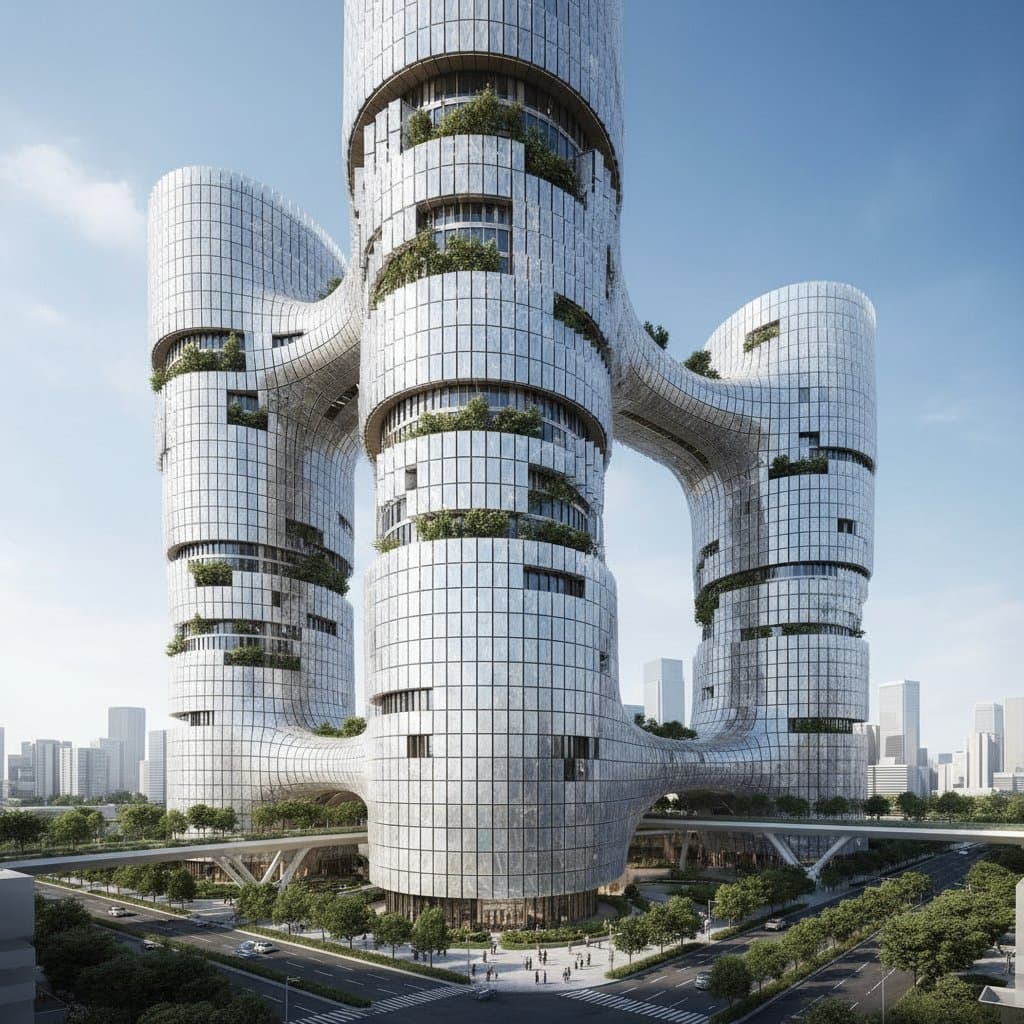
How Mathematical Facades Are Reshaping Architecture by 2026
You walk past a new office building and notice its exterior shifting subtly as sunlight angles change throughout the day. The surface appears sculptural, yet every panel aligns with exact measurements derived from computational models. Mathematics, embedded directly into the building envelope, drives this effect.
Architects now apply data and algorithms to expand facade capabilities beyond basic protection. These systems regulate energy flows, modulate daylight, and adjust to shifting environmental conditions. The outcome delivers structures that function with the same precision they exhibit visually.
Performance Goals Drive Initial Design
Facades once functioned primarily as static barriers against weather and temperature swings. Stricter energy codes and advanced modeling software have converted them into active systems. Designers input variables such as solar angles, wind patterns, and material properties into algorithms that generate optimized surface geometries. This method replaces manual trial and error with calculated iterations that balance efficiency and visual impact.
Parametric Relationships Replace Fixed Dimensions
Parametric tools establish dynamic links between design factors rather than locking in static measurements. A shading panel, for instance, can tilt automatically according to real-time solar radiation data. Adjusting one input value propagates changes across the entire assembly while preserving structural integrity and aesthetic intent.
The process uncovers efficient curvatures and fin placements that manual sketching rarely identifies. Resulting forms appear intricate yet rest on transparent functional logic.
Step-by-Step Workflow for Implementation
- Establish measurable targets such as reduced heat gain, improved daylight distribution, or controlled privacy levels.
- Define input parameters including window ratios, panel orientations, and thickness constraints.
- Run algorithmic generation through platforms that produce multiple compliant options.
- Evaluate each variant against structural, energy, and budget criteria.
- Finalize the selected model and export data directly to fabrication equipment for precise cutting and assembly.
Digital coordination at this stage reduces field errors and accelerates installation.
Documented Advantages for Project Teams
- Energy modeling limits solar gain and glare, lowering cooling and lighting loads by measurable percentages.
- Optimized material calculations decrease waste during production.
- Unique panel geometries become feasible at consistent unit costs because machines follow digital instructions without custom tooling.
- Design data supports future maintenance planning and component tracking.
Initial modeling investment typically recovers through reduced material orders and operational savings.
Budget and Schedule Considerations
Design phases extend beyond conventional drafting due to simulation cycles. Budget an additional 10 to 20 percent for this stage relative to project scale. Fabrication and installation often accelerate because digital files minimize on-site modifications.
Commercial systems range from 40 to 80 dollars per square foot. Residential applications fall between 25 and 60 dollars per square foot based on chosen materials and regional labor rates. Confirm local code documentation requirements early, as some jurisdictions request extra performance verification.
Structural and Safety Integration
Algorithmic outputs require review by licensed engineers to satisfy wind-load and seismic provisions. Digital stress predictions inform but do not replace physical certification. Projects using lightweight composites need verified fire ratings and attachment details before installation proceeds.
Climate-Specific Adaptations
Hot climates prompt algorithms to emphasize ventilation and overhangs. Cooler regions prioritize insulation and controlled solar intake. Sensor integration allows panels to reposition dynamically as conditions shift. Regional material selections, such as perforated screens in arid zones or insulated glazing in temperate areas, plug into the same computational framework with adjusted parameters.
Traditional Versus Computational Comparison
| Feature | Traditional Facade | Math-Driven Facade |
|---|---|---|
| Design Process | Manual drafting and iteration | Algorithmic modeling and simulation |
| Material Use | Often standardized | Optimized per panel |
| Energy Performance | Estimated | Quantified and tested |
| Fabrication | Manual or semi-digital | Fully digital and automated |
| Cost Predictability | Moderate | High, due to data accuracy |
Integrating Responsive Systems into Urban Infrastructure
Cities benefit when facades reduce aggregate energy demand and enhance occupant comfort. Sensor-linked surfaces communicate with building management platforms to modulate shading or airflow without manual intervention. Commercial towers can rotate elements according to instantaneous sunlight intensity. Residential buildings can increase privacy screening during peak hours. These networks convert fixed envelopes into adaptive urban components.
Adopting Math-Driven Facades in Your Project
Assemble a team familiar with parametric software and local code pathways. Review prior project samples that demonstrate both digital output and constructed results. Set explicit priorities around energy targets, visual objectives, or durability metrics before modeling begins. Share fabrication data with contractors at the earliest stage to align digital intent with physical execution and avoid later revisions.