
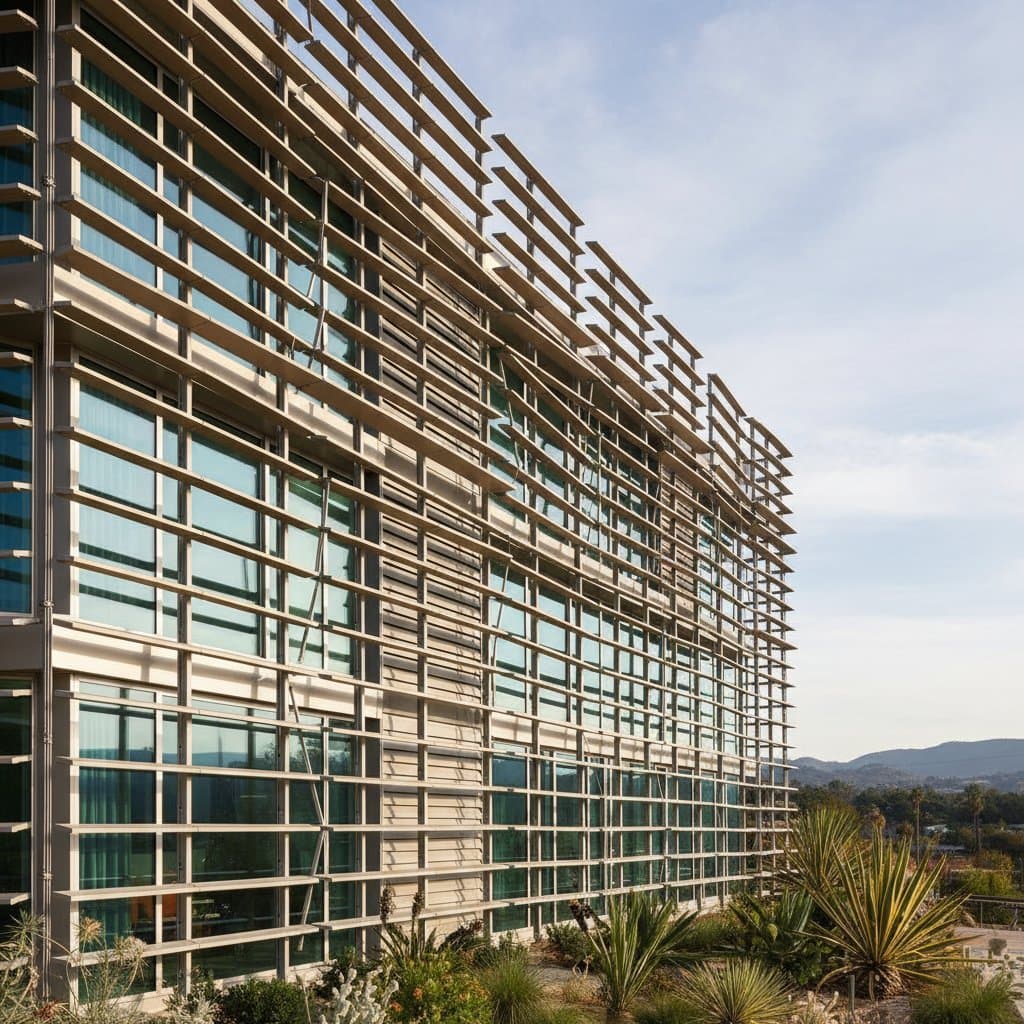
Why Parametric Facades Define Modern Exteriors
Modern buildings often feature exteriors that appear to interact fluidly with their environment. Parametric facades enable this dynamic quality through innovative design principles. Architects and builders increasingly rely on these systems to integrate form, function, and environmental responsiveness. Homeowners and developers benefit from exploring these options during planning for new constructions or renovations.
The Opportunity in Modern Exterior Design
Conventional facades employ static patterns and materials that provide consistent appearance but limited interaction with external conditions. Parametric facades leverage computational algorithms and environmental data to create surfaces that adapt to sunlight, wind, and temperature variations. This approach yields designs that enhance visual appeal while optimizing energy use and adaptability.
For residential applications, such facades serve as an active barrier that minimizes heat ingress, optimizes shading, and elevates indoor comfort levels. Previously confined to prominent commercial structures, advancements in manufacturing techniques now extend these benefits to bespoke residences and smaller-scale projects. Homeowners achieve greater energy conservation, personalization, and forward-thinking building performance.
How Parametric Design Works
Parametric design relies on defined variables, such as solar trajectories, fenestration positions, or prevailing wind directions. Advanced software analyzes these parameters to produce tailored geometries aligned with specified objectives. Designers iterate by modifying inputs, observing instantaneous form adjustments to harmonize artistic elements with practical requirements.
Consider a louvered screen where panel dimensions and orientations vary according to solar incidence. In regions with intense heat, denser configurations mitigate glare and decrease reliance on air conditioning. In temperate zones, sparser arrangements permit deeper light penetration, fostering natural illumination within living areas. Each contour, aperture, or motif contributes directly to operational efficacy.
Step-by-Step Approach to a Parametric Facade Project
-
Define performance goals. Specify targets like enhanced thermal insulation, targeted solar shading, or improved airflow management.
-
Collect site data. Gather details on building orientation, adjacent structures, and regional weather patterns, including seasonal sunlight paths and wind velocities.
-
Develop a digital model. Collaborate with architects proficient in parametric tools, such as Grasshopper for Rhino or Dynamo for Revit, to construct responsive digital prototypes.
-
Test variations. Simulate scenarios to assess impacts on energy consumption, occupant comfort, and aesthetic outcomes using tools like EnergyPlus or Ladybug for environmental analysis.
-
Fabricate components. Employ precision methods including computer numerical control machining, additive manufacturing, or waterjet cutting to produce elements with exact tolerances.
-
Install and calibrate. Assemble on-site with adjustments to verify alignment and functionality, incorporating sensors if dynamic features are included.
Coordination among design, engineering, and production specialists proves essential throughout. The outcome is a bespoke facade that aligns seamlessly with the structure's architecture and operational needs.
Practical Considerations for Homeowners
Cost: These facades generally exceed the expense of traditional siding or glazing systems, with initial outlays ranging from 80 to 150 dollars per square foot. Factors influencing price include material selection, geometric intricacy, and production techniques. Common choices encompass extruded aluminum, etched metal sheets, or fiber-reinforced polymers; bespoke timber integrations or precast elements may elevate expenditures.
Timeline: Conceptualization and computational modeling often prolong the preparatory stage by four to eight weeks. Once approved, production and assembly timelines mirror those of standard installations, typically spanning two to four months for mid-sized projects.
Difficulty Level: Moderate to high complexity demands professional involvement. Homeowners must partner with licensed architects, structural engineers, and fabricators versed in computational workflows; independent efforts risk suboptimal results.
Permits and Codes: Municipal regulations dictate constraints on protrusion depths, fire-rated materials, and structural integrity. Engage authorities during initial planning to preempt revisions and associated delays.
Performance ROI: Optimized designs can curtail energy expenditures by 20 to 30 percent via superior shading and passive ventilation. In climates prone to elevated cooling needs, payback periods shorten to five to ten years, amplifying long-term value.
Why Builders and Designers Are Adopting It
Parametric facades advance sustainable construction by enabling exact material allocation, which minimizes fabrication scrap. Digital frameworks facilitate seamless adaptations for retrofitting legacy buildings without extensive overhauls. Architects value the iterative precision, while property owners realize quantifiable gains in efficiency and durability.
Active variants, incorporating kinetic elements or integrated sensors, elevate responsiveness further. These mechanisms modulate positions hourly or daily, sustaining optimal conditions with reduced dependence on HVAC systems or supplemental illumination. Integration with building automation protocols enhances overall intelligence.
Integrating Parametric Facades into Your Project
For upcoming constructions or facade upgrades, consult architects versed in computational methods from the outset. Partial implementations, like accentuating entryways with adaptive screens or deploying modular shading on south-facing elevations, yield substantial improvements without full-scale commitment. Prioritize comprehensive site assessments, articulate precise objectives, and assemble a multidisciplinary team adept in digital production.
Parametric facades transcend mere stylistic enhancement. They deliver tangible efficiencies that render structures more intuitive and resilient to environmental demands.