
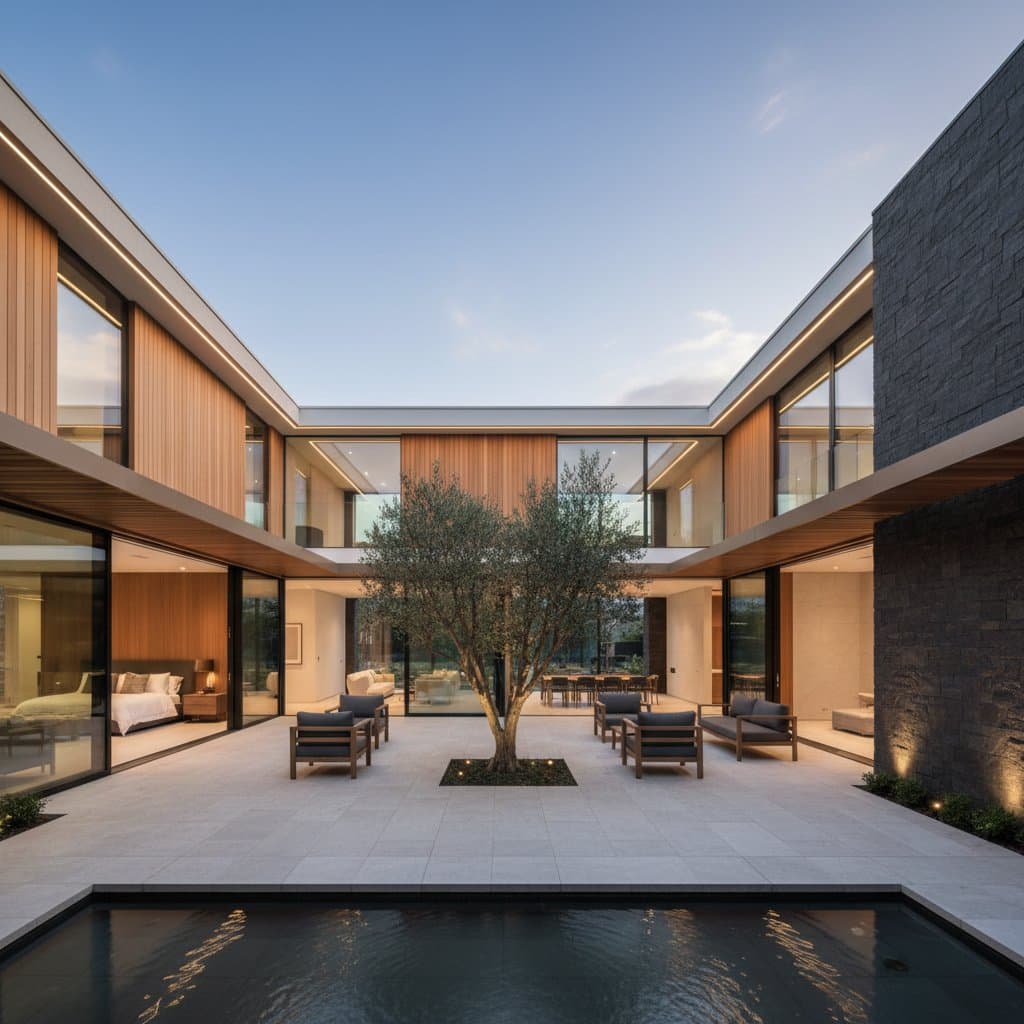
Why Courtyards Revive Privacy in Inward-Facing Homes
Contemporary homes often feature expansive windows and glass doors that face the street. This design creates an appealing visual in photographs, yet it leaves residents feeling exposed within their living areas. Residents who have experienced a neighbor's gaze through nearby windows recognize how quickly open-concept layouts erode personal privacy.
Inward-facing designs centered on courtyards provide homeowners with seclusion, silence, and dedicated personal space. These layouts enable outdoor enjoyment without the unease of public visibility. Courtyards introduce natural light and fresh air into interiors while protecting against external disturbances.
This architectural strategy draws from historical precedents and experiences renewed popularity today. Proper planning and material selection allow courtyards to deliver privacy, heightened comfort, and increased property value.
How Courtyards Restore Privacy
The primary role of a courtyard in an inward-facing home involves establishing a protected outdoor area. This feature enhances privacy through multiple mechanisms.
Blocking Sightlines
Courtyards prevent direct lines of sight from adjacent properties. Primary windows and doors orient toward the courtyard rather than the street or neighboring structures. This arrangement resolves common suburban privacy issues, eliminating reliance on fences or blinds as primary defenses.
Controlling Sound
Enclosed by solid walls, a courtyard minimizes external noise from vehicles, play, or construction. The surrounding structure redirects sound waves, maintaining a quieter central area. Such benefits prove particularly advantageous in densely populated neighborhoods or along high-traffic routes.
Fostering a Sense of Retreat
A secluded courtyard shifts the home's focus inward, promoting tranquility. Residents can relax with morning coffee, practice yoga, or read outdoors without concern for observation. The setting resembles a private garden more than a typical yard bordered by other residences.
Enhancing Security
Courtyard-centered homes feature fewer exterior windows, simplifying perimeter protection. This configuration allows secure enjoyment of open-air spaces within the property boundaries.
Practical Considerations for Courtyard Construction
Constructing a courtyard home demands careful preparation beyond standard layouts. Evaluate these elements prior to proceeding.
Costs and Budget
Inward-facing designs may incur higher expenses due to extra walls and waterproofing requirements. Custom courtyard homes typically range from $250 to $400 per square foot, influenced by material choices and local conditions.
Retrofitting an existing home with a courtyard involves expenses for wall modifications, utility relocations, and drainage systems, often totaling $80,000 to $150,000 for moderate-scale projects. Costs fluctuate based on geographic location, soil type, and labor availability. Consult a licensed contractor for a site-specific assessment.
Permits and Regulations
Courtyard projects frequently necessitate building permits, particularly when involving structural alterations or drainage changes. Municipal codes might restrict wall heights, lot coverage percentages, or setback requirements. Verify compliance with local authorities before commencing work.
For properties in homeowners associations, examine guidelines on exterior modifications. Certain communities impose restrictions on wall materials or outdoor features.
Drainage and Waterproofing
Courtyards accumulate precipitation, so effective drainage systems remain essential. Incorporate a central drain or perimeter trench connected to the primary stormwater infrastructure. Ensure the floor surface grades gently toward the drainage point.
Apply waterproof membranes under paving or concrete to avoid interior leaks. Engage professionals experienced in these installations to guarantee durability.
Sunlight and Orientation
The courtyard's position affects daily sunlight exposure. Southern or western alignments maximize illumination and warmth in most climates. In warmer regions, incorporate shading elements like pergolas or mature vegetation to manage heat buildup.
Architects often simulate daily light patterns to optimize brightness and thermal comfort.
Maintenance Requirements
Courtyards demand routine care, though less intensive than expansive yards. Schedule drain cleaning, plant pruning, and surface resealing periodically. Select durable options such as porcelain tiles or composite materials to minimize ongoing efforts.
Courtyards Versus Alternative Privacy Measures
Many homeowners address privacy concerns through fences, hedges, or window films. While effective to varying degrees, these solutions seldom match the comprehensive benefits of courtyards.
-
Fences and Screens: These establish boundaries and offer visual barriers but fail to dampen noise or achieve full isolation.
-
Window Treatments: Such coverings provide indoor seclusion yet diminish natural light and outdoor connectivity.
-
Tall Landscaping: Plants deliver screening over time, though they require years to establish and consistent upkeep.
Courtyards embed privacy directly into the home's structure. Residents gain access to light, ventilation, and openness without depending on supplementary features.
Indoor Comfort and Energy Advantages
Beyond privacy, courtyards enhance interior environments and promote sustainability.
Oriented windows and doors facilitate cross-breezes through the home, improving air circulation and reducing reliance on air conditioning. Indirect daylight from the courtyard decreases artificial lighting needs during daylight hours.
During colder seasons, thermal mass in masonry elements stores and gradually releases heat, moderating indoor temperatures. Together, these attributes yield comfortable, efficient living spaces with lower operational costs.
Integrating Courtyards for Lasting Benefits
To realize these advantages, collaborate with architects specializing in inward-facing designs. Begin by assessing your site's layout, climate, and lifestyle preferences. A well-executed courtyard not only safeguards privacy but also enriches daily life with natural harmony and enduring value.