
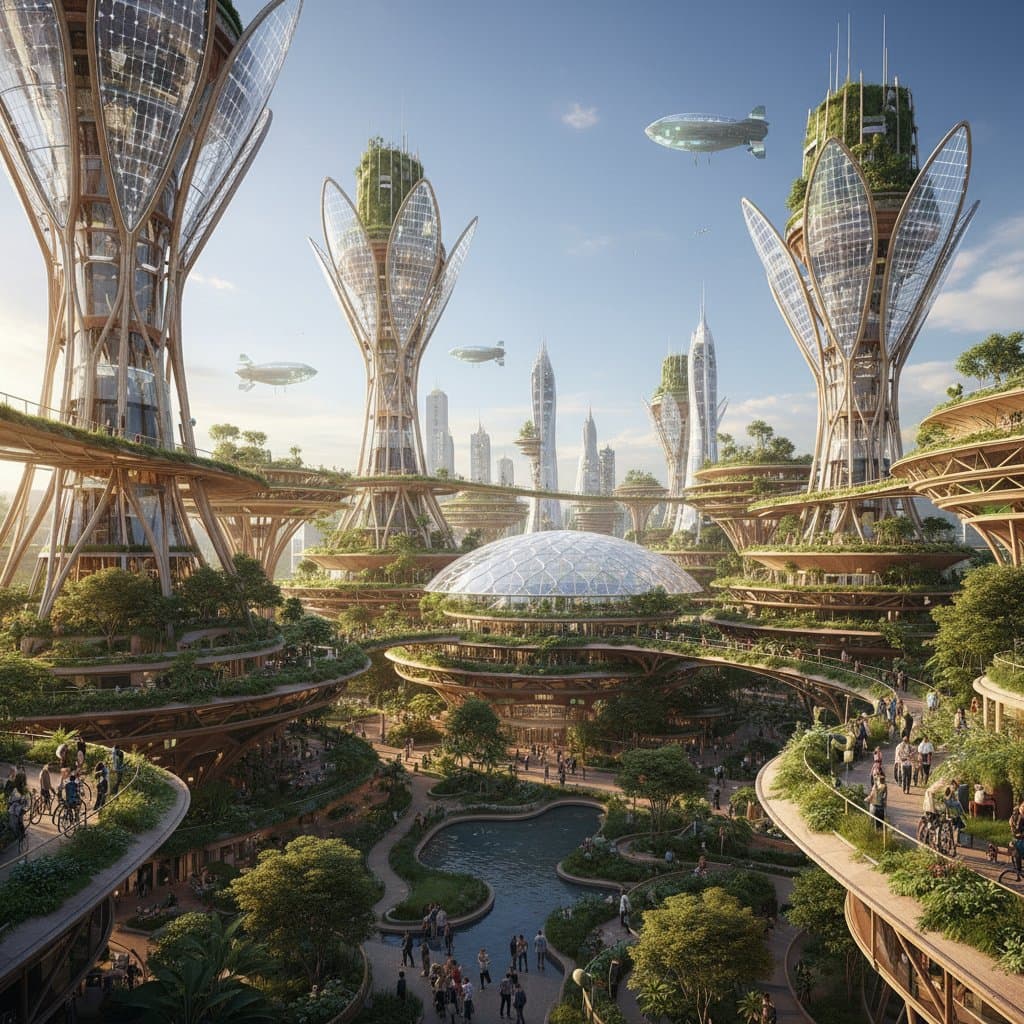
The Emergence of Solarpunk: A Vision for Green Urban Design
Picture a city street where solar panels gleam on every rooftop, trailing vines soften balcony edges, and the scent of blooming jasmine drifts from sidewalk gardens. The urban pulse blends seamlessly with natural rhythms, free from the clamor of industrial noise. This scene embodies solarpunk, an architectural ethos that redefines our relationship with built environments, emphasizing sustainability, community, and ecological balance.
Solarpunk challenges the dominance of stark, resource-intensive structures. It proposes designs that actively contribute to environmental health while enhancing daily life. By integrating renewable energy and biophilic elements, these buildings evolve into productive assets for their inhabitants and surroundings.
Redefining Urban Spaces Through Solarpunk Principles
Consider a typical cityscape dominated by steel and concrete; solarpunk introduces vitality through layered greenery and efficient systems. The core philosophy prioritizes synergy between human needs and natural processes. Structures no longer consume resources passively; they produce, recycle, and regenerate.
This approach addresses pressing challenges like climate change and urban isolation. Buildings equipped with solar facades and living walls reduce carbon footprints and improve air quality. Residents experience cooler interiors in summer and warmer ones in winter, thanks to natural insulation from vegetation.
The movement draws inspiration from diverse global traditions, such as Japanese urban forests or Mediterranean passive cooling techniques. It adapts these to modern contexts, ensuring designs resonate with local climates and cultures.
Core Components of Solarpunk Architecture
Solarpunk relies on interconnected systems that promote resilience and efficiency. These elements transform ordinary buildings into dynamic, supportive entities.
-
Advanced Solar Integration: Photovoltaic panels cover roofs and south-facing walls, capturing sunlight to power internal systems. Transparent solar glass in windows generates electricity without blocking views, supplying energy for appliances, heating, and even electric vehicle charging stations.
-
Integrated Green Features: Vertical gardens and green roofs absorb rainwater, insulate against heat, and filter airborne pollutants. Bioswales along pathways manage stormwater runoff, preventing flooding while nurturing soil microbes that enhance local biodiversity.
-
Sustainable Material Choices: Construction favors materials like cross-laminated timber from managed forests, mycelium-based composites, or recycled plastics molded into durable panels. These options minimize embodied carbon and allow for modular assembly, speeding up builds while reducing waste.
-
Community-Oriented Layouts: Designs incorporate shared amenities such as rooftop apiaries for pollination, communal tool libraries, and edible landscapes. These spaces encourage social interaction, resource sharing, and collective maintenance, strengthening neighborhood bonds.
-
Adaptive and Intelligent Systems: Buildings align with solar paths for optimal light and warmth, employing operable shading and cross-ventilation to minimize mechanical cooling. Rainwater collection feeds irrigation and graywater recycling, cutting utility demands by up to 50 percent in arid regions.
Real-world examples illustrate these principles. In a hypothetical retrofit of a mid-sized apartment block, solar canopies over parking areas provide shade and shade while generating enough power for common areas. Vertical farms on exterior walls yield fresh produce, supplementing resident diets and reducing food miles.
Implementing Solarpunk in Practice
Transitioning to solarpunk design demands thoughtful planning, but incremental steps yield substantial benefits. Homeowners can begin with a solar assessment to identify high-yield installation sites, such as unshaded roofs or pergolas. Adding a green wall kit, which supports climbing plants on trellises, improves insulation and aesthetics at a fraction of full renovation costs.
For larger projects, developers evaluate site-specific factors like sun exposure and soil quality. A feasibility study might reveal that incorporating rammed earth walls could lower heating needs by 30 percent in temperate zones. Budgets for initial setups range from $5,000 for residential solar arrays to $100,000 for comprehensive community retrofits, with incentives like tax credits accelerating returns.
Regulatory hurdles vary by location; solar permits often require engineering stamps to verify structural integrity. Integrating systems with existing infrastructure demands certified electricians to avoid hazards like overloads. Partnering with architects versed in LEED or Living Building Challenge standards ensures projects meet codes while exceeding performance goals.
Long-term maintenance involves routine checks on panels for efficiency and pruning of green elements to prevent overgrowth. These practices not only preserve functionality but also enhance property appeal, potentially increasing resale values by 10 to 15 percent in eco-conscious markets.
Embracing Solarpunk for Everyday Impact
Solarpunk extends beyond blueprints to inspire a collective ethos of stewardship and innovation. Each addition, from a backyard rainwater barrel to a neighborhood seed swap, reinforces the network of sustainable practices. This mindset shifts focus from consumption to contribution, fostering environments where well-being flourishes.
Communities adopting these designs report higher satisfaction levels, with greener spaces linked to reduced stress and increased physical activity. The result is a built landscape that supports diverse life forms, from human residents to urban wildlife.
Steps to Launch Your Solarpunk Project
To initiate a solarpunk transformation, assess your space's potential through free online tools that map solar viability. Consult certified sustainable builders for customized plans that align with your goals and budget. Platforms like doricsouth.com connect you with experts; post your details at no cost to receive tailored proposals. Your project becomes a catalyst, demonstrating how individual actions scale to reshape urban futures.